We’ve moved! Here’s where you can find us

The Green Ogre is now at https://www.greenogreindia.org

How green is tea?

Tea has been on my mind. Mostly because I have spent the last few weeks drinking it guiltily.
Coffee, I am told, is better for our forests than tea. Two NCF researchers I met in Valparai confirm this.
Tea cultivation essentially involves the clearing of large tracts of forest, leaving them bare and devoid of shade trees. Coffee, on the other hand, allows for shade trees and secondary cultivation. Tea offers nothing to grazing animals. It offers some shelter to birds, but nothing they won't find elsewhere. Coffee berries may be eaten by monkeys, civets, some herbivores and even elephants. Since tea picking takes place year round, tea habitats are constantly disturbed. Coffee suffers only seasonal disturbance.
Two weeks ago, I was shocked to see how tea gardens in the High Wavy Hills and Valparai verged upon some of the last stands of inviolate evergreen forest in the Western Ghats. This increases greatly the possibility of human-animal conflict and leaves the environment vulnerable to invasion by exotic plant and animal species.
These are not exactly great times for tea the product, so managements are opening up tea gardens to tourists who, having fooled themselves sufficiently that acres and acres of countryside bejewelled with tea bushes are an authentic imitation of paradise, will pay to stay in a guest house and be pampered with a whiff of colonial nostalgia. Along with a little rum and water in the evenings to wash down any chance feelings of guilt that may have pricked their consciences.
I wonder what my friend God, who until recently lived on a tea estate and worked in a coffee plantation, would have to say about this quandary of the cuppa.
On a lighter note, for those like me who still love their tea, this much has to be said: there are green ways of making it.
Like our guide Devidutt did up at 7500 feet in the Himalaya.

Flowering trees of Bangalore - now in PDF

S Karthikeyan is well known among Bangaloreans who are even remotely interested in nature. A widely regarded wildlife researcher, birder and butterfly expert, he has also photographed and documented a user-friendly guide to the flowering trees of Bangalore. For a long time, it remained a post on his website, linked from several blogs including mine. Karthik has now kindly consented to give his vast knowledge on the subject some mobility by making it a downloadable PDF. You can get it here.

Encounter - Changeable Hawk Eagle

What's so changeable about this forest eagle, you may ask. The answer has more than one context.
 
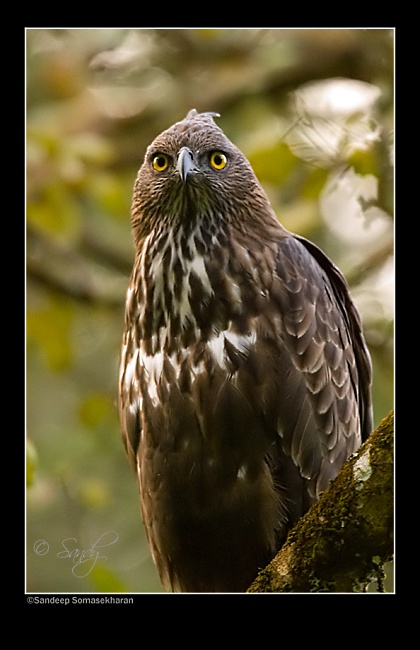
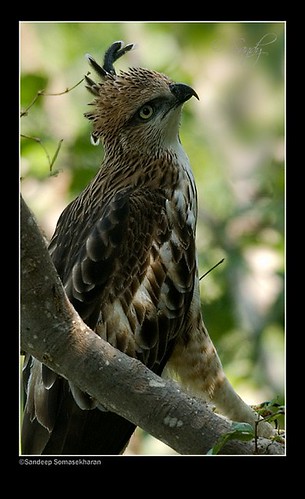
I cannot talk about the Changeable Hawk Eagle with laypersons without encountering that most pedestrian and wearying of questions: "What hawk eagle?" For your benefit, I say again: Changeable. One that is capable of change. It implies that the species is extremely variable in appearance. Adult birds may be dark or pale, and juveniles may be quite confusing. It used to be called the Crested Hawk Eagle earlier, and I wish they had stuck to that name. But to add to our confusion, some races, particularly those found in Southeast Asia, lack the crest. In Latin, it is Spizaetus cirrhatus cirrhatus or Spizaetus cirrhatus limnaetus, depending on the subspecies you are staring at. And if Pam Rasmussen must have her way, both subspecies are now separate species. A curious case of (S D) Ripley's Believe it or Not. Or some such. My first memorable encounter with this species (I usually exclude early childhood sightings because imagination overpowers memory and tends to fictionalise fact) was at the BRT Wildlife Sanctuary in March this year. A few turns before the K Gudi forest gate, Sandy (who took a record photograph then), spotted the raptor perched on a vantage bough overlooking the valley. On a more recent trip to BR Hills early this month, we saw two individuals who illustrated beyond doubt the predicament of baffled ornithologists (or taxonomists) who christened it. Both we saw up close. The first was a dark individual (above), and the second (below) had a plume of a crest and was paler. Probably a juvenile.  


The Changeable Hawk Eagle, like most forest eagles, is extremely agile. The second individual we saw shot off from its perch at great speed through a maze of forest trees and with immense power in its takeoff. Two weeks ago, I chanced upon this hunter at work. Driving back from Meghamalai, my car reached a bend in the road where forest shared an indistinct boundary with tea plantation. In a glade, I saw a hare cleaning its whiskers. Overhead, a shape darted out of the trees. The hare, startled by the sound of our engine, bolted. The eagle missed and, shrieking, cut a jagged path across the tea garden, then disappeared into the thicket. Did it strike or did it miss? I couldn't stay to find out. Photographs: © Sandeep Somashekaran. All rights reserved

For a plastic-free hair rinse, go Indian

Over at Life Less Plastic, I was pleasantly surprised to see that the best non-plastic hair rinse options are some Indian recipes that have been used for centuries. 
The common ingredients: shikakai (the fruit of Acacia concinna), amla (the fruit of Emblica officinalis, the Indian gooseberry), henna (made from the leaves of Lawsonia inermis), etc. And our very own oils of coconut, sesame and mustard.
So, for those of you who still have hair left to rinse, do try these at home.
And if you don't know by now, the word shampoo draws its roots from India. 

Light up the darkness, smoke out the evil?

Over the three or so decades of my life, I have seen many Deepavalis come and go (true to my chauvinism, I prefer the South Indian 'Deepavali' to the globalised 'Diwali')*. The essence of our festival of lights, I have been variously informed, is to symbolise the victory of light over darkness, of good over evil, and such. So it stayed for many years, as firecrackers blasted the wits out of the demons of darkness and sulphur fumes cauterised flying insects in the air. Suspended particulate matter notwithstanding, it's all for the good. Over evil. More recently, however, it has been about spending and buying. About trashing the old, and celebrating the new. Never mind our ailing banks, our fairy rings of malls and supermarkets and hypermarkets - BIG retail, as we know it - has helped ensure that we have lots of new to buy. So we trash the old, yea, and we trash it good. And we buy, buy, buy more new. By next year, new becomes old, and old becomes trash. And thus, good and evil live like twins separated at birth. Happily ever after. Or until the world ends. Whichever is sooner. And what of light and darkness? It's relative, isn't it? Like old and new. About seven years ago, flying to Bangalore from Mumbai, I would press my nose to the window to see as far as I could. From that redeye flight, all the world looked dark and inky black. Somewhere in the warped horizon, stray patches of light burned like matches dying in an ashtray. Most of our villages, and most of our roads, were just shades of darkness upon a field of darker dark. In a sense, it felt good to imagine that there were places out there in the hinterland that still enjoyed their share of night. Recently, even that has changed. Two months ago, as I flew back from Mumbai late at night, I stared out at the darkness. And didn't see it. It is heartening to know that many more of our villages have electricity. Many more villages have become townships, and many more townships have become towns. And electricity keeps them alive and well. Their roads are thin veins of light creeping deeper and deeper into the surrounding morass of blackness, seeking out its inky heart. We keep the lights on late into the night. So that darkness has no place in our lives any more. And light pollution? Oh, is that something we need to worry about? So this Deepavali, I wish your eyes well. May they crave the dark of night again. May they be able to look up and wonder if Orion and the Pleiades still occupy their rightful places in the sky. Unless we have blazed them out along with our demons. Have a blast! Actually, don't. * Postscript: Another dyed-in-the-saadamkolumbu South Indian, Krish Ashok, has defined at some length how Deepavali dropped the pa when it ascended that uncertain territory north of the Vindhyas.

Does God really live in Plastic Palani?

Last week, I was in Palani, covering the destination for a travel publication. Shock and awe are the two words that can best describe how I felt. Add to that sub-tones of revulsion, derision and the urge to get away from there as fast as a Tata Indica with a TN registration could take me. Now, nearly everyone knows that Palani is the seat of Murugan worship in southern India, and a magnet for the faithful. What they tend to forget is that Palani is also the gateway to the Palani Hills, which are a part of the Western Ghats and the Nilgiri Biosphere. In other words, it's an important link in a very critical ecosystem. However, like any religious destination, Palani is being trashed by tourists with a fervour that defies imagination. Plastic is everywhere, despite effete signboards banning its use. Trash forms a parallel mountain very near the shrine of the lord. And driving 13 km away on the Palani-Kodai road, I came across a signboard that told a sad story. And it struck me that the problem is really deep-rooted. It's not one of literacy or the lack of it. It's not the defiance of the rule of law. It's a hopeless apathy that runs agonisingly deep. And what's that someone said about cleanliness and godliness?

When Wildlife Week became a fortnight

The Green Ogre has been away being more green and less ogre, and thus his stomping grounds have been quiet.
I have enjoyed the most immersive wildlife and nature experiences over the last few weeks at some exquisite biodiversity sites in southern India.
October 9 through 12, my friends Sahastra, Sandeep and I were at Biligiri Rangaswamy Temple Wildlife Sanctuary, best known to most people as BR Hills. Thanks to Dr. Prashanth, who accompanied us on the trip, we experienced the forest like never before. For the first time in three trips, we enjoyed three days of clear weather. Undergrowth was thicker even in the drier areas of the forest, which made viewing difficult. However, we were lucky to see parts of the forest that we had never seen before and get a closer understanding of the Soligas, the tribe that inhabits the forests of the Biligirirangans. Also, we had some very good sightings of the Blue-bearded Bee Eater and Changeable Hawk Eagle. More about this later.
Last week, work took me to a few locations in Tamil Nadu that offered, as a sidelight, some very enriching birding and nature experiences. On October 14 and 15, I was in Meghamalai, a cluster of tea gardens tucked away in the HighWavy hills of Theni district. On our way up into the hills, we came across stands of exquisite moist deciduous and evergreen forest. We heard an elephant snort just a few feet away from the car and caught glimpses of the endangered Nilgiri LaughingThrush and the Painted Bush Quail.
On Friday and Saturday, I visited TopSlip and Valparai in the Anamalais. The northeast monsoon was active in the hills of Tamil Nadu and mist made viewing very difficult, but the few moments of clear light in the jungle offered me memorable glimpses of Yellow-browed Bulbuls, Asian Fairy Bluebirds, White-bellied Treepies and a variety of other birds endemic to the moist-deciduous and evergreen forests.
In Valparai, I was introduced to the Jungle Striped Squirrel. As if not to be ignored, a pair of Malabar Giant Squirrels came up to the car to get a good look at me. Very cute, but also very dangerous for the squirrels. On the 40 hair-pin-bend climb to Valparai, there are tracts of lush forest where the endangered Lion-tailed Macaque and Nilgiri Tahr can be seen. We were unlucky not to see any, mostly due to the bad weather. Tourists often feed the animals, and of late, there have been a number of road casualties including a few Lion-tailed Macaques.
The Nature Conservation Foundation (NCF) runs an excellent information centre, one of the best of its kind in the country, at Aiyarpadi just before the road winds onto the Valparai plateau. It is a must-stop for all those who want to learn about the biodiversity of the Anamalais.
Detailed reports will follow. (For the Gaur photograph, thanks to Nadine)

Bird list - BR Hills, Oct 9-12, 2008

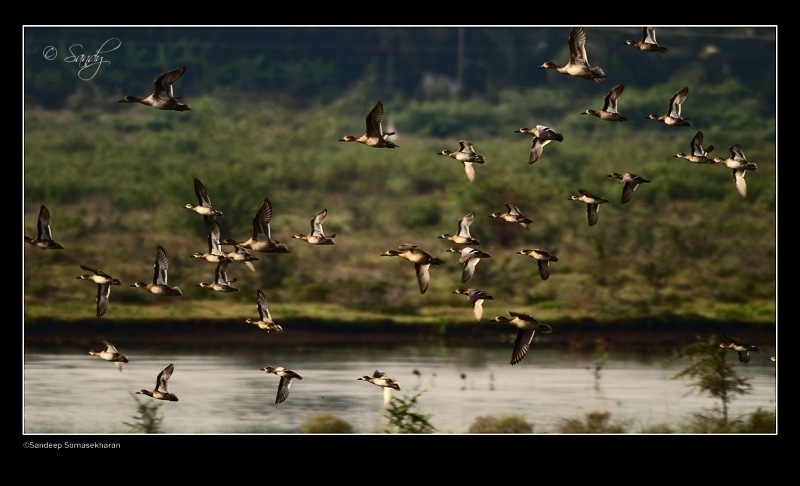
BR Hills Oct 9 – 12, 2008 Birders: Dr Prashanth, Sahastrarashmi, Sandeep, Bijoy Oct 9 - Nagavalli Tank, Chamarajnagar en route to BR Hills via K Gudi 1. Spotbill Duck 2. Gadwall 3. Black Ibis 4. Eurasian Spoonbill 5. Lesser Whistling Duck 6. Barn Swallow 7. Green Sandpiper 8. Red-wattled Lapwing 9. Yellow-wattled Lapwing 10. Long-tailed Shrike 11. Cattle Egret 12. Little Egret 13. Whiskered Tern 14. Pond Heron 15. Grey Heron 16. Common Snipe 17. Black-winged Stilt 18. Little Cormorant 19. Brahminy Kite 20. Green Bee-eater 21. White-throated Kingfisher 22. Common Coot 23. Intermediate Egret 24. Scaly-breasted Munia 25. Laughing Dove 26. Spotted Dove 27. Ashy Prinia 28. Common Tailorbird 29. Red-vented Bulbul 30. Black Kite 31. Pheasant-tailed Jacana 32. Little Grebe 33. White-browed Wagtail 34. Grey Wagtail 35. Greater Coucal 36. Indian Silverbill 37. Rose-ringed Parakeet 38. Common Myna 39. White-breasted Waterhen (H) 40. Grey Francolin (H) 41. Oriental Honey Buzzard 42. Indian Robin Forest gate to K Gudi 43. Grey Junglefowl 44. Small Minivet 45. White-bellied Drongo 46. Common Kingfisher 47. Green Imperial Pigeon 48. Common Flameback 49. Large-billed Crow 50. Rufous Treepie 51. Blue-faced Malkoha 52. White-browed Fantail 53. Great Tit 54. Bar-winged Flycatcher-shrike 55. Common Hawk-Cuckoo 56. Jungle Babbler 57. Black-hooded Oriole 58. Grey Cuckooshrike 59. Bronzed Drongo 60. Brown-capped Pygmy Woodpecker 61. Grey Hornbill 62. White-cheeked Barbet 63. Yellow-crowned Woodpecker 64. Gold-fronted Leafbird 65. Purple-rumped Sunbird 66. Pale-billed Flowerpecker 67. Velvet-fronted Nuthatch 68. Chestnut-bellied Nuthatch 69. Greenish Warbler 70. Red-whiskered Bulbul 71. Hill Myna 72. Vernal Hanging Parrot 73. Red-rumped Swallow 74. Blue-bearded Bee-eater 75. Malabar Parakeet 76. Scarlet Minivet 77. Common Iora 78. Asian Koel 79. Tickell’s Blue Flycatcher (H) 80. White-browed Bulbul (H) VGKK grounds 4:30 pm – 7 pm 81. Brown Shrike 82. Emerald Dove 83. Brown Fish Owl (?) 84. Grey Nightjar (H) October 10, 6:15 AM 85. Orange-headed Ground Thrush 86. Spangled Drongo 87. Racket-tailed Drongo 88. Puff-throated Babbler 89. Lesser Yellownape 90. Oriental White-eye 91. Golden Oriole 92. Thick-billed Flowerpecker 93. Greater Flameback 94. Crested Serpent Eagle 95. Yellow-browed Bulbul 96. Plum-headed Parakeet 97. Crested Treeswift 98. Grey-headed Canary Flycatcher 99. Malabar Whistling Thrush 100. Asian Paradise Flycatcher Oct 11 - K Gudi – Chamarajnagar 101. Changeable Hawk-Eagle 102. Red Spurfowl 103. Black-headed Munia 104. Asian Fairy Bluebird Oct 11 - Punjur-Bedaguli 105. Black Eagle 106. Asian Brown Flycatcher 107. Brown-headed Barbet Image: Gadwalls (Anas strepera) in flight at Nagavalli Tank, Chamarajnagar. Photo: © Sandeep Somasekharan. Used with permission

An animal I really want to see?

It's not the tiger - I have never been lucky enough to see one in the wild and I have never gone to Ranthambhore looking for one. I believe my time will come and I shall wait for it. The creature I'm looking for is a rare little rodent (probably nocturnal) called the Malabar Spiny Dormouse (Platacanthomys lasiurus). I have seen only one picture of it (on India Nature Watch). The Malabar Spiny Dormouse is the only living representative of its genus and has been reported from Kalakad Mundunthurai Tiger Reserve in Tamil Nadu. So, if you see one, let me know.

Sex - beastly and bizarre

Over at Short Sharp Science (the New Scientist blog), I ran into a post that lists ten animal behaviours that are absolutely bizarre. Of these, prurient soul that I am, I selected just a few sensational behaviours related to their sex lives:


Shark bites, love bites: The male White-tipped Reef Shark grips the female with his teeth to ensure that his mate doesn't get away from his amorous advances or until he hears from his dentist, whichever is sooner.


Say it with weeds: Male Amazon River Dolphins, or Boutou, present bouquets of seaweed to other dolphins in the hope that they will mate with them. Big business awaits underwater florists, er... weedists.


Husband attached, bare essentials only: Chances are you haven't heard of the male Leafvent Anglerfish. He latches on to the female of his choice by his privates and just wastes away. When it's time, all that's left of him - his unspeakables - fire sperm into her and knocks her up. Eerie, eh? 


Mate, or die trying: Man or mouse, this simple adage holds true. The male marsupial mouse mates only once in his lifetime, and he dies trying to keep other males from ravishing his promiscuous mate. Total tragedy, any way you look at it. 


More here

Seven Eco-Friendly Products, via SciAm

A hybrid bike, a new brand of toilet paper, reusable tote bags and a water-powered clock are among seven eco-friendly products listed by Scientific American.
The bike, manufactured by a Taiwanese company, is pegged at $2000. Who's buying? The water-powered clock sounds cool - all you need to do is fill the reservoir with water, add a pinch of salt and the chemical reaction that takes place powers your watch. If only this technology could run buses and aircraft! It costs only $16. But then, time is money. Of all these products, my heart went to the 'disposable cutlery'. What's new, you may ask. Imagine cutlery made out out of 'vegware' - 80% potato starch and 20% soy oil! What sounds truly amazing is that these products reportedly handle heat and washing very well. And they're priced right - $6 for 50. Hmmm... And just a few days ago, I mused about making plastics edible. Image - from sciam.com Technorati Tags: , ,

God is in the details - yes or no?

In a direct attack on Creationism and its ists, Gumby the Cat has written an Open Letter to Creationists. Very saucy, very snarky and very entertaining. And very venomous. It could have been better argued but that's exactly what makes it pure light reading. But, it appears the writer has nothing against Christianity and only has an axe to grind with Creationists.
The more you babble about ribs, talking snakes, magic boats and 600 year old men who build magic boats, the sooner you'll fade away in an increasingly educated and science-savvy world. Christianity will flourish without the oppressive and simpleminded likes of you, and the whole world will be much better off in your absence.
This is recommended reading for those who still believe that Adam laid Eve in the Garden (actually, this much I do believe - gardens are the best places for such activity whether intended for procreation or not, as most of our cinema and literature show) and that someone upstairs made the world in seven days without breaking for a beer. The same applies to those who argue passionately (and violently) about who built the Ram Sethu (this blog isn't the place for that discussion and I have spent myself writing about that already here to acrimonious responses). No offence intended to my believer friends. Please consider that I'm just taking an ideology break.

Shake it up, brotha, shake it up

As humans, we have bestowed upon ourselves the power to engineer great catastrophe - fire and flood, of course. But would you have thought earthquakes? Yo, man, we have the power to shake it up. Among the top 5 ways to cause a man-made earthquake, as Wired blogged in June, are dams, tall buildings and coal mines. And if that's not news enough and if you will excuse the pun, it seems the continent of Africa is splitting at the seams. Obviously not with laughter (as you would be at a joke like this). In fact, Momma Earth is constructing a new ocean for herself along the East African Rift - all the way from the tip of the Red Sea down to Mozambique. Of course, the fact that it will take ten million years to get the job done makes the whole thing less frightening. What's more worrying is if we will give this planet the next ten years (drat, my home loan tenure runs way beyond that).

Mumbai's trash flows from urban jungle to national park

There's a good reason to keep humans out of forests: Trash!

Some people stood here to enjoy the scenery, and left behind evidence of ample enjoyment


At birdsofbombay, Sunjoy Monga posted about a cleanup drive in Sanjay Gandhi National Park. A tireless team comprising schoolchildren and other volunteers recovered a large amount of trash from the national park, which is a virtual ghetto inside the city. 


And guess what most of the trash consisted of? Booze bottles - some half-full, others half-empty. Empty foil packets of wafers and gutkha - that awful-smelling stuff that some people sprinkle into their mouths from an elevation of half a foot. Now, this is must be a truly amazing way to celebrate Wildlife Week, no? 


When the Forest Department wakes up from its stupor, maybe it will give us some sober answers. I've seen this happen in every national park that I have visited - Bandipur, Mudumalai, Nagarahole, Bhadra, Periyar. For most of us urban chameleons, national parks offer a perfect hideaway from the city. But what some people do when they go there is unpardonable. 


Most national parks have effete, unconvincing signboards emblazoned with some weak cliche about saving our forests. Few of them offer the real reasons why you should not travel with stuff that tends to become trash. And if you do, why you should take your trash home. Most forest department workers are not educated about this aspect in the first place, so enforcement is not even on the horizon. 


Was it illiteracy or plain insensitivity that led people to litter below a signboard entreating them not to do so?
I once travelled on a safari in Bandipur with a bunch of engineering college students. One of them was playing music on a Walkman so loud that all of us could hear the screech of the playback singer's sibilants and the thump of jhankaar beats. I'm sure the animals heard him, too, a mile away. And, helped ably by the rattle and trundle of the diesel van that took us on the safari, we saw nothing but jungle fowl and the backside of an elephant. 


At Muthodi, my friends and I came across a group of surly drunks at the Shegekan Guest House. We hoped to stay here in order to have convenient access to the sholas. The Forest Department put us up at the dormitory downhill, denying us permission to stay at the guest house because someone connected to a minister had booked the place. Driving up, we heard the tinkle of bottles even before the guest house came into view. 


And, even as we stood watching Crimson-backed Sunbirds in that horrible garden planted with many exotics including a Christmas Tree, a couple of unsavoury characters argued loudly on the balcony, their beers and rums having gotten the better of them. We grumbled to the caretaker but got nothing except a helpless smile. And steel tumblers of coffee, at our expense. I stepped close to him unwittingly, and - sniff, sniff - my nose discovered the reason for his nonchalance. Booze makes quick friends. And if you have a quarter bottle to spare, rules melt like an ice cube in a glass of neat double malt.

Raptor massacre in Malta

Disturbing news from the Guardian website on the killing of raptors in Malta and local hunters' rage towards British conservationists. This is hatred of the Crown gone way too far. The excerpt says it all:
Thirty British volunteers and a delegation of five staff from the RSPB have spent the last two weeks documenting the shooting of birds of prey such as osprey, honey buzzards, and marsh harriers as they fly over over the Mediterranean island on annual migratory routes. The volunteers estimate scores of rare birds protected by EU laws have been killed this year and claim the shootings have reached a new high... Malta and the neighbouring island of Gozo are a key stopover point for hundreds of thousands of migratory birds as they make the journey from Europe to spend winter in Africa.
More here

O America, words fail me

Last night, over dinner, some friends and I worried about whether America will elect Sarah Palin for everything she is not. And then, I worried about being worried. And that made me worry some more. So I worried about that. Eventually, I thought, if the American people don't know better, here's my sentiment:

Ice, ice baby... going, going, gone

The yellow rubber ducky in your bathtub can be more useful than you think. NASA scientists are using ducks like this to track the movement (read recession) of glaciers in Greenland and Canada. Duck out of water? Thumbing through some old articles, I've been pondering the fate of the world's glaciers (see this link for facts and figures). For those who think the future is too far away to worry about, watching the BBC Planet Earth series is highly recommended. One of the final episodes compares footage of polar bears hunting in the Arctic - one set was taken 20 years ago, the other goes back just a few years. In the first, the bears are shown rearing up on their hind legs, lunging down and breaking the ice to hunt seals under the surface. In the more recent episode, the fragile ice gives away under the bears' paws. The marooned bear swims several kilometres and finally lands amid a pod of walruses. Exhausted, the bear is unable to hunt. In a scuffle with the walruses, it suffers mortal injuries and quietly lies down to die - weary and hungry. Heartbreaking, yes. But don't miss the larger picture: The melting of Arctic ice is a reality we cannot ignore simply because most of us live too far away to experience the ill-effects of global warming. At the poles, where a mad scientist seems to be running amok in Nature's laboratory, the evidence of global warming is clear and the shocking effects more palpable than anywhere else on the planet. Warm day, huh? Image copyright: United Nations Environment Programme DEWA/GRID-Europe

What shall we tell the President?

With environment finally figuring in the US Presidential Election debates, Scientific American has a nice summary of how Obama and McCain, and Biden and Palin stack up in terms of their approach to environmental issues. Listen and read

Paper and plastic - kicking the habit

Over at Life Less Plastic, Jeanne Haegele writes: And I still buy milk (in a glass container) and meat (wrapped in paper at the deli), and use my own cloth produce and grocery bags. In my three-decade-plus lifetime I have seen my parents do the same. Why, only about 15 years ago I have bought milk in a steel container. And I have shopped veggies in a little cloth bag emblazoned with a kitschy reproduction of a Mughal painting. As for meat and chicken and fish, we got them wrapped in sheets of newspaper - it was morbidly comic to see the 'killed' and 'dead' so ubiquitous in our headlines clinging to the gills of mackerel or slapped to mutton ribs. Somewhere along the way, plastic took over. First, as a fad. Then, as an excuse for convenience. Now, it has become a scourge. Haegele's article in the Dallas Morning Post was honest in that it dissected the quandary that some of our more discerning shoppers face every day - to plastic or not to plastic. Offered no choice by retailers, most go with the first option (no choice = no option, innit?). Ergo, along with the veggies and cartons and the ephemeral guilt come strips of shrink and bubble wrap, and plastic bags of varying micron thickness. Since we don't eat them, where do they go? Into the trash can. And then? Does anyone care? It's not about plastic alone. At Infosys, where I worked until August, green consciousness is afoot among the employees. How deep this runs is debatable but even a move from ecological nihilism to environmental lip-service is undoubtedly a start and deserves a round of applause, however feeble. At Infosys, plastic bags are being phased out - the bookshop and supermarket at the Bangalore campus have been wrapping their ware in brown paper bags for more than a year. Noble. But what of paper itself? An interesting opinion piece by Stanley Fish ran counter to Haegele's. Of course, the Fish eye-view comes across as anti-environmentalist posturing of shaky credibility - he takes on the greens but it's clear soon enough that he is a renegade green himself. What stayed with me was the reference to toilet paper and that oh-so-familiar name among all ye who paper thy behinds. Kimberley-Clark. If you live in a Turd World Country (like moi) and have trouble placing that name, allow me to help. Think of the last time you used a public loo at a hip software company or at any of our new temples of modern India - the newfangled international airports, eco-sensitive hotels, liver-protecting pubs, etc. The brand name that you smeared your poo with was Kimberley-Clark. Toilet paper, or just paper in the form of napkins and face tissue, has become an addiction with us children of the night-soil. And it is the sole reason why I choose to patronise the pain-in-the-butt salesman touting cloth handkerchiefs at Shivaji Nagar bus stand over the waif at traffic signals selling boxes of paper napkins for your car. But what's galling is the sight of people using whole wads of paper to wipe their faces - it leads me to ponder the unsanitary question: How many reams of Kimberley-Clark does it takes to finish up after they take a dump? Do they know that they are wiping their arses with strips of hoary boreal forest? And just one generation ago, these very people barely had water to use after a trip to the john (which was more likely than not of the clean and hygienic Indian-style sit-down-and-go variety). You didn't know?! There's evidence here and here and here. Back to plastic. The only option we are left with, if not for Alka Zadgaonkar's ingenious idea, is to make it edible. As for paper, why wipe when you can wash? It's time the rest of the world tore a leaf out of the toilet roll of the Turd World.

Encounter: Pop goes the weasel

In spring of 2001, my good friends Bruce Lee Mani and Rajeev Rajagopal (better known as guitar player and drummer, respectively, of Thermal And A Quarter) dragged me to the Himalayas on a trek for which I was quite unprepared. Bass player Rzhude, who had been there and done that before, had charted out our 'itinerary' - which meant heading to some nameless Himachali hamlet and hunting out people he remembered only by first name, then coaxing them to help us find accommodation. All on a budget that resembled my frayed shoestrings. I had spent the last six months in California driving on freeways to every national park within driving distance and getting fat on all the hormone-laden meat and milk and Washington apples I could shop at Safeway. A cardio workout in the Himalayas seemed a perfect way to burn off that ill-gotten tallow, and also to reorient myself among my countrymen. So much for excuses. Without even a pair of proper trekking shoes (I had on a pair of morning-walk-worn Power sneakers) and no backpack to call my own, I was bundled into a train that took the longest possible route to reach Delhi. On the bus to Manali, I got over my jet-lag only by listening to a tribe of multicultural fellow Hindustanis snore away in unison. What a homecoming! We trekked from Manali to Solang, but could not go to Rohtang as the pass was snowed in. No disappointments, though. At the end of our trek, we made our way back through the cobbled, undulating streets of old Manali village hopping goat-like across streams and trying to make polite conversation with the villagers (mostly with the intent of scoring some hash - as luck would have it, every second man turned out to be peddling some). Passing a stone fence in that village, a flash of hot orangey red caught my eye. A ribbon of movement among the piles of boulders, it was about an arm's length away. I had to peek over the wall to see what it was, and that earned me the opportunity to stare into the wrinkled face of an ancient woman with truck-window glasses who was either hard of hearing or irate or both. She hollered at the top of her voice at this outlandish peeping tom (moi) and waved her arms about, while I peered into the cracks of her compound wall. A black-tipped nose emerged, then a pointed white snout. Then a pair of beady, insolent eyes and a mouth that opened to reveal a row of sharp teeth. Here it was - a Himalayan Weasel (Mustela sibrica), that tiny little giant-killer of the foothills. He frowned his carnivore frown and slunk his sinuous body around the rocks and emerged now and then to look us in the eye, not hesitating to bare his fangs lest I found him too cute. Despite his huggability, he was a carnivore all the way - right from the bloodthirsty quivering of his nostrils to the merciless gleam in his eye. But, of course, these are human attempts at personification and what really matters is that this little fellow can bring down prey many times his size - such as hares, pikas, marmots, squirrels and small birds. The Himalayan Weasel is not getting any commoner in the hills, and we were very lucky to see this guy up close. Humankind's war against nature has pushed these little carnivores to the brink. Meeting this fierce little killer in the hills, I was reminded of Strange Meeting, Wilfred Owen's telling poem on the futility of war, especially these three lines from it: I am the enemy you killed, my friend. I knew you in this dark: for so you frowned Yesterday through me as you jabbed and killed.