We’ve moved! Here’s where you can find us

The Green Ogre is now at https://www.greenogreindia.org
Showing posts with label sea urchin. Show all posts

An Encounter with Radial Symmetry

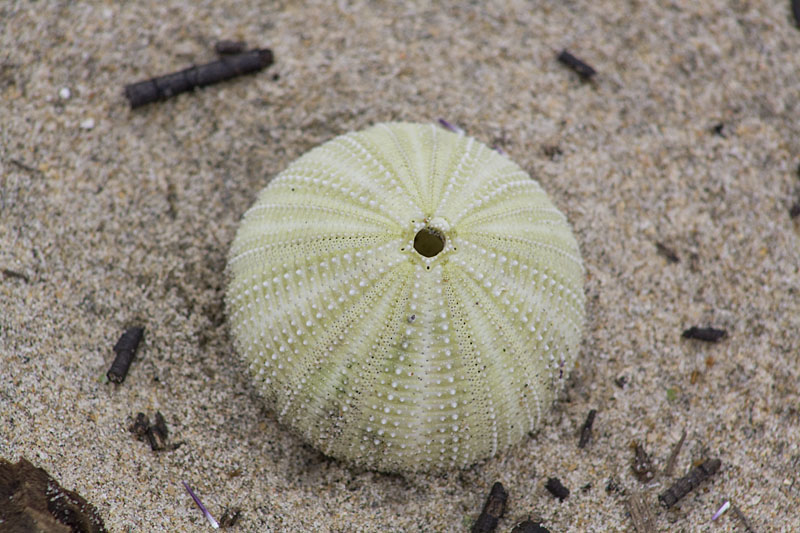
While combing the Marakkanam beach in Tamil Nadu, north of Pondicherry, Sahastra, Beej and I came across an object that was pale green and symmetrical, with bands radiating from a central orifice at the top.

Five white bands radiating from the centre can be seen

Being city-slickers from landlocked Bangalore our experience with the secrets of the sea was limited. So we searched our memories for names -- sea cucumbers, sea sponges... And then we got it right: Sea Urchins.

Sea Urchins are creatures of the phylum Echinodermata, which also constitute starfishes, sea cucumbers, etc. Echinoderms are spiny-skinned invertebrates that inhabit the ocean floor. Over 700 species of sea urchins have been recognized and we are not sure we can name what we saw.

Adult sea urchins have five-fold radial symmetry with a chitinous epidermis or outer covering. Spines protrude from this shell and are in some cases venomous.

The purple spines are clearly visible. When the creature was alive, the spines would have covered the entire surface of its skin
Sea Urchins use their tubed feet for locomotion. With these they move around and feed on algae/seaweed (especially brown algae, also called kelp), small invertebrates, etc. They tear up algae and plants using a special structure with teeth called the Aristotle's Lantern which is situated on the the underside. The larger opening on the underside is used for feeding and the smaller opening at the top is used to expel faecal matter.

The picture shows the upper part and the underside of Sea Urchins

Although many echinoderms reproduce asexually, sea urchins are dioecious (sexes being separate). They participate in mass spawning in which many individual animals release gametes (sperm and ova) into the water, and these fuse externally. Mass spawning improves the chances of fertilization.

In Japan, sea urchin roe (egg mass or spawn of crustaceans) is considered a delicacy. In other cultures they are eaten for supposed aphrodisiac properties.

Other than humans, sea urchins have a few natural predators in marine animals such as fish, sea otters (along the Pacific coast in California), etc. They in turn feed on algae, thereby maintaining a delicate balance between algal grazing and kelp forest productivity. In case this balance is tipped either way, entire reefs may be affected.

Text and photographs by Arun Menon

Photograph displaying upper part and underside of the sea urchin by Bijoy Venugopal


References:


ThinkQuest

Science magazine

Beachcombing - a littoral treasure hunt

A walk on the beach can yield untold treasures
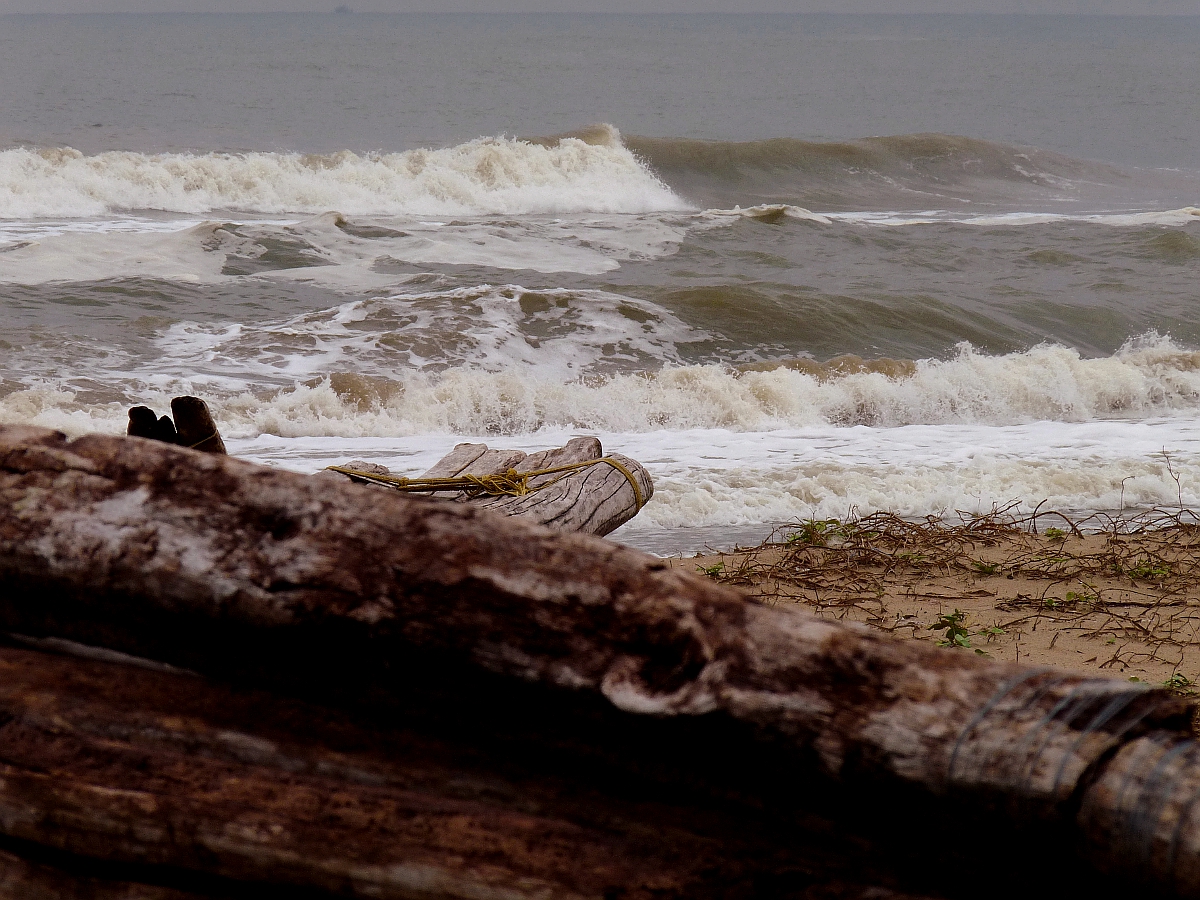
The beach on a wet, windswept day
Most people pick seashells on the seashore, and there's that old tongue-twirler about some old sheila selling them, too. Often, it's the smelliest, filthiest beaches littered with landmines of human dung that offer the happiest pickings, as long as you keep your fingers clean and your feet out of trouble. 

So it was when three out of four ogres went looking for waders beside an estuary. A little north of Kaliveli wetlands, near the village of Marakkanam north of Pondicherry, we found ourselves on a very picturesque beachhead. It was a blustering windswept day that threatened to blow our hopes away. 

It was a chaotic stretch of beach but fairly empty but for a few fisherfolk kids playing. The weather being most inclement, fishing boats were moored like cars jammed into a parking lot on a Saturday evening. A wash of seaweed stained the shore for its entire length and the sea spat gnashing waves in contempt. Occasionally a drift of rain carried to us like a fine spray and our optics, like the sand crabs scurrying about, were ever ready to duck back into their shelter. 

But there's that thing that Lady Luck does once in a way even when she's haunted by meteorological hormones – she smiles. 

But what a magnificent treasure trove it turned out to be! There was not a stretch of beach that wasn't littered with the bric a brac of the ocean. We felt like little boys all over again. And that's why the rest of our littoral treasure hunt is presented in pictures. I must add that but for a couple of sea urchin shells, we took no souvenirs. And yes, we left footprints.

A stain of spent seaweed

Pandora's vanity bag must have burst at the seams