We’ve moved! Here’s where you can find us

The Green Ogre is now at https://www.greenogreindia.org
Showing posts with label cicada. Show all posts

The Green Ogre Weekly Update July 3

What you missed while you were slaving away at the office

If your office blocks the beautiful Internet that lies outside of your work network, and if you're not too savvy about the whole proxy thing, you've probably missed out on an entire week's worth of The Green Ogre. Fret not, help is at hand. This weekly summary will bring you up to speed.

Our amazing Agumbe Diaries have revealed some lovely experiences from the Agumbe Rainforest Research Station, where we held the first Green Ogre Monsoon Conclave in June. Here's a summary of the week's best:
The Blue-eyed Bush Frog (Philautus neelanethrus) was unknown to science till 2007 when it was reported from the Sharavathi Valley. Out on a post-dinner amble at the Agumbe Rainforest Research Station, we were introduced to this intriguing but shy amphibian. It turned out that it was really the prince of frogs, and immensely kissable.

What's a rainforest without rain? Chicken Biriyani without chicken? Spending three full days in pouring rain didn't dampen our enthusiasm for it as we expected. In fact, when we came away we were Noahs after the flood, irked by anyone who complained about rain.


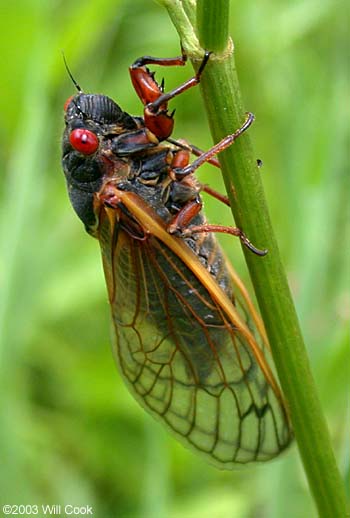
Ancient Greek poets compared cicadas to dulcet-voiced queens. But erm, only male cicadas sing. And they do mostly by day. So what was this one, which we met in Dandeli, doing out by himself so late at night? Curiouser and curiouser...
Yak, yak, yak! Sometimes it's important to shut up and let a photograph do the talking. And that's what we did on Wednesday. But hey, doesn't this picture inspire more conversation? Do slugs eat orchids? And what was the butterfly doing there? What kind of relationships do they share? So much for silence. Go on and leave a comment...


The most fascinating discoveries in a rainforest are often not the large animals but the tiny, elusive ones. If it weren't for Andy, we would have passed up this extraordinarily beautiful Malaysian Moon Moth. Interestingly, all this moth ever does in its adult life is sleep and make love. Now, we know a great many people who'd envy that – imagine just having to live on love and fresh air!

Birds in a rainforest are not easy to come by. You hear them all the time but the dense canopy and tangled understory keep them away from view. And so it was by sheer luck that we stepped into a forest glade when the rain took a break, and were treated to an amazing aerial acrobatic display by a Racket-tailed Drongo.

Look out for more good stuff next week!

The Cicada's Night Out

Cicadas are diurnal, so what was this one doing up late at night?


Lo! on the topmost pine, a solitary cicada
Vainly attempts to clasp one last red beam of sun.
- Unknown Japanese poet


Nearly everyone has heard cicadas but most people confuse their music (some think it is noise) with the nocturnal chatter of crickets and tree frogs. But there's an easy tip to never be mistaken again, for in most cases cicadas never sing at night. Unless perhaps they've had a bad day, or maybe if the moon is too full, or if artificial lighting so intensely mimics daylight.

Cicada music varies with the species but usually, it resembles a gradual crescendo of violas and violins played in shrill, frenetic unison. The sound has nothing to do with the cicada's mouth. Like all insects, it does not have vocal chords. So how does a cicada rustle up that loud, penetrating din? The sound one hears is made not by one cicada but by thousands of them. These forest fiddlers rub together their ribbed membranes, called tymbals, which envelop hollow abdominal chambers that amplify the noise. Some species have been measured at over 100 decibels.

And it's almost always a love song.

An obscure Greek ode, translated roughly, goes thus: “We call you happy, O Cicada, because after you have drunk a little dew in the treetops you sing like a queen.” Certainly, that Hellenic bard didn't mean Freddy Mercury? For notwithstanding the poetic license to ascribe femininity to any creature or thing that makes music, cicada musicians are males serenading their mates. Females, unlike in our species, are relatively quiet.

And it's not dew that cicadas drink but tree sap. They have mouthparts adapted for piercing and more than a few people have complained that they've been bitten. Odd, because cicadas have no need for blood – they'd probably die of indigestion or food poisoning if they consumed it. Neither are they unreasonably aggressive. The only plausible reason is that the hungry cicada mistook the victim for a tree. Or it could be a case of mistaken identity – they were probably stung by the Cicada Killer Wasp, which predates on cicadas.

I've had many close encounters with cicadas since childhood when I used to wander about groves and grope the barks of avenue trees to locate the source of the phantom noise. But they were all daytime encounters. A couple of months ago, on a visit to the Kulgi Nature Camp in Dandeli, we were ambling about after dinner in pitch darkness with only the cold white beam of our headlamps illumining the path ahead. Suddenly, one of us stepped on something and it made an angry buzzing noise, prompting the offender to spring back in shock. Curious to know what it was, we shone our lights on it and the grumpy fellow buzzed a little more.

It was a cicada, but how very unusual to discover it at night. Now, now, do cicadas have a night life? Was he exiled, like Cacophonix, from the great village banquet? Or had some visitors from Bangalore taken the infectious BPO lifestyle a little too far? Or maybe it just fell off a tree?

We had no clear idea. So we took some pictures and let the guy go. Have you any theories or explanations of the cicada's night out? We'll be glad and grateful for any information you can share.

Text and photo by Beej

RIP Charles Lee Remington


The man whose breath is the breathing of small white butterflies...
- Erica Jong, The Man Under the Bed


It's not often that we see the Page Three element in the life of a biologist elbowing into the foreground. But more people are likely to remember Charles Lee Remington for his association with Lolita author Vladmir Nabokov than for his path-breaking evolutionary study of butterflies. Or for his patient longitudinal study of the Magicicada (including an account of its taste, which he described as akin to good venison). Some that worked with him may remember his ties. Flutter on into the afterlife, Prof. 


Image: http://www.carolinanature.com