 |
| From left to right: Arun Menon, Sahastrarashmi, Sandeep Somasekharan, Bijoy Venugopal, Jennifer Nandi, Anand Yegnaswami and Jagadeesh Seshadri |

Showing posts with label the green ogre. Show all posts
Showing posts with label the green ogre. Show all posts
The Green Ogre Autumn Conclave - Dandeli, October 2011
The September Wallpaper - yours to download and flaunt!
Sandeep Somasekharan presents the September wallpaper. Put this thirsty Purple-rumped Sunbird on your desktop.

Download this file and make it your desktop calendar
Disclaimer: This Green Ogre free download is hosted at File Factory, a third-party file storage service. For reasons best known to your ISP or your employer, depending on where you are accessing this page from, you may or may not be able to download the file. If you manage to download it at first go, thumbs up! If not, we encourage you to keep trying from various locations. You don't have to be a paid subscriber to download the file. Ignore all the promotional stuff at the top of the page, scroll down and choose the SLOW DOWNLOAD option. Paid subscribers are offered faster downloads while unsubscribed or free users will have to wait for a few seconds before downloading. Do not let this thwart your quest. Enjoy!
Disclaimer: This Green Ogre free download is hosted at File Factory, a third-party file storage service. For reasons best known to your ISP or your employer, depending on where you are accessing this page from, you may or may not be able to download the file. If you manage to download it at first go, thumbs up! If not, we encourage you to keep trying from various locations. You don't have to be a paid subscriber to download the file. Ignore all the promotional stuff at the top of the page, scroll down and choose the SLOW DOWNLOAD option. Paid subscribers are offered faster downloads while unsubscribed or free users will have to wait for a few seconds before downloading. Do not let this thwart your quest. Enjoy!
The Green Ogre Weekend Update August 7
It's been a high traffic week at The Green Ogre. This week we gave away our first freebie -- a wallpaper download that doubles as an August calendar. Got it yet?

Snakes have always got the wrong end of the stick. So it was with trepidation (for the snake, of course) that I watched the movements of one in my yard. First, it attempted to climb a coconut tree and then hid amid a pile of pipes just a few feet away from the toiling gardener.
Was it a cobra or a rat snake? Who would have cared before killing it? On that note, would you trust a snake?
MORE >
 Vultures are the most misunderstood of birds despite the fact that Hindu mythology associates them with virtue rather than evil. Ramanagara, near Bangalore, has become something of a shrine for vulture-watchers in the last decade that various Gyps species have been driven to the brink by the ill-effects of the veterinary drug Diclofenac. However, signs are not good. Instead of declaring the granite monoliths a protected area, the authorities have allowed private builders to develop property there. What this holds for vultures is uncertain. Our callousness has already led to a huge decline in their numbers. What next?
MORE >
 My review of Nirmal Kulkarni's The Goan Jungle Book appears in this month's issue of Outlook Traveller. When I received the book for review, my first thought would have been "Okay, here's another naturalist having a go at celebrity" if I didn't already know of Kulkarni and his work. Some of you might know that he's a director of Wildernest, the eco-retreat in Goa. This book offers an honest and sincere view of small life like weaver ants and caecilians, told in the manner of a series of blog posts sans editorial fuss or scholarly pretensions. And the best part is that it is self-published.
MORE >

Trees have a way of inhabiting our imagination unlike any other living creature. In profiling the Red Cassia for The Green Ogre, Sahastrarashmi summoned up the most aesthetically inclined of his muses and let her run riot in his head. What we have is an intimate and tender portrayal of this seasonally blooming avenue tree, illustrated with photographs whose charm even paintings cannot paraphrase.
MORE >
Look out for more good stuff next week. And do your part, dear reader, by introducing your friends to the pleasures of The Green Ogre.

Snakes have always got the wrong end of the stick. So it was with trepidation (for the snake, of course) that I watched the movements of one in my yard. First, it attempted to climb a coconut tree and then hid amid a pile of pipes just a few feet away from the toiling gardener.
Was it a cobra or a rat snake? Who would have cared before killing it? On that note, would you trust a snake?
MORE >
MORE >

MORE >
Trees have a way of inhabiting our imagination unlike any other living creature. In profiling the Red Cassia for The Green Ogre, Sahastrarashmi summoned up the most aesthetically inclined of his muses and let her run riot in his head. What we have is an intimate and tender portrayal of this seasonally blooming avenue tree, illustrated with photographs whose charm even paintings cannot paraphrase.
MORE >
Look out for more good stuff next week. And do your part, dear reader, by introducing your friends to the pleasures of The Green Ogre.
Download the Green Ogre August wallpaper
Sandy has been mulling over offering free wallpapers for a while and here's his first gift to all Green Ogre readers. He made it one step better -- these wallpapers double as calendars. Go to the link below and download the first one -- for August.

Spotbill Ducks (Anas poecilorhyncha) take to the skies. Although the most common of our resident duck species, they are threatened by the loss of wetlands to development and urbanization.

Spotbill Ducks (Anas poecilorhyncha) take to the skies. Although the most common of our resident duck species, they are threatened by the loss of wetlands to development and urbanization.
Photo: Sandeep Somasekharan
Download this file and make it your desktop calendar
Disclaimer: This Green Ogre free download is hosted at File Factory, a third-party file storage service. For reasons best known to your ISP or your employer, depending on where you are accessing this page from, you may or may not be able to download the file. If you manage to download it at first go, thumbs up! If not, we encourage you to keep trying from various locations. Paid subscribers are offered fast downloads while unsubscribed or free users have to wait before downloading. Do not let this thwart you. Enjoy!
Download this file and make it your desktop calendar
Disclaimer: This Green Ogre free download is hosted at File Factory, a third-party file storage service. For reasons best known to your ISP or your employer, depending on where you are accessing this page from, you may or may not be able to download the file. If you manage to download it at first go, thumbs up! If not, we encourage you to keep trying from various locations. Paid subscribers are offered fast downloads while unsubscribed or free users have to wait before downloading. Do not let this thwart you. Enjoy!
The Green Ogre Weekend Update July 31
Alaska, Gaia and birds whose presence is dwarfed by their voices -- that's what The Green Ogre was all about this week
It's the last day of July with the monsoon still in full force over the subcontinent. In the rainforests of Agumbe, the frogs must still be calling, their trails of spawn must have hatched into little tailed tadpoles, and the snakes must be making merry at the abundance of chow. Over in Bangalore, pelicans have joined cormorants and herons in our lakes, feasting on the seasonal glut of fish. And here at The Green Ogre, we've been housebound, office-bound and our mindwalks have been extra vivid with the afterglow of unrealised dreams. The bright side: deprived of the outdoors, we sat down to write.

Andy recalled his ramble through Alaska's Denali National Park and his encounters with moose, elk, caribou and grizzlies. In weather that was all but conducive to hiking, his friends and he flirted with the possibility of catching a glimpse of the mist-shrouded Mount Denali. Interestingly, they drove through the city of Wasilla on the same night that its former mayor and Alaska's then governor Sarah Palin was announced as John McCain's running mate in the 2008 US Presidential Election.

On Tuesday the birds came back to The Green Ogre. Recollecting a drive through his native land of Rae Bareli before the birding bug had bitten him, Sahastra described in all self-deprecation his first encounter with the Rufous-tailed Shrike. Many passers-by must have walked past the bird that day without as much as glancing at it. However, to a birder, its presence there at that time of the year was an epiphany: it was way out of its known range. Such are the serendipitous joys that await the birdwatcher, even in his or her backyard.
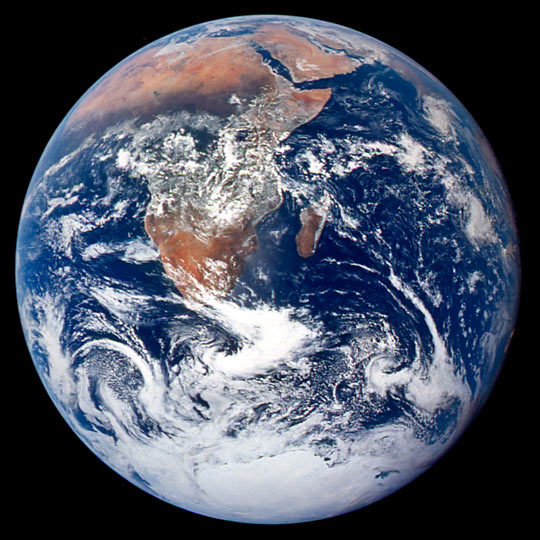
July 26 was the 92nd birthday of James Lovelock, who proposed the enchantingly controversial Gaia hypothesis. Offering an appreciation of the man and his work, Sahastra wrote: "Gaia as an idea has both scientific and spiritual sides. This is welcome since it helps us connect science to worldliness and makes us feel complete again. Many paint James Lovelock as a hermit scientist who never followed institutional science, has no specialization and worked in a remote corner of the British countryside rather than in a state-of-the-art lab. Lovelock said that it is precisely due to these attributes that he could think large, be moved by his own curiosity and inspiration and break the boundaries between disciplines. Eventually, inspired by the first space images of the beautiful blue planet with swirling clouds, he was able to theorize the self-regulation of Earth – true to his instinct, he called it a living earth."

Among the most commonly heard but ignored birds of our urban landscape is the Coppersmith Barbet. Its penetrating took-took call is an indelible constituent of park birdsong. Indeed, the Coppersmith's penchant for monotony makes it the heavy metal percussionist of bird songsters. How much have you seen of the little bird, though? Take a good look, for Sandy has an excellent photographic profile of this little whiskered noisemaker.
Look out for more good stuff next week. Enjoy your weekend!
The Green Ogre Weekend Update July 24
Last week the birds returned to The Green Ogre, though we have been feasting on frogs and snakes after our Agumbe conclave and continued to lick our fingers into the week that was
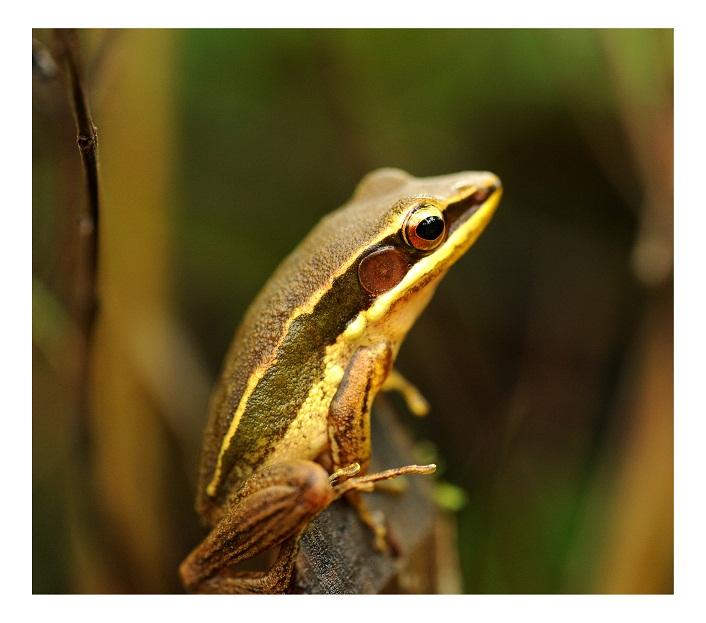 |
| The Golden Frog |
 |
| The Golden Frog (right) poses for an ardent admirer |
MORE >
 |
| Matsuo Basho's frog haiku (via Geishablog) |
 |
| Caecilian, you're breaking my heart! |
At Agumbe we had the fortune of meeting the Bombay Caecilian, a purplish-black serpentine amphibian with moist, mucous-coated skin, thanks to the ARRS station manager Prashant. It was the experience of a lifetime.
MORE >
On Wednesday, the birds returned wordlessly to The Green Ogre, with Sandy showing us his picture of Racket-tailed Drongos on a monsoon date. Reminded me of that faux Japanese proverb from You Only Live Twice, quoted by Sean Connery playing 007: "Bird never make nest in bare tree."
 |
| The beautiful Nilgiri Flycatcher |
MORE >
 |
| The common Sand Boa that was saved from becoming a roadkill |
MORE >
Look out for more interesting posts next week. Enjoy your weekend (or what's left of it)!
The Green Ogre Weekend Update July 10
If you've missed anything this week, the weekend edition of The Green Ogre should sort you out...
I've been away on a family vacation most of last week, soaking up the monsoon in south Goa. Rain-washed Goa is refreshing. The Western Ghats slope down in a verdant riot that skids to a stop beside the ocean, buffered only by deserted beaches of soaked, clingy sand. Butterflies, dragonflies and birds were everywhere. Despite a domestic ban on birding, I sneaked sly glances at stork-billed kingfishers, prinias, spotted munias, black drongos and even a crimson sunbird that dropped by the hotel garden to say hello as I was dunking my daughter in the pool. Gorgeous, I say. And now, having returned sufficiently vindalooed, balchaoed, rechaedoed and bibincaed, I'm pleasantly surprised to see that my fellow-Ogres have been hacking away.
 This week, we continued our Agumbe Diaries and presented more finds from our sojourn in that neck of the deep, dark woods. On Monday, Sahastra introduced us to the Bicoloured Frog, one of the most attractive creatures to hop on the forest floor. In fact, if you're not watchful, you might mistake it for the forest floor itself.
MORE> Sex is always a subject for steamy discussion. Despite Sandy's depraved jokes about the amatory pursuits of frogs, I gleaned some wisdom from watching all sorts of creatures in love. Dragonflies interlocked in subtle arcs as they mated on twigs. Grasshoppers and bush crickets carried on unabashed, hopping away together only when we almost crushed them underfoot. Lesser Whistling Ducks wheeled in the air, piping joyously, while Rufous Woodpeckers introduced new mates to the treasure trove of ants' nests in the treetops. Love was so in the air, and so inspired were we by monsoon mating mania that that we shot like zoopornographically obsessed paparazzi.
MORE>
 Having said too much already, and having pushed this blog to the brink of NSFW-ness, we thought it best to clam up on Wednesday. But then, Arun's busy frame of mud-puddling lime butterflies raised so many curious eyebrows and engendered a spate of new questions.
 Dung Beetles aren't the most charismatic of insects. They are dark, round, fat and inconspicuous except when they whir absent-mindedly past your ears or crash dizzily into lamps at night. Worse, their crappy lives revolve around what other animals leave behind. But then again, rain affords you the luxury of time. Time enough to stop and stare at a cow pat for five hours, and we were amazed at how a Dung Beetle made short work of it. Andy essayed this ode to the lowly dung-muncher.
MORE>
 Last Day's Luck is a phenomenon that has mystified most nature-walkers. After three days at Agumbe we had heard so much about snakes that we expected them to stalk us from every bush and tree stump. No such luck. And then, a few hours before we were to depart, a Green Vine Snake showed up and allowed us the luxury of a long, relaxed photo-session.
MORE>

Among things that crawl, snakes scare the mojo out of most people. And a leaping frog has been known to turn dull altos into shrieking sopranos. But leeches?! Those eyeless, elastic strips of skin that crawl the mulchy rainforest floor? Sandy is so terrified of leeches that he gave us a hard time on the trip, repeatedly checking under our feet and rushing off unannounced into the bathroom to strip himself down for vainglorious de-leeching attempts. He refused to cross a stream and enter the dark rainforest for fear of his wetting his shoes -- later, when we returned from the walk soaked in rain and bristling with living leeches, he looked relieved that Fate hadn't picked him for that brief adventure. Leechophobia drove Sandy to such a paroxysm of panic that he wrote a fantasy-laced opus on these bloodsucking monsters.
MORE>
That's your weekend edition of The Green Ogre. Enjoy!
I've been away on a family vacation most of last week, soaking up the monsoon in south Goa. Rain-washed Goa is refreshing. The Western Ghats slope down in a verdant riot that skids to a stop beside the ocean, buffered only by deserted beaches of soaked, clingy sand. Butterflies, dragonflies and birds were everywhere. Despite a domestic ban on birding, I sneaked sly glances at stork-billed kingfishers, prinias, spotted munias, black drongos and even a crimson sunbird that dropped by the hotel garden to say hello as I was dunking my daughter in the pool. Gorgeous, I say. And now, having returned sufficiently vindalooed, balchaoed, rechaedoed and bibincaed, I'm pleasantly surprised to see that my fellow-Ogres have been hacking away.

MORE>

MORE>

MORE>

MORE>
Among things that crawl, snakes scare the mojo out of most people. And a leaping frog has been known to turn dull altos into shrieking sopranos. But leeches?! Those eyeless, elastic strips of skin that crawl the mulchy rainforest floor? Sandy is so terrified of leeches that he gave us a hard time on the trip, repeatedly checking under our feet and rushing off unannounced into the bathroom to strip himself down for vainglorious de-leeching attempts. He refused to cross a stream and enter the dark rainforest for fear of his wetting his shoes -- later, when we returned from the walk soaked in rain and bristling with living leeches, he looked relieved that Fate hadn't picked him for that brief adventure. Leechophobia drove Sandy to such a paroxysm of panic that he wrote a fantasy-laced opus on these bloodsucking monsters.
MORE>
That's your weekend edition of The Green Ogre. Enjoy!
The Green Ogre Weekly Update July 3
What you missed while you were slaving away at the office
If your office blocks the beautiful Internet that lies outside of your work network, and if you're not too savvy about the whole proxy thing, you've probably missed out on an entire week's worth of The Green Ogre. Fret not, help is at hand. This weekly summary will bring you up to speed.
Our amazing Agumbe Diaries have revealed some lovely experiences from the Agumbe Rainforest Research Station, where we held the first Green Ogre Monsoon Conclave in June. Here's a summary of the week's best:

The Blue-eyed Bush Frog (Philautus neelanethrus) was unknown to science till 2007 when it was reported from the Sharavathi Valley. Out on a post-dinner amble at the Agumbe Rainforest Research Station, we were introduced to this intriguing but shy amphibian. It turned out that it was really the prince of frogs, and immensely kissable.

What's a rainforest without rain? Chicken Biriyani without chicken? Spending three full days in pouring rain didn't dampen our enthusiasm for it as we expected. In fact, when we came away we were Noahs after the flood, irked by anyone who complained about rain.

Ancient Greek poets compared cicadas to dulcet-voiced queens. But erm, only male cicadas sing. And they do mostly by day. So what was this one, which we met in Dandeli, doing out by himself so late at night? Curiouser and curiouser...

Yak, yak, yak! Sometimes it's important to shut up and let a photograph do the talking. And that's what we did on Wednesday. But hey, doesn't this picture inspire more conversation? Do slugs eat orchids? And what was the butterfly doing there? What kind of relationships do they share? So much for silence. Go on and leave a comment...

The most fascinating discoveries in a rainforest are often not the large animals but the tiny, elusive ones. If it weren't for Andy, we would have passed up this extraordinarily beautiful Malaysian Moon Moth. Interestingly, all this moth ever does in its adult life is sleep and make love. Now, we know a great many people who'd envy that – imagine just having to live on love and fresh air!

Birds in a rainforest are not easy to come by. You hear them all the time but the dense canopy and tangled understory keep them away from view. And so it was by sheer luck that we stepped into a forest glade when the rain took a break, and were treated to an amazing aerial acrobatic display by a Racket-tailed Drongo.
Look out for more good stuff next week!
It's raining in the rainforest!
After a long, wet, leech-infested weekend in the rainforest, you return like Noah after the flood, intolerant of anyone complaining about rain
Watch out for more Agumbe Diaries!
Text and photos by Sandeep Somasekharan. All rights reserved.

|
| It doesn't rain in the rainforest, it pours! |
Alighting at Agumbe bus stand on the first day of our planned three-day expedition, what met our eyes was a thick layer of mist that shrouded the sleepy town. Wherever you looked, all you saw was mist. The reaction from the photographer within me, seeing the bleakness around, was not dissimilar to that of the penguins in Madagascar alighting at Antarctica and regarding the emptiness around them: "Well, this sucks!" It looked pretty certain that the entire trip was going to be what we shutterbugs call a "High-ISO" trip - cranking up the sensitivity of our camera sensors to get sharp shots in low light (and invariably ending up with noisy images).
 |
| Arecanut trees stand guard in the mist like ghostly soldiers |
But then, a little introspection made me open up (as well as brighten up) a little. I have never been in a rainforest in such pristine condition. It was bound to be dripping wet, slushy and depressing but I would never get to see such rain anywhere - Agumbe is the rainiest place in south India and just trails Cherrapunji and Mawsynram with respect to the volume of rain that it receives. So I let the apprehensions drop and walked into the mist and set my first foot on the leech-infested road bordering the Agumbe Rainforest Research Station. The vertical embankments on either side of the cut-out mud road sprouted moss and ferns. Even trees had moss all over their trunks.
 |
| The whole place just throngs with life |
The sky was almost permanently cloudy. Not a single ray of sun shone through. Rain and mist took turns to mate with the landscape. And it was green all around - olive-green, dark green, bright-green, bottle green, emerald green and dung green. The ground looked like it was saturated from beneath and was sweating at the surface, even when it did not rain. Sunlight probably never got to kiss the floor in these parts. There was leaf litter from the trees in various stages of decomposition all around, and we took care not to step on it -- as curled up in there might be foul-tempered Hump-nosed Pit Vipers (Hypnale hypnale), or (worse?) leeches.


Siddharth Rao, the director of ARRS, warned us on the dos and don'ts before we started our stroll. "And yes," he added, "Watch out for falling trees."
Andy was curious. "What kind?"
Siddharth replied, "Every kind..."
And we saw quite a few of them had fallen. It looked like the excess of water and moisture everywhere had infiltrated through the bark and into the kernel of the wood, softening it from within, making it rot and snap at the touch of the gentlest of winds.
 |
| Despite falling, life still manages to cling on... |
After the first day, when we waited for breaks in the rain, we just accepted them as a part of the package. We strolled around, drizzle notwithstanding, just ensuring that our cameras weren't soaked. When it rained, there was running water everywhere. Tiny streams flowed along the paths and would get isolated into puddles when the rains paused. Large drops of water would bomb down still, from the thick canopy above, many minutes past the showers. Drops of water clung to everything - spiderwebs, leaves, fruits, branches and insects.
 |
| Wild berries dripping with fresh raindrops |
Incredibly, despite all the rain, it was not cold, just moist. You could reach out and grab moisture from the air. Winds were gentle, just the kind that would rustle leaves and ruffle your hair.
 |
| Every strand of this spiderweb was threaded with pearly water-drops |
The nights were even more amazing. All kinds of croaks -- loud, shrill, ringing, hollow -- resounded as frogs called out to each other, the sounds echoing off the membrane walls of the bubbles under their chins.
 |
| A white nosed bush frog suddenly finds itself in the spotlight... |
A silly jingle that I made up for myself "It's raining in the rainforest" looped in my head all through the trip. And once outside the forest and back in Mysore, I was irked at people making the slightest crib about a drizzle. I was Noah after the flood...
 |
| One hundred percent attendance at the first Green Ogre Monsoon Conclave. L-R: Beej, Sahastra, Sandy, Andy and Arun |
Text and photos by Sandeep Somasekharan. All rights reserved.
Dads we love wildly
On Father's Day, we raise a toast to the best animal dads, but our top contender isn't a bird!
It might be just another Hallmark card red-letter day, but Father's Day means a lot to us Ogres. And not just because we hold our own dads in great esteem. While motherlove dominates the wild world, there are a few notable exceptions among animal fathers who shine bright. Here's our pick of the Top 6. You're free to argue or disagree, but do leave a comment if you'd like to split hairs, or have a bone or feather to pick.
 If this were a gallop poll, those delicate little fish known as seahorses would have breasted the ribbon without challenge. When it's time to make more little seahorses (or sea-foals, should we say?), dad-to-be and mom-to-be the male waltz intimately for about eight hours before the female lays about a thousand eggs in the male's brood pouch. The male fertilizes the eggs by releasing his sperm into the surrounding water and then releases the hormone prolactin (which, in mammals, induces the production of milk). The eggs hatch inside the pouch and the young swim away, and with that the seahorses' parental responsibility comes to an end.
Seahorses are threatened by over-fishing and collecting for ornamental aquariums. The biggest threat comes from Chinese epicureans who believe that eating seahorses (often on a skewer or in soups) has aphrodisiac properties.
2. Greater Painted Snipe
 Polyandrous female Greater Painted Snipes are the epitome of women's lib. Brightly coloured and aggressive, they court drab, dowdy males. Once they're through with the formalities, they lay their eggs and move off to repeat the show with another male. The males incubate and hatch the eggs, teach the chicks to forage and then shoo them off to lives of their own. Once the nest is empty and the breeding season is back on the calendar, it's time for papa Painted Snipe to come into his own all over again.
3. Indian Eagle Owl
 Look into the deep amber eyes of the Indian Eagle Owl. Does he look like he has a chip on his shoulder? Not surprising, for he's not exactly your lovey-dovey kind of papa but the strong, silent, responsible type with exemplary family values. A tad conservative, but a swell guy in the final analysis.
The male Eagle Owl has his act cut out: He goes about aggressively defining his territory in the best real estate he can find, then attracts a suitable mate and provides for her as she incubates their eggs. Once the eggs hatch, he steps up the hunt, cleaning up every furball in the vicinity to nourish his hungry, greedy and fast-growing little ones. He also joins his mate in teaching the fluffy, gauche young things to fend for themselves. And when it's all done, it's time to repeat it all over again!
4. Ostrich
 When the male ostrich fights off competitors to cobble together a harem of five to six females, he is taking on an enormous responsibility that few of us would envy. Once done with the amorous preliminaries, the females get down to business. The male does the dirty work, scraping a pit in the ground that can be up to two feet wide and ten feet wide. In this large communal nest, the pregnant females lay their eggs. The hens incubate the eggs during the day when their drab plumage blends perfectly with the sand. In the dangerous dark of the night, the dark-coloured male takes over. Hunched over the nest in the dark, he is almost impossible to see. Once the eggs hatch, he teaches the chicks to feed and defends them against predators. A kick from his powerful legs, tipped with two sharp claws, has been known to kill lions. This guy is a macho dad all the way.
4. Weaverbird
 Apart from the usual stuff, stability and security are two traits that females of the species have always sought in males. Real estate and housing are huge concerns among some birds, the male weaverbird's badge of courage is his ability to build a nest that can win his lady's approval. When the first rains arrive, he singles out the best blades of grass and weaves his nest while the strands are still moist. As they dry they stiffen into the shapes he has envisioned.
The female, true to character, is a picky customer, and she will reject outright a nest that doesn't appeal to her aesthetic tastes. Perhaps she also inspects the nest for stability, protection from predators and weather, and she ends up rejecting many half-built nests. But Bob the Builder persists until he has built the heart-stopper of nests. And then, mama and papa raise their brood in the comfort of the nest that won the Good Housekeeping Award for Birds.
5. Hornbill
 Male hornbills of nearly all species bear an enormous burden. Mostly, he and his chosen mate pair for life. When they are ready to start a family, they single out a good-sized hollow in an old forest tree.
The female enters the hollow, sheds most of her feathers (possibly to line the nest), and the male imprisons her inside by sealing the opening with mud. He then leaves the mother-to-be and her eggs to forage. He makes several trips a day, clattering his bill and making the hills reverberate with his honking call. Once the eggs hatch and the young are ready to fledge, the male unseals the nest.
In the event that he is killed during the nesting period, both the female and his brood will starve to death. Just imagine the anxieties faced by single-income families.
Photos: Wikimedia Commons (Seahorse, Greater Painted Snipe and Ostrich). Pictures of Indian Eagle Owl and Weaverbird by Sandeep Somasekharan and Malabar Pied Hornbill by Arun Menon.
Text by Beej
Read more about:
Indian Eagle Owls
Weaverbirds
Malabar Pied Hornbills
It might be just another Hallmark card red-letter day, but Father's Day means a lot to us Ogres. And not just because we hold our own dads in great esteem. While motherlove dominates the wild world, there are a few notable exceptions among animal fathers who shine bright. Here's our pick of the Top 6. You're free to argue or disagree, but do leave a comment if you'd like to split hairs, or have a bone or feather to pick.
1. Seahorse
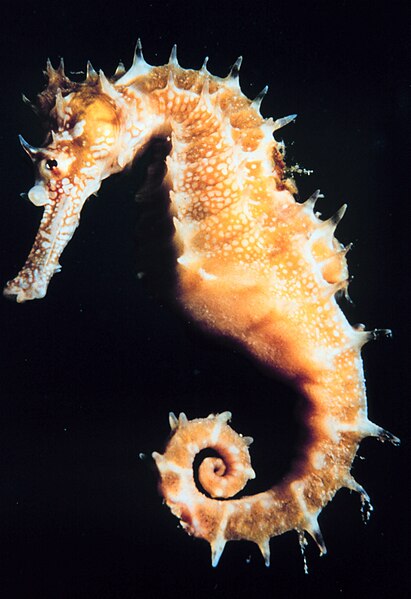
Seahorses are threatened by over-fishing and collecting for ornamental aquariums. The biggest threat comes from Chinese epicureans who believe that eating seahorses (often on a skewer or in soups) has aphrodisiac properties.
2. Greater Painted Snipe

3. Indian Eagle Owl

The male Eagle Owl has his act cut out: He goes about aggressively defining his territory in the best real estate he can find, then attracts a suitable mate and provides for her as she incubates their eggs. Once the eggs hatch, he steps up the hunt, cleaning up every furball in the vicinity to nourish his hungry, greedy and fast-growing little ones. He also joins his mate in teaching the fluffy, gauche young things to fend for themselves. And when it's all done, it's time to repeat it all over again!
4. Ostrich

4. Weaverbird

The female, true to character, is a picky customer, and she will reject outright a nest that doesn't appeal to her aesthetic tastes. Perhaps she also inspects the nest for stability, protection from predators and weather, and she ends up rejecting many half-built nests. But Bob the Builder persists until he has built the heart-stopper of nests. And then, mama and papa raise their brood in the comfort of the nest that won the Good Housekeeping Award for Birds.
5. Hornbill

The female enters the hollow, sheds most of her feathers (possibly to line the nest), and the male imprisons her inside by sealing the opening with mud. He then leaves the mother-to-be and her eggs to forage. He makes several trips a day, clattering his bill and making the hills reverberate with his honking call. Once the eggs hatch and the young are ready to fledge, the male unseals the nest.
In the event that he is killed during the nesting period, both the female and his brood will starve to death. Just imagine the anxieties faced by single-income families.
Photos: Wikimedia Commons (Seahorse, Greater Painted Snipe and Ostrich). Pictures of Indian Eagle Owl and Weaverbird by Sandeep Somasekharan and Malabar Pied Hornbill by Arun Menon.


Text by Beej
Read more about:
Indian Eagle Owls
Weaverbirds
Malabar Pied Hornbills
The First Green Ogre Monsoon Conclave at ARRS, Agumbe
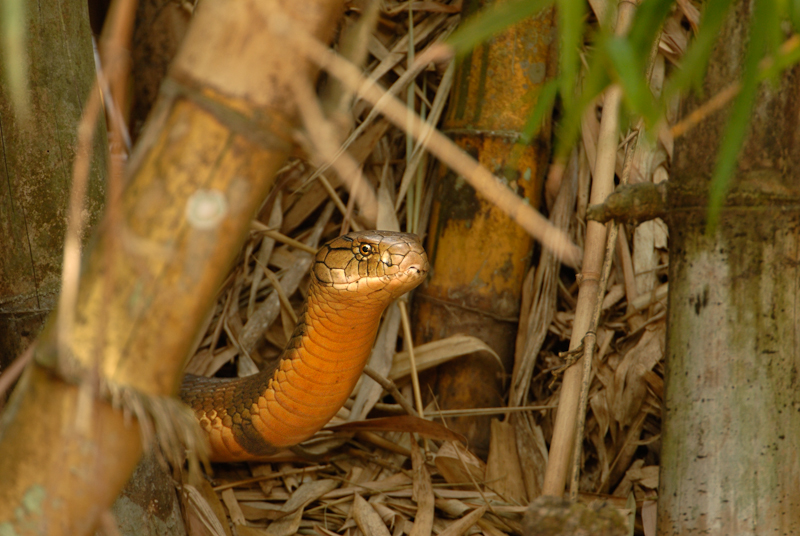
If all goes well, The Green Ogre will hold its first-ever Monsoon Conclave at the Agumbe Rainforest Research Station from Saturday through Monday. Conclave is actually a dignified and rather hyperbolic term that describes the rare opportunity when all four (and now five) of us get together. Weather and luck permitting, Arun, Sahastra, Sandy, Andy and I hope to return with some splendid documentation in words and pictures from southern India's most well-watered region.
Agumbe, in Shimoga district of Karnataka, receives approximately 301 inches of rainfall annually. The region is well studied by the Rainforest Research Station set up by "snakeman" Romulus Whitaker to study the King Cobra. We hope to be granted an audience with the King and sundry other subjects.
For more information, visit the ARRS website
Image: King Cobra at Agumbe by Kalyan Varma/Wikimedia Commons. This file is licensed under the Creative Commons Attribution 3.0 Unported license

It's Hornbill Week at The Green Ogre!

Monday through Friday, we explore hornbills and their habitats at The Green Ogre

Hornbills are intriguing birds. You can never forget your first sighting of one, however uncharismatic the species. Charisma, by the way, is a misleading word, for all of us at The Green Ogre are crazy about hornbills. We have travelled far and wide to see them -- Arunachal Pradesh, Valparai, Parambikulam, Periyar, Pachakkanam, Mysore, Rae Bareli, Dandeli... the list of places where we have spotted and enjoyed hornbills is exhaustive. It's time for us now to celebrate our passion and share it with you, dear reader, and to reel you into the awe-inspiring and humbling world of these wondrous birds.
Monday, May 16 through Friday, May 20 we carry a special series on hornbills and their habitats. If you haven't bookmarked The Green Ogre already, explore the various ways in which you can do so -- subscribe to our feed, follow this blog (Blogger and Google) or like us on Facebook. You can even follow us on NetworkedBlogs. All of these options are available on our sidebar.
But we digress... this is Hornbill Week. So pick up your virtual field glasses and join us on an exploration of these fantastic birds all week long. You'll learn to love them like we do!
Photograph: Sandeep Somasekharan
All rights reserved
Like The Green Ogre? Show your allegiance on Facebook!

Since The Green Ogre became a group blog last month we have been getting a fair bit of eyeballs. Our Facebook page, started last weekend, has already enlisted a few "likers". We have a lot more to offer here -- photo albums, discussions, videos, etc. And the opportunity to share your own stuff. We'd love for you to join us! Start here
The Green Ogre is four times stronger

To wit, The Green Ogre has now become a group blog. Let me introduce our new contributors:


Sandeep Somasekharan: Sandy to his friends, he is a crack shot in the field. As a birder, he is smitten with raptors. I have used his photographs in my Encounter series for a long time. Sandy works with Infosys in Mysore and I met him first on the company's Green Team email group. He joined me on a trip to BR Hills and has since been in my inner circle of birding pals.

Thanks, gentlemen, for your support to The Green Ogre. Let's party!
- Beej
Subscribe to:
Posts (Atom)