We’ve moved! Here’s where you can find us

The Green Ogre is now at https://www.greenogreindia.org
Showing posts with label Malabar Pied Hornbill. Show all posts

Dads we love wildly

On Father's Day, we raise a toast to the best animal dads, but our top contender isn't a bird!


It might be just another Hallmark card red-letter day, but Father's Day means a lot to us Ogres. And not just because we hold our own dads in great esteem. While motherlove dominates the wild world, there are a few notable exceptions among animal fathers who shine bright. Here's our pick of the Top 6. You're free to argue or disagree, but do leave a comment if you'd like to split hairs, or have a bone or feather to pick.

1. Seahorse
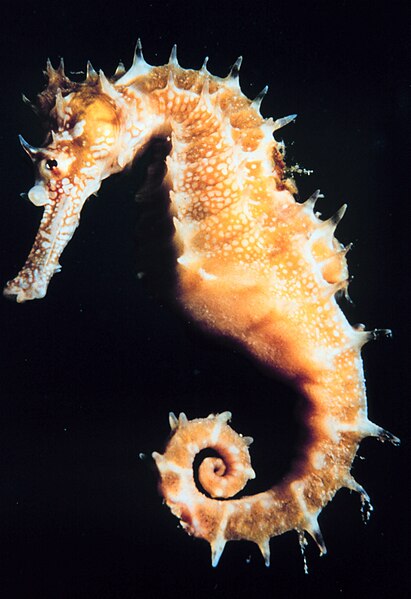
If this were a gallop poll, those delicate little fish known as seahorses would have breasted the ribbon without challenge. When it's time to make more little seahorses (or sea-foals, should we say?), dad-to-be and mom-to-be the male waltz intimately for about eight hours before the female lays about a thousand eggs in the male's brood pouch. The male fertilizes the eggs by releasing his sperm into the surrounding water and then releases the hormone prolactin (which, in mammals, induces the production of milk). The eggs hatch inside the pouch and the young swim away, and with that the seahorses' parental responsibility comes to an end. 


Seahorses are threatened by over-fishing and collecting for ornamental aquariums. The biggest threat comes from Chinese epicureans who believe that eating seahorses (often on a skewer or in soups) has aphrodisiac properties.


2. Greater Painted Snipe
Polyandrous female Greater Painted Snipes are the epitome of women's lib. Brightly coloured and aggressive, they court drab, dowdy males. Once they're through with the formalities, they lay their eggs and move off to repeat the show with another male. The males incubate and hatch the eggs, teach the chicks to forage and then shoo them off to lives of their own. Once the nest is empty and the breeding season is back on the calendar, it's time for papa Painted Snipe to come into his own all over again.


3. Indian Eagle Owl
Look into the deep amber eyes of the Indian Eagle Owl. Does he look like he has a chip on his shoulder? Not surprising, for he's not exactly your lovey-dovey kind of papa but the strong, silent, responsible type with exemplary family values. A tad conservative, but a swell guy in the final analysis.


The male Eagle Owl has his act cut out: He goes about aggressively defining his territory in the best real estate he can find, then attracts a suitable mate and provides for her as she incubates their eggs. Once the eggs hatch, he steps up the hunt, cleaning up every furball in the vicinity to nourish his hungry, greedy and fast-growing little ones. He also joins his mate in teaching the fluffy, gauche young things to fend for themselves. And when it's all done, it's time to repeat it all over again!


4. Ostrich
When the male ostrich fights off competitors to cobble together a harem of five to six females, he is taking on an enormous responsibility that few of us would envy. Once done with the amorous preliminaries, the females get down to business. The male does the dirty work, scraping a pit in the ground that can be up to two feet wide and ten feet wide. In this large communal nest, the pregnant females lay their eggs. The hens incubate the eggs during the day when their drab plumage blends perfectly with the sand. In the dangerous dark of the night, the dark-coloured male takes over. Hunched over the nest in the dark, he is almost impossible to see. Once the eggs hatch, he teaches the chicks to feed and defends them against predators. A kick from his powerful legs, tipped with two sharp claws, has been known to kill lions. This guy is a macho dad all the way.


4. Weaverbird
Apart from the usual stuff, stability and security are two traits that females of the species have always sought in males. Real estate and housing are huge concerns among some birds, the male weaverbird's badge of courage is his ability to build a nest that can win his lady's approval. When the first rains arrive, he singles out the best blades of grass and weaves his nest while the strands are still moist. As they dry they stiffen into the shapes he has envisioned. 


The female, true to character, is a picky customer, and she will reject outright a nest that doesn't appeal to her aesthetic tastes. Perhaps she also inspects the nest for stability, protection from predators and weather, and she ends up rejecting many half-built nests. But Bob the Builder persists until he has built the heart-stopper of nests. And then, mama and papa raise their brood in the comfort of the nest that won the Good Housekeeping Award for Birds.


5. Hornbill
Male hornbills of nearly all species bear an enormous burden. Mostly, he and his chosen mate pair for life. When they are ready to start a family, they single out a good-sized hollow in an old forest tree. 


The female enters the hollow, sheds most of her feathers (possibly to line the nest), and the male imprisons her inside by sealing the opening with mud. He then leaves the mother-to-be and her eggs to forage. He makes several trips a day, clattering his bill and making the hills reverberate with his honking call. Once the eggs hatch and the young are ready to fledge, the male unseals the nest. 


In the event that he is killed during the nesting period, both the female and his brood will starve to death. Just imagine the anxieties faced by single-income families.


Photos: Wikimedia Commons (Seahorse, Greater Painted Snipe and Ostrich). Pictures of Indian Eagle Owl and Weaverbird by Sandeep Somasekharan and Malabar Pied Hornbill  by Arun Menon.


Text by Beej


Read more about:


Indian Eagle Owls
Weaverbirds
Malabar Pied Hornbills

Gluttony in the Timber Graveyard

The Timber Depot in Dandeli presents a feast for both bird and birdwatcher, and then some rumination


If a man walks in the woods for love of them half of each day, he is in danger of being regarded as a loafer. But if he spends his days as a speculator, shearing off those woods and making the earth bald before her time, he is deemed an industrious and enterprising citizen.
- Henry David Thoreau

The Timber Depot at Dandeli is a living graveyard, if that oxymoron makes any sense. It stands right in the heart of this sylvan north Karnataka town, which the virile Kali river cleaves in two as it hurries to the sea about a hundred kilometres away at Karwar. One hot afternoon in April, we crossed a bridge over the river (gawking at the heft of an enormous marsh crocodile basking on an islet) and arrived at the timber depot. We had barely entered when it struck us that this place had more hornbills than we had collectively bargained for. 


An enormous mugger basks in the afternoon sun beside the swollen Kali river
It also struck us that the Karnataka Forest Department, like forest departments everywhere in India, exists for the primary purpose of generating revenue from natural resources. For everything else besides timber was an aside, not even meriting a rounding error in its account books. 

In the timber depot large trees, bare of leaves but laden with rotund yellow fruit, stood like fairytale giants, their tentacled fingers stretching skyward. At their feet lay corpses of their kith and kin, their sawn trunks stacked in neat heaps on the dry earth. From towering living things they had been degraded to commodities. Now they were known as rosewood, jackwood, teakwood – wood being the operative suffix. 


A Malabar Grey Hornbill takes a burp break
The evening light softened the mood, lending to the recumbent logs a sobering burnish. Above me, the canopies were aflutter with so much avian activity that I had trouble deciding where to look. We were just recovering from the surfeit of Malabar Pied Hornbills, which were ubiquitous, and gazing with satiated boredom upon flocks of Malabar Grey Hornbills. Glossy-black male Asian Koels and their speckled mates, White-cheeked and Coppersmith Barbets, Plum-headed Parakeets, Pompadour Green Pigeons and Chestnut-tailed Starlings feasted on the cornucopia of yellow fruit, barely shuffling at the disturbance caused by our gawking selves. 


A female Pompadour Green Pigeon makes love to its meal
A Coppersmith Barbet appears to be lost in thought before it takes another bite

Against the relentless symphony of cicadas an Indian Roller sallied about, flaunting its brilliant cerulean hues in vain as we ignored it for the hornbills. A troop of Hanuman Langurs, comprising overgrown adult males, subadults and females with infants, pillaged the trees of fruit and leaves. Giant squirrels stuffed their mouths. Mynas and crows hung around, unable to resist the opportunity to dig in. 


What was this manna that got the entire animal kingdom in raptures, I wondered. I picked up a fallen fruit and bit into it. It was tough-rinded but juicy, not sweet but leaning towards sour, and otherwise unremarkable. It left an acidic aftertaste. I spat it out.


A pair of Malabar Giant Squirrels were delightful to watch as they ate meditatively in the canopy
Yet, with so much to behold, the trees and their supine carcasses haunted my thoughts. Did this charming evening spent at this necropolis signify something more: perhaps the oncoming eventide for all of our great old-growth forests and their guardians, the hornbills? 


As my eyes wandered about the yard, I picked out signs of humanity – the gaudy saris of women ambling down the depot's main thoroughfare presented hopeful hues against the sombre dullness of the trees, and I saw the simple joys of companionship in the resigned contentment of an elderly couple using a hefty log as a park bench. 


Perhaps this forest represented much more than it actually stood for – it was a landmark of nature's resilience, her unstinting will to push on in despite the looming spectre of imminent loss that the great darkness of human civilization would inevitably bring. And then, after our time, perhaps the forest's soul shall be rekindled again, gilded by the hopeful rays of a new sunrise. 


We bade farewell to the sleeping logs before sunset as the sounds of the great feast echoed behind us -- the last suppertime squabbles of the hornbills and the frantic whoops of the langurs as they settled domestic tiffs. There is still a good hour to go before lights out, the birds seemed to think. We might as well eat.


The sleepers that lived and died wait, the far advanced
are to go on in their turns, and the far behind
are to come on in their turns,
The diverse shall be no less diverse, but they shall
flow and unite
--they unite now.


Gluttony in the Timber Graveyard from Green Ogre on Vimeo.


From Sleepers by Walt Whitman

Encounter: The Malabar Pied Hornbill

A timber yard in Dandeli, Karnataka offers some of the best views you can have of the threatened Malabar Pied Hornbill When you mention Dandeli, people respond in two ways. "Rafting!" exclaim the majority. The others enthusiastically say: "Hornbills!" On our trip, we (Sahastra, Bijoy, Andy, Satish and I) didn't even consider the former.
Four species of Hornbills are found in the Western Ghats. At Dandeli, it was the Malabar Pied Hornbill (Anthracoceros coronatus) that held our rapt attention for over two hours. After catching mere glimpses of these birds the previous day close to the core area of the reserve, we were in for a treat as we entered the timber depot in the heart of Dandeli town. Just as we alighted from our vehicle at the entrance to the depot, we saw a flurry of movement on a fruiting tree. Our jaws dropped. When the folks at the Kulgi Nature Camp told us that we would find hornbills at the depot, we imagined that they were referring to the commoner Malabar Grey Hornbill (Ocyceros griseus). But here, as we watched open-mouthed, four or five Malabar Pied Hornbills, among the most endangered hornbills in India, fed on berries while several others flitted around just about everywhere.

The Malabar Pied Hornbill is primarily a frugivore, feeding mainly on figs. Hence they play a vital part in the dissemination of seeds. Their preferred habitat is lowland riparian forest (adjoining a large water-body such as a stream, river or lake). The Dandeli Timber Depot, where we saw them, is close to the Kali river.
Getting ready to swallow
They were flying about everywhere
Although these birds are categorised as 'NT' (Near Threatened) by the IUCN, they did not appear to be threatened here. Like B2 bombers, they would appear out of nowhere, transfix us with their graceful glides, and disappear as swiftly as they had arrived.
Incoming...
Transfixing...
Disappearing...
Hornbills are classified under the family Bucerotidae in the order Coraciiformes. Birds of the this family are characterized by long, downward-curving bills which resemble horns. In some species the bill has a casque on the maxilla (upper jaw/beak). The scientific name of the family refers to the bill's shape -- "Buceros" meaning cow's horn in Greek. Hornbills are the only birds in which the axis and atlas (the first and second vertebrae) are fused together. This skeletal structure is believed to help support the huge bill, better. They are also the only birds with a two-lobed kidney (in all other birds it is three-lobed). The casque is mostly hollow and is made up of keratin (the same material that makes up the beak).

The large downward-curving beak is characteristic of hornbills
The use of the casque is a subject that is widely debated. Some consider that it serves as an indicator of the bird's age, sex etc. There are others who contend that it is used in fighting rivals or for displays. Some are of the opinion that it helps to amplify the make the bird's call and make it resonant.
The Malabar Pied Hornbill's casque is more than half of its beak in length and the posterior ends in black
The female bird can be easily differentiated from the male by the white region around the eye. In the male this region is completely black. The Malabar Pied Hornbill, like many other hornbills, are monogamous. They build their nests in the hollows of large tree-trunks. The female then imprisons herself inside the hollow by sealing the opening with a plaster that is mainly made up of mud, faeces and fruit pulp. During this time it is up to the male to feed her. This he does by passing food through a slit in the sealed opening. During incubation, the female undergoes a complete and simultaneous moult (shedding of existing feathers and growing new ones). Perhaps the old feathers serve as lining material for the nest by the time the chicks hatch (this is my surmise and it is gladly open to correction). When the chicks hatch and the nest cavity becomes too small to accommodate all of them, the mother breaks open the seal and emerges. She then starts assisting the male in feeding the chicks.
A Female Malabar Pied Hornbill - The characteristic creamish-white around the eye is clearly visible

A Male Malabar Pied Hornbill - The eye is surrounded by black
IUCN justifies classifying these birds as Near Threatened based on the extent of continuing habitat loss. Within a short span of just 16 years the bird has been moved to this category from the 'LC' (Least Concern) status. The felling of old-growth trees, which the birds require to nest and breed, impacts their ability to multiply as it takes several decades for young trees to attain a size that is conducive for the hornbills' nesting.

The sun started to set and we had to leave soon. I sat on a log and watched as a male hornbill clambered up a tree to its top to reach a female that was perched there. As he hopped from one branch to another, he did something very curious - he would bend his neck and look underneath every branch as if searching for something. He continued until he reached the female. Unfortunately, I couldn't understand the reason for this peculiar behaviour.

The male inspecting the underside of a branch
Once the male reached the female, the pair proceeded to groom each other and display several other courtship or bonding rituals. They clasped beaks and gripped each others' necks in their beaks.
The pair clasping beaks
As we watched the mutual grooming behaviour of the pair, Beej mused,"Isn't this a call for conservation in itself?" Unless the habitat that they require to sustain themselves in terms of food and nesting sites is maintained strictly, these birds might be lost to the next category of IUCN.

But there is hope. The sight of these birds moving about fearlessly and living in such close proximity to humans in the heart of a busy town proves that it is possible for man and bird to co-exist.

Text and photographs by Arun Menon
Additional Photographs by Anand Yegnaswami and Bijoy Venugopal