We’ve moved! Here’s where you can find us

The Green Ogre is now at https://www.greenogreindia.org
Showing posts with label sandeep somasekharan. Show all posts

Indian Licorice - Black-eyed beads of death

The red-and-black seeds frequently used in the indoor games of my childhood, I learned recently, are deadly poisonous. Introducing the pretty and dangerous Rosary Pea or Indian Licorice. Now chew on that!


Back when I was a kid visiting my grandparents, dinner would generally be over by 7 pm. The lack of a television at their place meant that we had to spend time together, playing indoor games seated on the cold, red-oxide coated cement floor. Usually, it was a game called "ottayo-irattayo" (roughly translated, it means "Odd or even").


Granddad had a box full of  lovely red-and-black seeds (known in Malayalam as kunnikkuru), which he would distribute equally among the players. The game was to grab random handfuls and make the opponent guess if the count was even or odd. A correct guess corroborated after counting the seeds, would be rewarded with the entire handful being "won" and added to the guesser's pile, and a wrong guess would mean surrendering the same number of seeds to the opponent. The game goes on till one player is out of seeds and becomes a pauper. 


Granddad warned me the first day he taught me the game that at no cost should I eat the seeds or even put them in my mouth. I would vomit blood and die if it was ingested, he warned. Even though I didn't believe it completely (my grandparents carried on about a lot of superstitious beliefs) I was never tempted to chew on one after hearing that.


Even or odd? 
Another memory of this seed is tied to the famous Guruvayur temple in Thrissur, Kerala. Inside the temple premises is a wide-brimmed vessel filled with these seeds. They are there for an interesting ritual: Kids are to grab a handful and drop it back in - this was believed to make them more mischievous. I was really disappointed that they made me drop the colorful seeds back into the vessel; I would have loved to carry some home!


A pod that has already burst open
About 25 years later, I came upon a creeper at Polachira wetlands (near Thiruvananthapuram) that carried a pod that was just splitting open. From within peered five or six of those red peas. I came home immediately and tried to read up on the seed. I realized it was the seed of a creeper called Abrus precatorius, otherwise called the Rosary Pea or Indian Licorice. And my Granddad's warning of toxicity was spot on. The seeds contain a toxin called abrin, which is very harmful to humans even in very small quantities -- it can stop protein synthesis at a cellular level and cause death within 3-5 days. Incredibly, despite its toxicity, it was very popular among children of my generation who played games like ottayo-irattayo. The current XBOX generation would probably never get to even see one.


A small vine, already carrying numerous seeds
Compared to my grandparents' superstitions (among them -- whistling at night invites snakes, and owls hooting at night are harbingers of death), this one turned out to be a piece of local wisdom. I wonder how many more would be proven true with reading and experience. 


Text and photos: Sandeep Somasekharan

Wordless Wednesday: Flight of the Hornbill


By Sandeep Somasekharan
More on hornbills
More Wordless Wednesdays

Download the December wallpaper

December is seven days old and we've been sluggish. Blame it on the cold! Here's our last wallpaper of the year. May the lemony yellowness of this Oriental White-eye light up your holidays. 


Seasons Greetings!


Photo: Sandeep Somasekharan


DOWNLOAD THIS PHOTO TO USE AS A WALLPAPER FOR YOUR DESKTOP OR LAPTOP


Disclaimer: This Green Ogre free download is hosted at File Factory, a third-party file storage service. For reasons best known to your ISP or your employer, depending on where you are accessing this page from, you may or may not be able to download the file. If you manage to download it at first go, thumbs up! If not, we encourage you to keep trying from various locations. You don't have to be a paid subscriber to download the file. Ignore all the promotional stuff at the top of the page, scroll down and choose the SLOW DOWNLOAD option. Paid subscribers are offered faster downloads while unsubscribed or free users will have to wait for a few seconds before downloading. Do not let this thwart your quest. Enjoy!

Wordless Wednesday: Do or Dive


Photograph: Sandeep Somasekharan
And if you prefer words, read: What's black and white and hovers?

Encounter - Chestnut-headed Bee-eater

In the deciduous forests fringing the Western Ghats, look out for the charming Chestnut-headed Bee-Eater


Bee eaters are probably a bird-lover's (and photographer's) favourite birds -- breathtakingly beautiful, amazingly acrobatic and acquiescent. Early into my birding days, I ran into the Chestnut-headed Bee Eater (Meropus leschenaulti) when I had imagined that the Green Bee-eater (Merops orientalis) was the end of the road to birding bliss.
A Chestnut-headed Bee-eater looks out from its vantage near Valparai, Tamil Nadu

The chestnut head and crown are definite pointers to identification. A chestnut-and-black line runs horizontally at the base of the neck, under the off-white/ cream-coloured cheeks and chin. The chestnut on the head tapers back, well beyond the shoulders to blend into the rich foliage-green of the wings and tail. The body, breast down to the vent, sports a lighter shade of green, and the inner tail-feathers are a dull olive.
Perched on a mud bank, maybe near a nest, near Valparai, Tamil Nadu

Quite a few people, in my experience, confuse the European Bee Eater (Merops apiaster) and the Green Bee-eater for the Chestnut-headed. The chestnut head in this species is darker in comparison to the golden-yellow of the Green Bee-eater in breeding plumage, and the cheeks are off-white, compared to the blue cheeks of the Green Bee-eater. The European Bee-eater, too, sports a chestnut crown, but it ends a little above the forehead, and then a dark band like a highwayman's hood runs over the eyes. In the Chestnut-headed Bee-eater the chestnut runs all the way to just above the beak and over the eyes, and ends in a dark line under the eye.
Showing off the bold brown collar
If you are straining against the bright sky, unable to discern the colors, the tail is an easy giveaway. The long spike, present in most bee eaters, is absent and the Chestnut-headed Bee-eater's tail ends in a shallow w. The call is a repetitive 'trill' -- gruffer than the Green Bee-eater's -- while perched and in flight.


Chestnut-headed Bee-eaters are agile on the wing, capable of swift flight and spectacular aerial sallies. They wait on open perches, tossing their heads from side to side, keeping a keen eye out for insect movement. A patient observer may be rewarded with the sight of them snapping up wasps, dragonflies or butterflies at arm's length. Then the birds return to the perch, repeatedly beating the prey, which is still clasped in the bill, against the perch to separate the stings.
This is typically how you might encounter the Chestnut-headed Bee-eater - on an open perch in a forest glade

The Chestnut-headed Bee-eater nests in holes on sand embankments. They are common in south India, and I have spotted them in several places in the Western Ghats including the Anamalais. I have heard stories about village children raiding the nests with playful curiosity, but thankfully those occasional incidents remain the only threats to these lovely birds, loss of habitat and natural predators notwithstanding.


Text and photos: Sandeep Somasekharan
See all posts in our Encounter series

Download the November wallpaper

A misty morning in Dandeli revealed this surreal spiderscape. Bring it alive on your desktop. Yours, with our compliments. Happy November!


DOWNLOAD THIS WALLPAPER FOR YOUR DESKTOP >>


Photo: Sandeep Somasekharan in Dandeli, Karnataka

Life notes from a sea of green

A bad day of birding need not be a bad day with nature, not when you have a lush green paddy field to adore

Another routine morning trip to see if I could catch some birds on the wing took me to a remote corner of Mandya, along a paddy field. Skies were clear from the rain that had cleansed everything the night before, and a September sun jovially smiled upon us. But birding luck didn't. All we got to see were a few egrets and black headed ibis, and a few weavers. 

Sneaking up on them, I lost my footing and fell amidst the paddy. As I hauled up my overweight frame from the (thankfully dry) paddy field floor, something tiny caught my eye. This orange insect clung to a paddy leaf, the tip of which held a glowing crown -- a tiny drop of water. It held onto the leaf, as if guarding the drop from being stolen, its eyes fixed on it.
Intrigued, I looked around for more and was rewarded by scores of other insects. No two were alike. A tiny white moth sat on another blade, wings spread as if in penance.
Another orange moth sat on a straight blade, looking down, possibly pondering over life's intricacies.
As if to test its resolve, Providence let a gust of wind blow another blade across, giving an illusion to the moth that it is on the crossroads of life. Yet, it preferred to stick to its blade.
More careful inspection showed many other life forms. A pied paddy skimmer dragonfly, a robberfly, a ground skimmer dragonfly, and some other teeny rock stars I couldn't identify. As I spent time observing and clicking them, this tiny ladybug materialized in a sea of green.
My day was made. Birds or no birds.

Text and photos by Sandeep Somasekharan
Wordless Wednesday - What's inside the fig?

See all Wordless Wednesday posts

On The Wing: Indian Grey Hornbill

What goes flap-flap-glide, flap-flap-glide? A Grey Hornbill in flight!


Grey hornbills (Ocyceros birostris) fly like tiny missiles -- if not by speed, by profile.

Flap-flap-glide, flap-flap-glide... when you see one pass by you can always expect another one to be close behind – usually its soulmate. This one was headed straight for me when it realized I was right ahead, braked in the air spreading the wings and tail feathers, and within a second, it changed direction by ninety degrees and disappeared into the branches of a tree.

Text and photo by Sandeep Somasekharan
All rights reserved
See all posts in our On the Wing series

Wordless Wednesday - Sitting Duck

Photograph: Sandeep Somasekharan
All rights reserved
See all Wordless Wednesday posts

Wordless Wednesday: Drongos on a date

Wordless Wednesday - Who said three's a crowd?


Photograph: Sandeep Somasekharan
See more Wordless Wednesdays

Dads we love wildly

On Father's Day, we raise a toast to the best animal dads, but our top contender isn't a bird!


It might be just another Hallmark card red-letter day, but Father's Day means a lot to us Ogres. And not just because we hold our own dads in great esteem. While motherlove dominates the wild world, there are a few notable exceptions among animal fathers who shine bright. Here's our pick of the Top 6. You're free to argue or disagree, but do leave a comment if you'd like to split hairs, or have a bone or feather to pick.

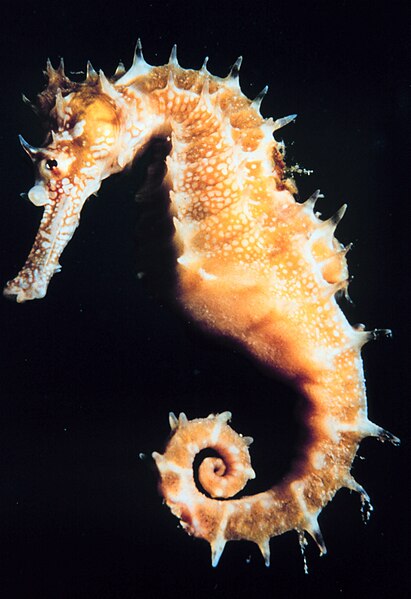
1. Seahorse
If this were a gallop poll, those delicate little fish known as seahorses would have breasted the ribbon without challenge. When it's time to make more little seahorses (or sea-foals, should we say?), dad-to-be and mom-to-be the male waltz intimately for about eight hours before the female lays about a thousand eggs in the male's brood pouch. The male fertilizes the eggs by releasing his sperm into the surrounding water and then releases the hormone prolactin (which, in mammals, induces the production of milk). The eggs hatch inside the pouch and the young swim away, and with that the seahorses' parental responsibility comes to an end. 


Seahorses are threatened by over-fishing and collecting for ornamental aquariums. The biggest threat comes from Chinese epicureans who believe that eating seahorses (often on a skewer or in soups) has aphrodisiac properties.


2. Greater Painted Snipe
Polyandrous female Greater Painted Snipes are the epitome of women's lib. Brightly coloured and aggressive, they court drab, dowdy males. Once they're through with the formalities, they lay their eggs and move off to repeat the show with another male. The males incubate and hatch the eggs, teach the chicks to forage and then shoo them off to lives of their own. Once the nest is empty and the breeding season is back on the calendar, it's time for papa Painted Snipe to come into his own all over again.


3. Indian Eagle Owl
Look into the deep amber eyes of the Indian Eagle Owl. Does he look like he has a chip on his shoulder? Not surprising, for he's not exactly your lovey-dovey kind of papa but the strong, silent, responsible type with exemplary family values. A tad conservative, but a swell guy in the final analysis.


The male Eagle Owl has his act cut out: He goes about aggressively defining his territory in the best real estate he can find, then attracts a suitable mate and provides for her as she incubates their eggs. Once the eggs hatch, he steps up the hunt, cleaning up every furball in the vicinity to nourish his hungry, greedy and fast-growing little ones. He also joins his mate in teaching the fluffy, gauche young things to fend for themselves. And when it's all done, it's time to repeat it all over again!


4. Ostrich
When the male ostrich fights off competitors to cobble together a harem of five to six females, he is taking on an enormous responsibility that few of us would envy. Once done with the amorous preliminaries, the females get down to business. The male does the dirty work, scraping a pit in the ground that can be up to two feet wide and ten feet wide. In this large communal nest, the pregnant females lay their eggs. The hens incubate the eggs during the day when their drab plumage blends perfectly with the sand. In the dangerous dark of the night, the dark-coloured male takes over. Hunched over the nest in the dark, he is almost impossible to see. Once the eggs hatch, he teaches the chicks to feed and defends them against predators. A kick from his powerful legs, tipped with two sharp claws, has been known to kill lions. This guy is a macho dad all the way.


4. Weaverbird
Apart from the usual stuff, stability and security are two traits that females of the species have always sought in males. Real estate and housing are huge concerns among some birds, the male weaverbird's badge of courage is his ability to build a nest that can win his lady's approval. When the first rains arrive, he singles out the best blades of grass and weaves his nest while the strands are still moist. As they dry they stiffen into the shapes he has envisioned. 


The female, true to character, is a picky customer, and she will reject outright a nest that doesn't appeal to her aesthetic tastes. Perhaps she also inspects the nest for stability, protection from predators and weather, and she ends up rejecting many half-built nests. But Bob the Builder persists until he has built the heart-stopper of nests. And then, mama and papa raise their brood in the comfort of the nest that won the Good Housekeeping Award for Birds.


5. Hornbill
Male hornbills of nearly all species bear an enormous burden. Mostly, he and his chosen mate pair for life. When they are ready to start a family, they single out a good-sized hollow in an old forest tree. 


The female enters the hollow, sheds most of her feathers (possibly to line the nest), and the male imprisons her inside by sealing the opening with mud. He then leaves the mother-to-be and her eggs to forage. He makes several trips a day, clattering his bill and making the hills reverberate with his honking call. Once the eggs hatch and the young are ready to fledge, the male unseals the nest. 


In the event that he is killed during the nesting period, both the female and his brood will starve to death. Just imagine the anxieties faced by single-income families.


Photos: Wikimedia Commons (Seahorse, Greater Painted Snipe and Ostrich). Pictures of Indian Eagle Owl and Weaverbird by Sandeep Somasekharan and Malabar Pied Hornbill  by Arun Menon.


Text by Beej


Read more about:


Indian Eagle Owls
Weaverbirds
Malabar Pied Hornbills

Pachydermophobia!

A few things to remember before you are battered to death by a wild elephant


There are two opinions on elephants with respect to their behaviour. Some say they are foul-tempered creatures while others contend that they are the gentlest of animals that resort to violence only when left with no option. Whatever be the case, elephants have to be respected for their bulk and what they can do with it.


Hailing as I do from Kerala, a land famous for elephants used to bear temple idols in ceremonial processions, I have heard of instances where elephants have turned rogue and killed their mahouts. Numerous videos have been shown on television of mahouts picked up, pounded and thrown around like ragdolls. There have been instances where motorists on national highways cutting through forests have been chased and often killed by elephants. Even before I became interested in birding and wildlife, elephants have given me a slight weakness in the knees.


The big one from Nagarhole with the broken chain
My first close encounter was in Nagarahole National Park, Karnataka. I was driving with three friends along a narrow road just outside the sanctuary when we saw a tusker (with easily the largest tusks I have seen on an Asian elephant) coming right towards us along the center of the road. We put the engine in neutral and waited. It was a domesticated elephant and trailed a broken chain from its front leg. To make things worse, it appeared as if this elephant was in "musth" - a mating urge due to which they go near-berserk, more so if it has not had access to a female elephant (in Africa male elephants in heat are rumoured to mount rhinos in desperation with fatal results for the rhinos, of course). 

We switched off the engine and waited for it to pass and noted that a tractor crammed with people had stopped behind us. We held our breath, having rolled up the windows as the elephant stopped right in front of us. After what felt like eternity, it passed our vehicle. We switched on the engine and, as silently as we could, moved ahead and stopped a safe 50 metres away and looked back. The elephant started walking towards the tractor. Every single person aboard it jumped off and ran helter-skelter. The elephant observed the tractor for a while and walked off, much to everyone's relief.

A mother and calf crossing the road at Chinnar
The second instance was in Chinnar, Kerala. We had overtaken a Kerala-registered car with a group of noisy guys who appeared to be drunk. Ahead we saw a a group of elephants, mostly cows and calves. We stopped at a respectful distance as they crossed the road and once they had passed, we went past them without making any noise. We could hear the noisy group coming along behind us and we were pretty sure they would vex the elephants, so we moved further ahead. 

As expected the noisy group's car came tearing through the forest road and a few minutes later the guys, seeing us drive slowly, screamed, "Hey... Elephant elephant, danger danger!" What could have happened with them is anybody's guess.

Elephants can either mock-charge or charge for real. The mock charge is a warning, an indication of the animal's irritation at being disturbed. The elephant does everything to make the charge appear authentic: Pounding footfalls, kicking up dust, ears fanned out, trunk raised... 


The real charge is a lightning-quick strike relatively devoid of show. The elephant runs up to you - if the ears are not fanned out and if the trunk is held down, you can tell it is not a mock charge - and would continue running over you. You need a miracle to survive. A mock charge can turn into a real charge any time. You can read (and see) more on elephant charges here in an encounter by my friend Dhaval Momaya.
Little ones like this might be cute, but never try to approach them as momma will be around
Both these encounters were experienced in the relative safety of a car but the the ones in Parambikulam, Kerala was more unnerving because we were on foot. Beej , Sahastra, Rohit and I had started our 18 km tramway trek along with a forest guard. Barely half a kilometre into our trek we saw an elephant herd with females and calves beside the road. 

Aadhan, the forest guard, whispered to us to be silent and told us that elephants don't like human noise and are likely to be provoked into attacking if they heard us talk. A tribesman who was with us tapped a nearby tree trunk three times with his bamboo walking stick. The sound carried in a forest that had barely woken up. The elephants looked back, saw us and began moving away from the road. It was evidently an exhibition of mutual respect and understanding. I let go of the breath I was holding and raced off after the others...

The herd at Parambikulam
On our return, we heard loud noises of bamboo stalks snapping about 10 metres ahead to the right of our path. Our second guide Manoharan asked Aadhan to wait with us, motioning us to stay silent. He tiptoed to the source of the sound, peeped into the woods and came back looking grave. He then veered off the trail into the bushes and asked us to follow quietly. Bewildered, we entered the forest in the opposite direction of the noise, off the road, and walked parallel to the road for almost half a kilometer, after which we joined the road again. Back on the road, Manoharan said the elephant was an "Ottayan", referring to a lone tusker. These animals are known for their foul temper. Tapping the tree trunk would have only earned us a charge!

Here are a few things to keep in mind when you encounter an elephant or a herd:
  1. Keep your distance, always
  2. Avoid white and other bright colors as seeing this attracts their (unwanted) attention
  3. Avoid making noise and refrain from conversation
  4. An elephant that means business can outrun the fastest of humans, so never assume that you can beat these bulky beings by fleeing at the last moment
  5. Be it a mock charge or a real charge, both mean that you have encroached into the elephant's comfort zone. It wants you out of there. Obey. 
Text and photos by Sandeep Somasekharan
All rights reserved

Still in love with elephants even after reading this post?! You might want to read: 

Wordless Wednesday - An Edgar Allan (Hoo)Poe mystery


Tree or no tree, who gives a fig?

A fig tree in fruit is a forest in itself: every creature in the vicinity is attracted to the sprawling canopy to eat the ripe red fruits, or the fruit-eaters. Sadly, these lovely fig trees are disappearing with our appetite for wider roads

Ripening fruit on a fig tree
Fig trees (Ficus sp) are valuable sources of food for many birds and animals. In an age when fruit trees have turned into cash crops restricted to orchards, with guards stationed to keep birds away, these trees, which provide tiny fruits that ripen to a rich red and house thousands of tiny seeds, become life-givers for birds and mammals. When they are not fruiting, the trees' thick canopies provide safe haven for several species. When the fruits ripen you can hear the clamour of a hundred birds feasting from a long way off.


I have seen a number of fig trees in and around Mysore, but the one that most inhabits my memory is the huge tree near my village in Karukutty, Ernakulam district, Kerala. That tree is believed to be 500 years old and hosts a sarppakkavu -- a shrine dedicated to serpent spirits. My grandfather told me that it was an atthi-maram -- Malayalam for fig tree, though I never saw it in fruit in the days I spent with my grandparents. 


It was nevertheless an amazing tree. Its branches and roots were barely distinguishable from each other. Long strands hung down from the boughs, slowly growing towards the ground. On touching the ground they turned into pillar-like struts supporting the superstructure of the tree. And in this way the tree would branch out and occupy a fair acreage of land.


The Ficus tree at Karukutty
Though I have never seen the fruits of the tree at Karukutty, the ones in Mysore have more than compensated for my loss. There is a huge tree near the smoking zone at Infosys and there are other trees I have seen at my regular birding haunts. I have seen them spread new leaves, sprout tiny ripe fruits, and some others meet their ends - either through natural causes, or at the hands of humans.
A Chestnut-tailed Starling eyes its next morsel
The first casualty I can remember is one near Mysore's Outer Ring Road. This tree had a deep hollow that was home to a Spotted Owlet. The canopy played host to Chestnut-tailed Starlings, Common Mynas, Rose-ringed Parakeets, Brahminy Kites and, at times, a pair of Oriental Honey Buzzards


One morning when we arrived, it simply wasn't there -- all that remained was a stump. For no reason that was apparent, the tree had been cut down and the plot where it stood remains empty even today. I have seen shoots emerge from the still-standing trunk but it will take years for it to regain its past glory -- perhaps more than my lifetime, and that is if it is allowed to stand for that long. 


Some trees, like the one on the shore of Lingambudhi Lake, has been spared the axe since it stands in the compound of a temple.


A Coppersmith Barbet attempts the seemingly impossible
Another one that I shall remember was a fig tree that used to stand near Hebbal Lake in Mysore. It was a majestic tree and bore smaller fruits than that of the Banyan (Ficus bengalensis) but, unfortunately, I never got round to identifying it. It was the roost of purple herons and I have even spotted a Booted Eagle hiding in the thick branches. Last June we found the tree fallen, its trunk brutally snapped by heavy winds that mark the advent of the monsoon.


A contented Golden Oriole in a fig tree laden with fruit

With the widening of the Ring Road in Mysore two fig trees beside the road have been felled. As the city grows, many more are likely to fall prey to development. And the birds that depend on these trees for food will be driven further and further away. And then, sadly, we shall refer to them all in past tense.


Text and photos by Sandeep Somasekharan

Mommy loves you!

The Green Ogre salutes mothers and mothers to be of every feather! Happy Mothers Day! We love you back!

A female baya weaver feeds a juvenile (right)


Raptor Friday - The Lesser Fish-Eagle

Formerly thought to be a resident of the Himalayan foothills, the Lesser Fish-Eagle has pleasantly surprised us by nesting along rivers in southern India

Formerly thought to occur only in the Himalayan foothills, the Lesser Fish-Eagle has now been confirmed as a resident breeder along the Cauvery River in Karnataka as well as river islets in Kerala, both in southern India
The Lesser Fish-Eagle (Ichthyophaga humilis) was believed to be a resident of the Himalayan foothills until recently when there has been a flurry of sightings along the Cauvery river in Karnataka. Other recent reports also confirm that the bird is a resident in southern Kerala (see notes below).


Let me tell you before I begin that 'lesser' is a relative term, to be taken literally only when comparing this raptor to the Grey-headed Fish-Eagle (Ichthyophaga ichthyaetus). In no way should this bird be mistaken for a diminutive creature as it is more than two feet tall when perched, with an impressive wingspan.
All of my three sightings have been in the Ranganathittu Bird Sanctuary near Mysore. The bird would perch on a branch overlooking the river, appearing pensive. On all three occasions, when our boat drew close the bird took off, never to be seen again that day. To watch it fish remains a dream unfulfilled.
The extent of white in the Lesser Fish-Eagle's plumage are a distinguishing mark to identify it against the closely related Grey-headed Fish-Eagle
As its name suggests the Lesser Fish-Eagle feeds on fish and is hence found mostly along riversides. The head is grey, the chest brown and the wings are a deep brown. The belly and thighs are white and the tail is dark. In the field, the primary distinguishing feature to tell it apart from the Grey-headed Fish-Eagle is to observe the area where the white parts of the bird end. In the Lesser Fish-Eagle, the white area ends abruptly at the beginning of the tail. In the Grey-headed Fish-Eagle, it extends all the way to the tip of the tail where it terminates in a thick, dark band. 


Both the Lesser Fish-Eagle and the Grey-headed Fish-Eagle are listed as vulnerable (VU) in the IUCN Red List.


Notes:
1. The latest issue of the journal Indian Birds (Vol. 7, No. 1), April 25, 2011 carries a comprehensive report on the breeding of the Lesser Fish-Eagle in Cauvery Wildlife Sanctuary, Karnataka, India. The report is authored by Dinesh Ramarao, Dipu Karuthedathu, Mohanram K, Prakash H L, Raju A K, Sreekumar H, Srikanth Kumar and Vinay Das


2. A separate report in the same issue of the journal, by C Sashikumar, C K Vishnudas, S Raju, P A Vinayan and S Kannan, informs us that the Lesser Fish-Eagle is a breeding resident in Kerala including reservoir islets in the Parambikulam and Periyar forest areas.


Text and photos by Sandeep Somasekharan
All rights reserved

Wordless Wednesday - Look before you leap


Photograph: Sandeep Somasekharan
All rights reserved

Wordless Wednesday - Ducking the sunset


All rights reserved