We’ve moved! Here’s where you can find us

The Green Ogre is now at https://www.greenogreindia.org
Showing posts with label hornbill week. Show all posts

On the Wing - The Great Hornbill


Nothing can prepare you for the awe-inspiring spectacle of a Great Hornbill, flying wild and free in its ancient forests
The swooshing sound of the Great Hornbills' wingsweeps resonates in the silence of the forest

The Great Hornbill (Buceros bicornis) is found in the Western Ghats and the Himalayan foothills in India as well as in the thick rainforests of Sumatra, the Malay Peninsula and Thailand extending north all the way up to Nagaland in India, as well as Nepal.

These large omnivorous birds do not have many natural predators. However, they are near threatened due to habitat loss from excessive deforestation as well as from poaching (their meat is considered unsuitable for consumption) as their large bills are coveted as trophies. Apart from its huge bill and colorful plumage, the bird is recognizable for its loud and sonorous call, which has earned it the Malayalam name “Malamuzhakki” -- one who makes the hills reverberate. 

 Great Hornbills are known to be monogamous and have a peculiar breeding habit that restricts their ability to proliferate in large numbers. Hornbill pairs partner for life and the death of either partner results in the surviving partner going mate-less for the rest of its life.


Exhibiting great dexterity, a Great Hornbill tosses a berry in the air before swallowing it
While hornbills have a lifespan of around 35 years or more, due to their selective breeding and nesting habits this longevity does not offer a significant advantage for their survival. Females nest in tree hollows while the male helps seal the cavity from outside. The male takes the responsibility of providing food to the incarcerated female. The male makes several daily trips to gather fruits, berries, reptiles and insects for the female. The male stores the fruits in the crop (a sac in its throat) and regurgitates them at the nest, following this regimen until the chick has grown significantly and it is time for the female to emerge from the nest cavity. Since the female has to rely on the male during this time, his death due to hunting or poaching would result in the death of the female and the offspring as well. Great Hornbills are known to return to the same tree cavities year after year and the loss of the tree means the pair would have difficulty in breeding again. There are few trees that satisfy the nesting requirement of hornbills and deforestation has become a major reason for the bird's dwindling numbers. 

Seeing the decline in numbers of the Great Hornbill, several conservation programs have been commenced to protect and revive this intriguing species.

Text: Anand Yegnaswami
(See Sandy's blog post on his meeting with the Great Hornbill)


These lovely images are best printed with HP Laserjet

Trees speak, even in death

Lifeless, numbered, fated to become furniture, the dismembered corpses of ancient forest trees are stacked neatly in the Dandeli Timber Depot. Peer closely at these images gleaned from that brooding graveyard -- your mind's eye might detect fate-lines gone awry, cracked smiles, suppurating wounds, faces contorted in silent pain, broken hearts, gnarled palms clasped in futile prayer...


Along the northern coast,

Just back from the rock-bound shore, and the caves,
In the saline air from the sea, in the Mendocino country, 
With the surge for bass and accompaniment low and hoarse, 
With crackling blows of axes, sounding musically, driven by strong arms, 
Riven deep by the sharp tongues of the axes—there in the Redwood forest dense, 
I heard the mighty tree its death-chant chanting. 
The choppers heard not—the camp shanties echoed not; 
The quick-ear’d teamsters, and chain and jack-screw men, heard not, 
As the wood-spirits came from their haunts of a thousand years, to join the refrain; 
But in my soul I plainly heard. 

from Song of the Redwood-Tree by Walt Whitman

Photographs: Sahastrarashmi

Gluttony in the Timber Graveyard

The Timber Depot in Dandeli presents a feast for both bird and birdwatcher, and then some rumination


If a man walks in the woods for love of them half of each day, he is in danger of being regarded as a loafer. But if he spends his days as a speculator, shearing off those woods and making the earth bald before her time, he is deemed an industrious and enterprising citizen.
- Henry David Thoreau

The Timber Depot at Dandeli is a living graveyard, if that oxymoron makes any sense. It stands right in the heart of this sylvan north Karnataka town, which the virile Kali river cleaves in two as it hurries to the sea about a hundred kilometres away at Karwar. One hot afternoon in April, we crossed a bridge over the river (gawking at the heft of an enormous marsh crocodile basking on an islet) and arrived at the timber depot. We had barely entered when it struck us that this place had more hornbills than we had collectively bargained for. 


An enormous mugger basks in the afternoon sun beside the swollen Kali river
It also struck us that the Karnataka Forest Department, like forest departments everywhere in India, exists for the primary purpose of generating revenue from natural resources. For everything else besides timber was an aside, not even meriting a rounding error in its account books. 

In the timber depot large trees, bare of leaves but laden with rotund yellow fruit, stood like fairytale giants, their tentacled fingers stretching skyward. At their feet lay corpses of their kith and kin, their sawn trunks stacked in neat heaps on the dry earth. From towering living things they had been degraded to commodities. Now they were known as rosewood, jackwood, teakwood – wood being the operative suffix. 


A Malabar Grey Hornbill takes a burp break
The evening light softened the mood, lending to the recumbent logs a sobering burnish. Above me, the canopies were aflutter with so much avian activity that I had trouble deciding where to look. We were just recovering from the surfeit of Malabar Pied Hornbills, which were ubiquitous, and gazing with satiated boredom upon flocks of Malabar Grey Hornbills. Glossy-black male Asian Koels and their speckled mates, White-cheeked and Coppersmith Barbets, Plum-headed Parakeets, Pompadour Green Pigeons and Chestnut-tailed Starlings feasted on the cornucopia of yellow fruit, barely shuffling at the disturbance caused by our gawking selves. 


A female Pompadour Green Pigeon makes love to its meal
A Coppersmith Barbet appears to be lost in thought before it takes another bite

Against the relentless symphony of cicadas an Indian Roller sallied about, flaunting its brilliant cerulean hues in vain as we ignored it for the hornbills. A troop of Hanuman Langurs, comprising overgrown adult males, subadults and females with infants, pillaged the trees of fruit and leaves. Giant squirrels stuffed their mouths. Mynas and crows hung around, unable to resist the opportunity to dig in. 


What was this manna that got the entire animal kingdom in raptures, I wondered. I picked up a fallen fruit and bit into it. It was tough-rinded but juicy, not sweet but leaning towards sour, and otherwise unremarkable. It left an acidic aftertaste. I spat it out.


A pair of Malabar Giant Squirrels were delightful to watch as they ate meditatively in the canopy
Yet, with so much to behold, the trees and their supine carcasses haunted my thoughts. Did this charming evening spent at this necropolis signify something more: perhaps the oncoming eventide for all of our great old-growth forests and their guardians, the hornbills? 


As my eyes wandered about the yard, I picked out signs of humanity – the gaudy saris of women ambling down the depot's main thoroughfare presented hopeful hues against the sombre dullness of the trees, and I saw the simple joys of companionship in the resigned contentment of an elderly couple using a hefty log as a park bench. 


Perhaps this forest represented much more than it actually stood for – it was a landmark of nature's resilience, her unstinting will to push on in despite the looming spectre of imminent loss that the great darkness of human civilization would inevitably bring. And then, after our time, perhaps the forest's soul shall be rekindled again, gilded by the hopeful rays of a new sunrise. 


We bade farewell to the sleeping logs before sunset as the sounds of the great feast echoed behind us -- the last suppertime squabbles of the hornbills and the frantic whoops of the langurs as they settled domestic tiffs. There is still a good hour to go before lights out, the birds seemed to think. We might as well eat.


The sleepers that lived and died wait, the far advanced
are to go on in their turns, and the far behind
are to come on in their turns,
The diverse shall be no less diverse, but they shall
flow and unite
--they unite now.


Gluttony in the Timber Graveyard from Green Ogre on Vimeo.


From Sleepers by Walt Whitman

Rendezvous with the Narcondam Hornbill

Atul Jain, who has ticked 989 species of birds in the Indian subcontinent, ventured to the remote Andaman island of Narcondam and was rewarded with many prize sightings


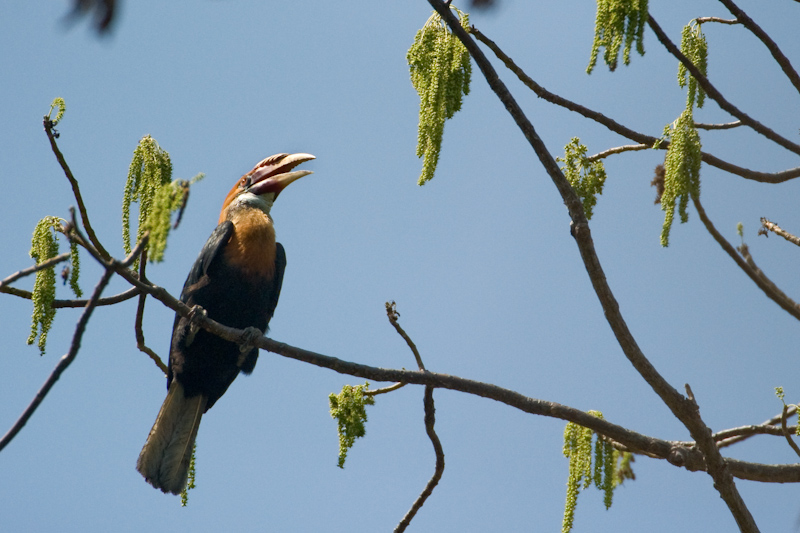
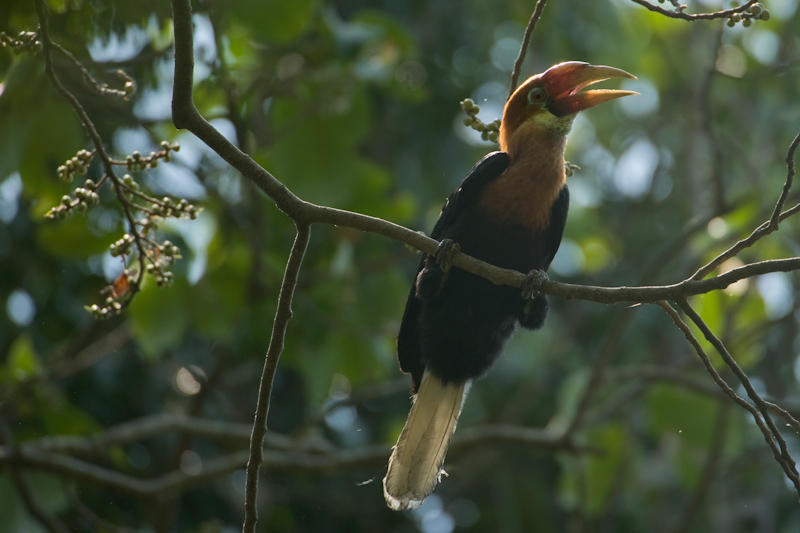
The Narcondam Hornbill is found nowhere else except on the remote Narcondam island
The Andamans conjure a mystic image of a forgotten land with turbulent history and exotic flora and fauna. It lived up to its reputation and rewarded us with some excellent bird sightings. It took six months of planning to organise a trip to Narcondam Island and the Andamans. Five intrepid birder-photographers (Harkirat Sangha, Manoj Sharma, Vinay Das, Aparna Jain and I) joined hands to visit this endemics hotspot. Each traveler brought a different skill-set to the table. Harkirat’s incisive knowledge about birds (and bees!) was helpful in cracking some of the most difficult identification issues and his word was taken as the final answer on any ornithological query. Manoj entertained us with his excellent sense of humour and was the de-facto group leader. He pushed us hard to go for more birds. Our lifer list would have been 50 percent fewer had he not shown rigour and doggedness. Vinay came prepared with background material on Andaman birds and it came handy very often. Aparna was the official “non-bird” photographer and provided feminine stability to the group.
The Andaman islands from the air
We had our ups and down while organising this trip. A few birders came on board and then dropped out due to various personal reasons. We took all this in stride and did not let our trip go haywire. We must admit that Ramki’s support was unstinting and he ensured that the trip remain viable. The inspiration to explore the Narcondam and Barren islands came from a similar trip organized by Janaki et al last year. We tread the same path and got in touch with Nick Band, proud owner of the sailing boat Emerald Blue. He is of British origin and is based out of Phuket. He has an enviable sailing experience of more than 39 years, has lived a bohemian lifestyle, and loves sailing to far-flung islands.
The Emerald Blue at anchor
We arrived in Port Blair two days before the actual sailing date with the objective of ticking as many lifers as we could. We even budgeted two additional days after we finished our Narcondam trip. We had the services of the only local birding guide in Port Blair, Vikram Shil. Vikram has good knowledge of birding hotspots and can claim to be an owl expert. We covered most of the birding areas under his tutelage -- Chiriya Tapu, Mount Harriet, Sippi Ghat, Burma Bridge, Obara Barrage, Veterinary College and Wondoor. A few of these sites were visited many times to ensure that we did not miss any specialties. We were able to get most of the endemics and a few more interesting birds.
Catch of the day
We set sail on February 27 early in the morning. Our boat was moored at a slight distance from the jetty and we were quickly ferried by Nick in his inflatable dingy. We were greeted by Al, our Thai cook and only crew member besides Nick. The boat was neat and tidy and gave an appearance of prudence with space. Every nook and corner was used to store something or other. The living space was a little cramped and left us wondering what would have happened with three more people on board. Not to get bogged down with trivial issues, we all quickly settled down to the ways of a sailing boat including a hand-operated toilet flush. The food was Thai and was peppered with the catch of the day. We had endless supply of drinks and snacks and never felt short of good food. Harkirat was picked by Nick as his second-in-command. He kept vigil on the boat when Nick had to catch up on sleep.
Pigeon Island
Approaching Narcondam Island

The journey to Narcondam took approximately 36 hours and it was almost dark when we arrived. The island gives an impression of an extinct volcano -- biggish with lush green forest cover. Nick quickly found a suitable place to drop anchor and we settled for the evening. All of us were very happy and agreed that it would be difficult to sleep. 
Narcondam Hornbill (Rhyticeros narcondami)
We woke up to the calls of Pied Imperial Pigeons, which were abundant on the island. The excitement was palpable and with each flight of the pigeon, minute physiological details were discussed and lots of hi-fives exchanged. And then, a sudden war cry went up in the air. Somebody had pointed out a Narcondam Hornbill. And yes, indeed it was one! It was flying majestically from one tree to another. It is a small hornbill and reminded us of a smaller version of the Rufous-necked Hornbill. The tail is striking white and the rufous on the neck is resplendent. We decided to circle the island by boat and were able to see a few more hornbills. Besides hornbills and pigeons, we identified Alexandrine Parakeets, Hill Mynas and Asian Koels. Satiated, we decided to head back in the evening.
Barren Island has the only active volcano in Indian territory

Our next port of call was Barren Island, which has the distinction of being the only active volcano in Indian territory. True to its image, it was spewing ash and gases when we arrived the next day in the afternoon. Barren Island is not fully barren and does support sparse vegetation on its side. Pied Imperial Pigeons were seen hopping from one tree to another and a White-bellied Sea Eagle was sitting guard on a rock face. We again decided to circle the island by boat and observed that the volcano was active every 15-20 minutes. The whole experience of watching a live volcano was magical, though surreal. We made further stopovers at Neil and Havelock Island for a recce and were amply rewarded with good sightings of the White-breasted Woodswallow and the Andaman Serpent Eagle.
The volcano on Barren Island erupts every 15 to 20 minutes
Watching a live volcano at work was at once magical and surreal

We finally reached Port Blair on March 4 with a good six days on the high seas. Most of us were philosophical and were raving about the exhilarating experience of visiting remote islands in our country. Goodbyes were said and a promise to return some day was made.
White-breasted Woodswallow
Oriental Scops Owl

The next two days were as hectic as could be. Manoj was a man possessed and he mercilessly pushed us from 5 am - 9 pm. And it helped! We stumbled on a flock of 100 Daurian/Purple Backed Starlings. The starlings are vagrant and very few sightings have been reported from the subcontinent. Harkirat was of the view that A O Hume collected a single sample from this Island. Another significant sighting was of the Mangrove Whistler at Sippi Ghat.

Triplist:


White-bellied/Glossy Swiftlet, Asian Glossy Starling, Edible-nest Swiftlet, Olive-backed Sunbird, Pacific Reef-heron, Andaman Green Pigeon, Pied Imperial Pigeon (Narcondam Island), Narcondam Hornbill (Narcondam Island) and Andaman White-headed Starling are in good numbers and can easily be seen. Brown Coucal, Andaman Flowerpecker, Andaman Hawk-owl, Hume’s Hawk-owl, Oriental Scops-owl, Andaman Teal, Slaty-breasted Rail, Andaman Wood Pecker, White-breasted Woodswallow, Andaman Serpent Eagle, Andaman Bulbul, Andaman Shama and Andaman Cuckooshrike, Pacific Swallow are scarce but gettable with some effort. Oriental Reed-warbler, Mangrove Whistler, Andaman Cuckoo-dove, Andaman Woodpigeon, Andaman Treepie and Long-toed stints are rare and may pose a good challenge. A flock of Daurian/ Purple-backed Starlings!
Vernal Hanging Parrot
Photographs by Aparna Jain
Photographs of Narcondam Hornbill by special courtesy of Kalyan Varma
All rights reserved

Encounter: The Malabar Pied Hornbill

A timber yard in Dandeli, Karnataka offers some of the best views you can have of the threatened Malabar Pied Hornbill When you mention Dandeli, people respond in two ways. "Rafting!" exclaim the majority. The others enthusiastically say: "Hornbills!" On our trip, we (Sahastra, Bijoy, Andy, Satish and I) didn't even consider the former.
Four species of Hornbills are found in the Western Ghats. At Dandeli, it was the Malabar Pied Hornbill (Anthracoceros coronatus) that held our rapt attention for over two hours. After catching mere glimpses of these birds the previous day close to the core area of the reserve, we were in for a treat as we entered the timber depot in the heart of Dandeli town. Just as we alighted from our vehicle at the entrance to the depot, we saw a flurry of movement on a fruiting tree. Our jaws dropped. When the folks at the Kulgi Nature Camp told us that we would find hornbills at the depot, we imagined that they were referring to the commoner Malabar Grey Hornbill (Ocyceros griseus). But here, as we watched open-mouthed, four or five Malabar Pied Hornbills, among the most endangered hornbills in India, fed on berries while several others flitted around just about everywhere.

The Malabar Pied Hornbill is primarily a frugivore, feeding mainly on figs. Hence they play a vital part in the dissemination of seeds. Their preferred habitat is lowland riparian forest (adjoining a large water-body such as a stream, river or lake). The Dandeli Timber Depot, where we saw them, is close to the Kali river.
Getting ready to swallow
They were flying about everywhere
Although these birds are categorised as 'NT' (Near Threatened) by the IUCN, they did not appear to be threatened here. Like B2 bombers, they would appear out of nowhere, transfix us with their graceful glides, and disappear as swiftly as they had arrived.
Incoming...
Transfixing...
Disappearing...
Hornbills are classified under the family Bucerotidae in the order Coraciiformes. Birds of the this family are characterized by long, downward-curving bills which resemble horns. In some species the bill has a casque on the maxilla (upper jaw/beak). The scientific name of the family refers to the bill's shape -- "Buceros" meaning cow's horn in Greek. Hornbills are the only birds in which the axis and atlas (the first and second vertebrae) are fused together. This skeletal structure is believed to help support the huge bill, better. They are also the only birds with a two-lobed kidney (in all other birds it is three-lobed). The casque is mostly hollow and is made up of keratin (the same material that makes up the beak).

The large downward-curving beak is characteristic of hornbills
The use of the casque is a subject that is widely debated. Some consider that it serves as an indicator of the bird's age, sex etc. There are others who contend that it is used in fighting rivals or for displays. Some are of the opinion that it helps to amplify the make the bird's call and make it resonant.
The Malabar Pied Hornbill's casque is more than half of its beak in length and the posterior ends in black
The female bird can be easily differentiated from the male by the white region around the eye. In the male this region is completely black. The Malabar Pied Hornbill, like many other hornbills, are monogamous. They build their nests in the hollows of large tree-trunks. The female then imprisons herself inside the hollow by sealing the opening with a plaster that is mainly made up of mud, faeces and fruit pulp. During this time it is up to the male to feed her. This he does by passing food through a slit in the sealed opening. During incubation, the female undergoes a complete and simultaneous moult (shedding of existing feathers and growing new ones). Perhaps the old feathers serve as lining material for the nest by the time the chicks hatch (this is my surmise and it is gladly open to correction). When the chicks hatch and the nest cavity becomes too small to accommodate all of them, the mother breaks open the seal and emerges. She then starts assisting the male in feeding the chicks.
A Female Malabar Pied Hornbill - The characteristic creamish-white around the eye is clearly visible

A Male Malabar Pied Hornbill - The eye is surrounded by black
IUCN justifies classifying these birds as Near Threatened based on the extent of continuing habitat loss. Within a short span of just 16 years the bird has been moved to this category from the 'LC' (Least Concern) status. The felling of old-growth trees, which the birds require to nest and breed, impacts their ability to multiply as it takes several decades for young trees to attain a size that is conducive for the hornbills' nesting.

The sun started to set and we had to leave soon. I sat on a log and watched as a male hornbill clambered up a tree to its top to reach a female that was perched there. As he hopped from one branch to another, he did something very curious - he would bend his neck and look underneath every branch as if searching for something. He continued until he reached the female. Unfortunately, I couldn't understand the reason for this peculiar behaviour.

The male inspecting the underside of a branch
Once the male reached the female, the pair proceeded to groom each other and display several other courtship or bonding rituals. They clasped beaks and gripped each others' necks in their beaks.
The pair clasping beaks
As we watched the mutual grooming behaviour of the pair, Beej mused,"Isn't this a call for conservation in itself?" Unless the habitat that they require to sustain themselves in terms of food and nesting sites is maintained strictly, these birds might be lost to the next category of IUCN.

But there is hope. The sight of these birds moving about fearlessly and living in such close proximity to humans in the heart of a busy town proves that it is possible for man and bird to co-exist.

Text and photographs by Arun Menon
Additional Photographs by Anand Yegnaswami and Bijoy Venugopal