We’ve moved! Here’s where you can find us

The Green Ogre is now at https://www.greenogreindia.org
Showing posts with label coorg. Show all posts

A homecoming to Iruppu Falls

A chance trip to Iruppu Falls at the foot of the Brahmagiri peak in southern Coorg brought back a rush of old trekking memories
The falls, not yet at their most splendid, are captivating
In 2006, a little after my broken humerus had regained its sense of humour, I ventured on a drive to Iruppu Falls from Bangalore with my still rather newly-wed wife and camper extraordinaire Sahastrarashmi, whom I'd known for about a year. Along with us were four others.
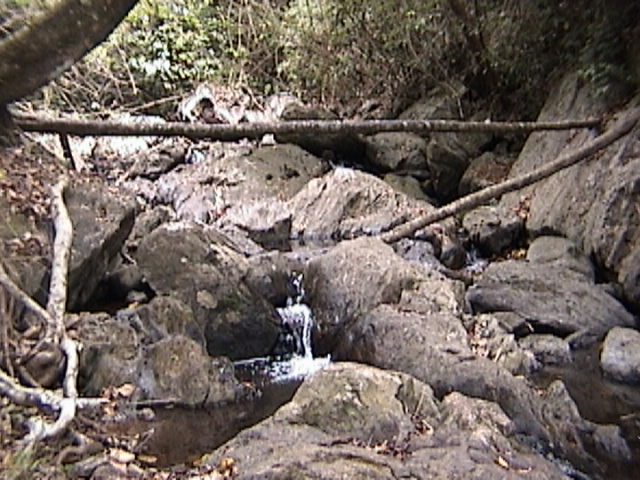
The Lakshmanatheertha flows towards the temple after descending from Brahmagiri at Iruppu Falls
We freshened up at the rooms behind the very serene Rameswara temple at Lakshmanatheertha (Rama's brother Lakshmana is believed to have meditated here) and passed the falls, after which we began our climb to Brahmagiri with great aplomb. Having driven all night and having stayed up sleepless with excitement for unnumbered nights before that, I was pretty blown. A kilometre into the steep climb I realised with anguish that the five heavy bird books that I was carrying in my backpack were an unnecessary and foolhardy choice of reading material, especially considering the fact that there was not going to be any electricity up there at Narimala. 


Behind every ambitious but unsuccessful climber is a woman who knows better. Anitha propped me up by my divine behind every time I skidded back under the weight of my burden. When I reached Narimala, we pitched tent. I passed into a deep, snoring slumber and woke up only just before sundown when dinner had been cooked. That was that (read more about that trip here).


In March this year, I happened to visit Iruppu Falls again quite by chance on a writing assignment for Outlook Traveller with photographer Jyothy Karat


It was a strange sort of homecoming for me, though this time climbing the peak was not on the agenda. On my last visit the temple wore a serene, old-world charm. Five years later it had been given a concrete facelift of which the management was doubtless very proud. The temple office even controlled our access to the falls. Though we reached there at 7 AM, we were turned away and asked to return an hour later. 


The Rameswara temple  at Lakshmanatheertha in Iruppu has got itself a concrete makeover though the old temple looked far more tranquil
Returning as appointed, we lingered about the falls, taking pictures and marvelling at the butterflies mud-puddling beside the rock pools -- Jays, Blue Mormons, Paris Peacocks, Malabar Banded Peacocks, Bluebottles... Nabokov would have run amok! 


A few men enjoying a pounding shower under the falls began to perform for the camera (or the cameraperson, I imagined). After humouring them for a few shots, Jyothy got down to business, trying to click women bathing (fully dressed, of course) under the cascade. One of those splendid shots made it to Outlook Traveller's May 2011 issue along with my travelogue


An ant-mimicking spider (Mymarachne) overwhelms a cricket nearly five times its size
On the steps leading up to the falls, a great breakfast battle raged on -- an ant-mimicking jumping spider (Myrmarachne) was overwhelming a brown cricket with its venomous bite. The encounter must have lasted a good ten minutes until the dogged little predator beheaded the immobilised cricket, which was at least five times its size.


Around us the day warmed, though we were still ensconced in the cool comfort of the forest. A Crested Serpent Eagle whistled from high above as it soared on a thermal. Great lianas hung like enormous pythons over the stepped walkway. Wood spiders sealed the gaps in the canopy with giant, invisible orbs.


Ancient lianas cleave the view
An Asian Fairy Bluebird's chirrupy gurgle sought me out but the bird itself was a shadowy presence concealed in dense foliage. Racket-tailed and Bronzed Drongos flitted in the glades. Malabar Whistling Thrushes hopped on the path ahead, unruffled by our presence. Punch-drunk sunbirds brawled over blossom nectar while peaceable White-eyes cheeped feebly from the tender, sun-drenched treetops. 


Bright red Coral blossoms dropped spent from the canopy in the aftermath of a morning feeding frenzy as mynas, sunbirds, orioles and starlings tucked into a nectar binge. On the earthy path black ants with piercing bites (as I discovered with agony while trying unsuccessfully to photograph them) marched in steady lines. 


Iruppu is still fairly wild despite the rush of pilgrim-tourists and sundry merry-makers. Yet, the odd plastic bottle still bobs in the stream and the rocks are slippery with effluent soap, shampoo and oil from the bathers. Trash appears to be collected regularly, for we did not see too much litter on the path. 


Everywhere, the forest department has erected signs persuading tourists to be on their best behaviour. Despite the noble intent behind them, most were hilarious. And since those are best seen to be believed, I'll leave you to enjoy them. 


Tigers on honeymoon are perhaps on a meatless diet, eh?

Shikari Shambhu redux

Perhaps the macaque ought to wear its loins in the right place

Thanks to Jyothy Karat for her picture of the ant-mimicking jumping spider
Text and other photographs by Beej

Blossom Showers and Bamboo Famines


Coffee in full flower

Early this week I travelled to Coorg on assignment. Mild spring showers had triggered a riotous explosion of coffee blooms. Planters depend on these early rains, known locally as Blossom Showers, for the next year's coffee crop. The dark-leaved boughs drooped under the weight of the clustered white blooms, and the air was redolent with their jasmine-like fragrance. 


The blooms emit a pleasant fragrance redolent of jasmine
The blooms last only a few days before they wither into dark thready puffs and then expose the incipient fruit buds. These turn into the cherries that are then picked and pulped and dried and roasted and ground before they are packaged into the various brews that become your morning cuppa.

The bloom is an eagerly anticipated event and dictates the prosperity of the year ahead. Interesting, since coffee is a major cash crop, that it also coincided with the last days of the financial year. 

Tree coffee in flower
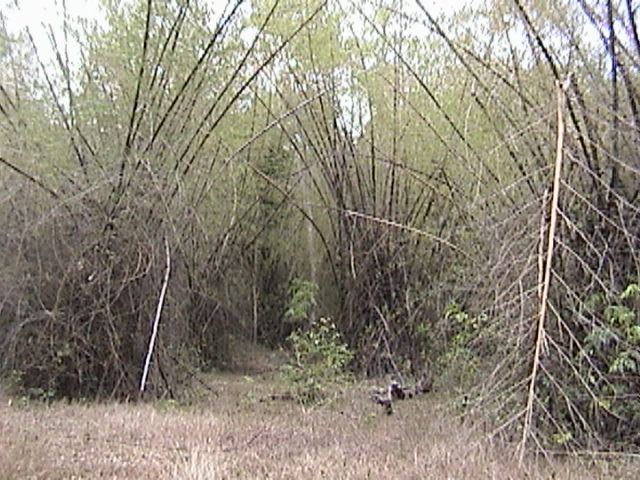
It was a picture of striking contrast at Nagarahole National Park, where I went on a side-trip. The great bamboo forests, which had stood in tall, dense thickets for over a decade or so, had turned into a ghost landscape of desolate desiccation. Browned by death, the clusters had withered from the inside out and stood like creaking skeletons along the highway that runs inside the forest.

Dead bamboo makes the forest look haunted
Despite their enormous size bamboos are grasses and, depending on the species, they flower at intervals of every 60 or 120 years. The inflorescence is an amazing mass phenomenon and entire forests flower all at once. The fine seeds scatter on the ground providing a rich source of food for a large number of creatures, and are also harvested like rice by humans. 

An Indian roller in the forest
Despite the spectacular plenitude of food that it brings, the large-scale flowering of bamboo is believed to herald the onset of famine. While some people have dismissed this contention as superstition, studies elsewhere have indicated that the sudden transition from a cornucopia of seed-food to a profusion of sprouting shoots in fact leaves nothing for the seed-eaters (primarily rodents). 

Bamboo seeds are also included in the diet of the Malabar Giant Squirrel
Paucity of food forces rats out of the forest to pillage larders and granaries, as well as standing crop fields. A rodent invasion of this scale can (and has, in the past) cause huge losses in traditional storage silos and granaries. Famines of this nature have been documented in northeastern India, where bamboo grows in profusion. 


These contrasting landscapes presented themselves to me within 20 km of each other and I wondered that would happen if bamboo-dependent species such as elephants, driven by the depletion of one of their favourite food sources, turned on crops instead. Conflict alert!

Text and photos by Beej

Iruppu-Brahmagiri on foot

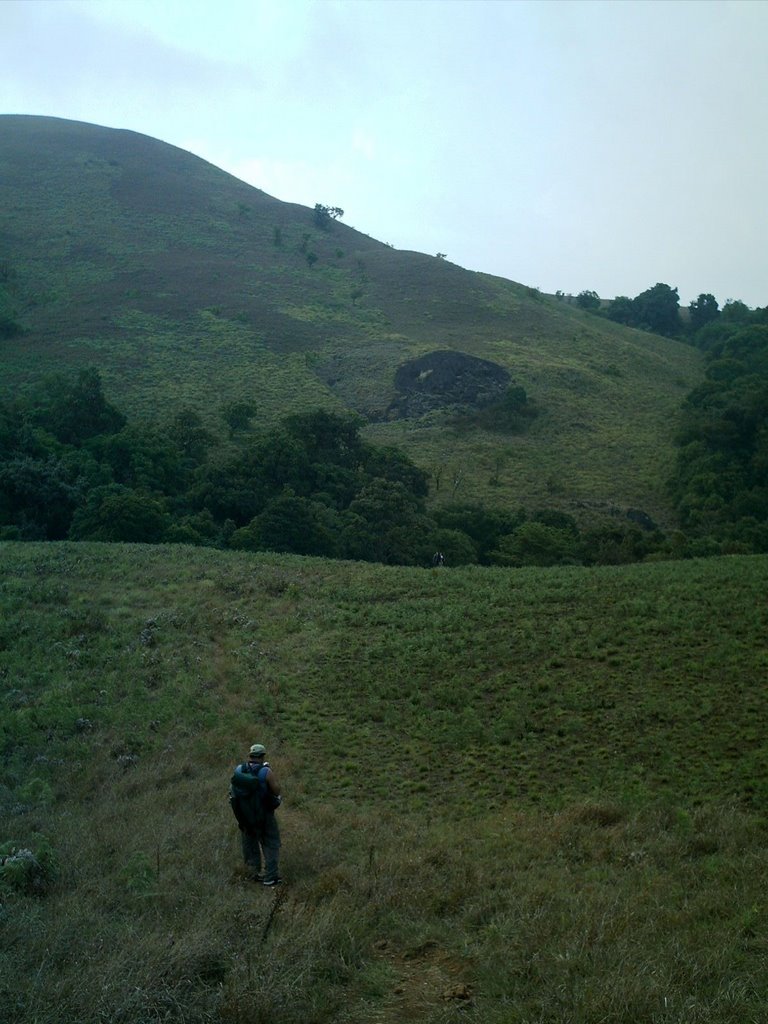
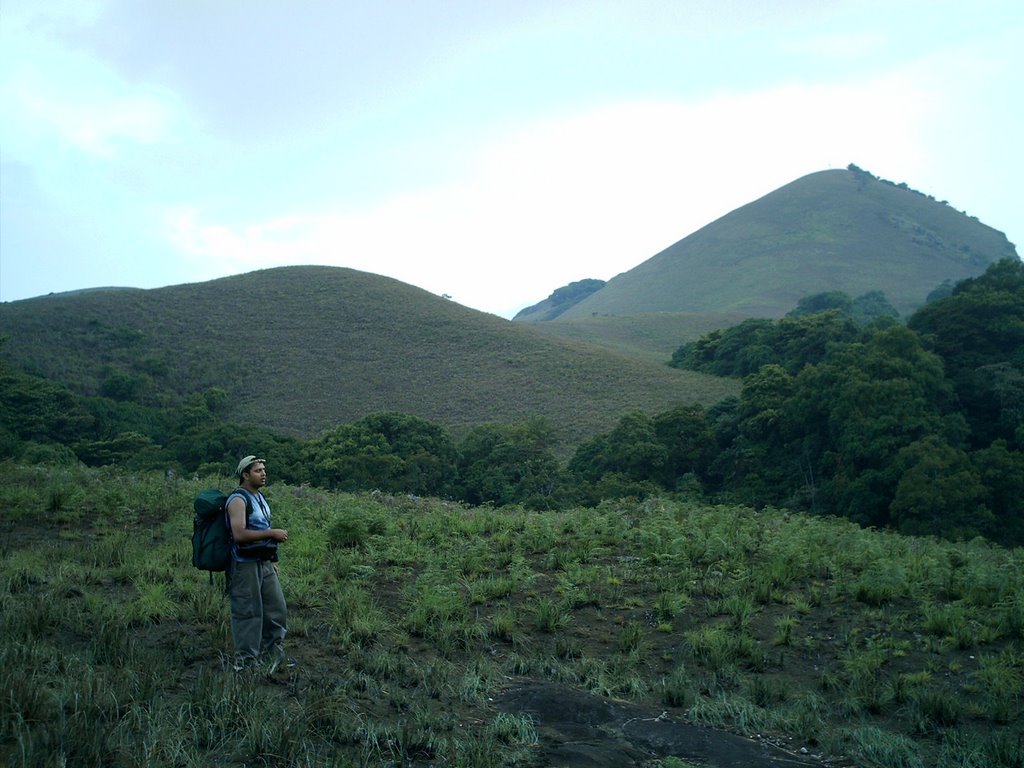
The trail begins at Iruppu, a picturesque waterfall where pilgrims to the Rameshwara temple are eager to strip to their barest and enjoy a shower. It is also perhaps the noisiest place in a radius of about 10 kilometres - and not because of the cicadas. Mercifully, as we begin the trek to Brahmagiri, 1350 m above MSL, the human voices fade behind us. Butterflies with startling blue wings sail past, while turquoise dragonflies dip their pointed abdomens in the limpid pools. As we round the bend in the hillside, the shrill crescendo of cicadas hangs in the air like white noise. Birdsong is patchy - an occasional Hill Myna or White-rumped Shama calls in the canopy. The climb is steep but steady, and soon my lungs balk and my heart pounds in my face, my jugular pulsing like a bass drum. The forest transforms suddenly, turning into dense groves of that monstrous grass, bamboo. The tall, ancient stalks creak in the wind. Far away, really far away behind us, we can still hear the waterfall's ghostly whisper. But it's a memory, and its place is in the past. As for me, I must only look ahead, and climb what's left of the trail. Which, dauntingly, is most of it. Four kilometres to go, announces our guide Lakshman, named mysteriously after the holy spot of Lakshmanatheertha that we have just passed. It is warm in the bamboo forest, and the exertion pumps the water out of me. I have driven most of the night without a moment's shut-eye and the strain begins to tell. Our guide has loped ahead, and soon I can't even see the backs of my fellow trekkers. Only Froggie sticks by me, faithful but equally exhausted. The bamboo forests give way to thin deciduous forest, the leaf litter paving the path with a mosaic of red, black and russet brown. My shoes slip on the smooth leaves. The climb is steady. Cicadas screech around me - I can see them clasping the tree trucks, crying to bring down the rain. Robber flies buzz about my ear, while its several smaller cousins are already gorging on generous samples of my blood. My backpack feels heavy - weighed down by the two 2-liter water bottles. After the hardest stretch, the trail begins to level out. Not discernibly, but my thighs and lungs can feel the easing strain. We hear the gurgle of a stream but it disappears from earshot, like a mirage. The trees are larger here. Strangler figs are wrapped around some of the older forest trees. With sunlight hidden by the canopy, the woods are dim and cool. Butterflies cavort in the glades. Brilliant red stink bugs swarm the leaf litter. The earth is moist. I look about for signs of the promised lion-tailed macaque, one of the most theatened primates in southern India, but there are none. We reach a pool under a tree. A spring, with water bubbling into it from some source beneath the ground. Pond skaters walk its surface. The water is cool, clear and sweet. The forest ends after an abrupt 20-foot ascent. Then the grassland begins. This is the great wide open that Tom Petty sang about, with magnificent views on all sides. Above us only sky. And stream-cooled evergreen sholas in the valley below us. The rustle of reptiles in the grass and undergrowth - mostly skinks and small lizards. And birdsong - bulbuls, woodpeckers, barbets, thrushes. Even the freewheeling song of a Malabar Whistling Thrush that must be heard to be believed. Dried elephant dung is scattered about - this region is one of the last strongholds of the Asian elephant (Elephas maximus) but I am not eager to run into any just now. There is more to the trail but no climbing for a while. The track meanders through lush shola, with magnificent views at every bend. Mysterious birdsong echoes in the woods, but the birds are all well camouflaged. Revived by deep draughts from a bottle of Electral in water, I am recharged again. But not for long. At the next halt, I drink greedily from a forest stream. And the group wolfs down methi rotis with pickle. We pause to examine a beautiful Bronzed Frog by the stream. It sits still, flecked with droplets, as we scramble to photograph it. It is some 26 degrees here in the forest. Air-conditioned. And the sweat drying on your skin makes it cooler. The air is fragrant with the fresh scent of green foliage. Can you get high from too much oxygen?