We’ve moved! Here’s where you can find us

The Green Ogre is now at https://www.greenogreindia.org
Showing posts with label bronzed frog. Show all posts

Encounter: The Bronzed Frog


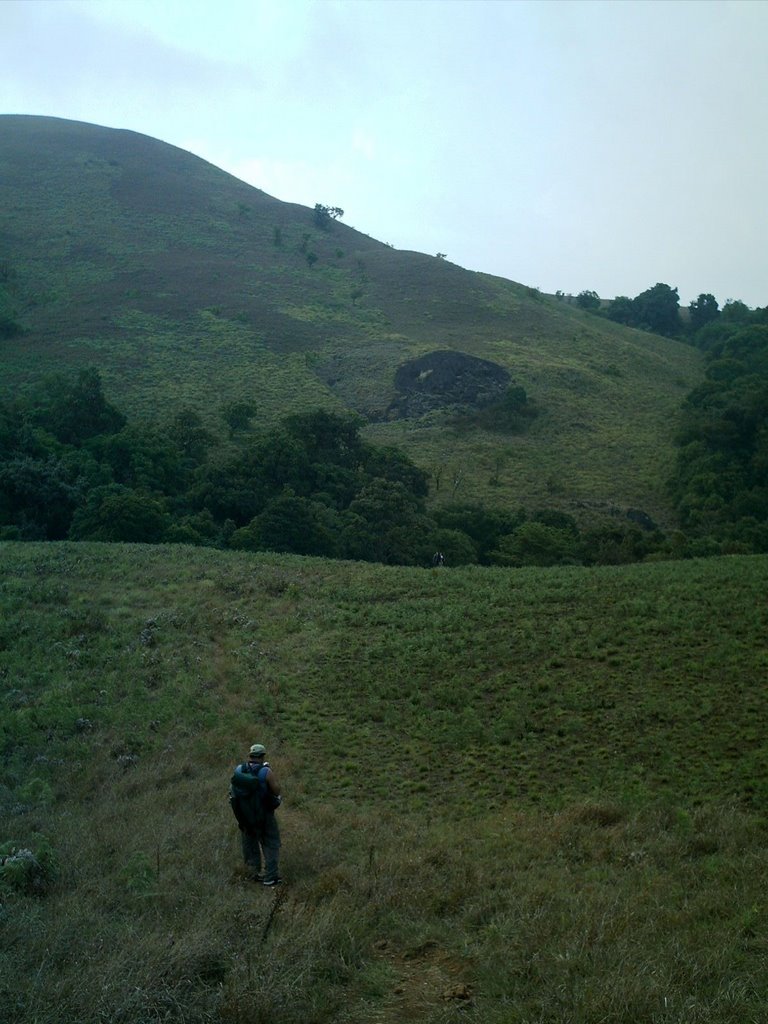
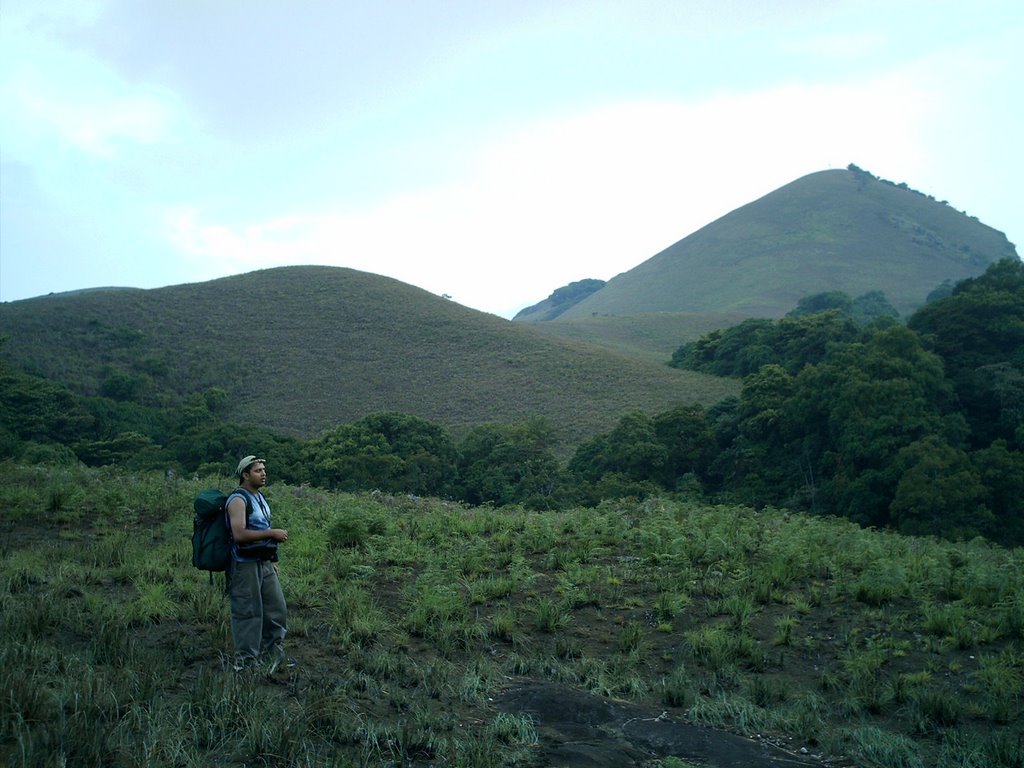
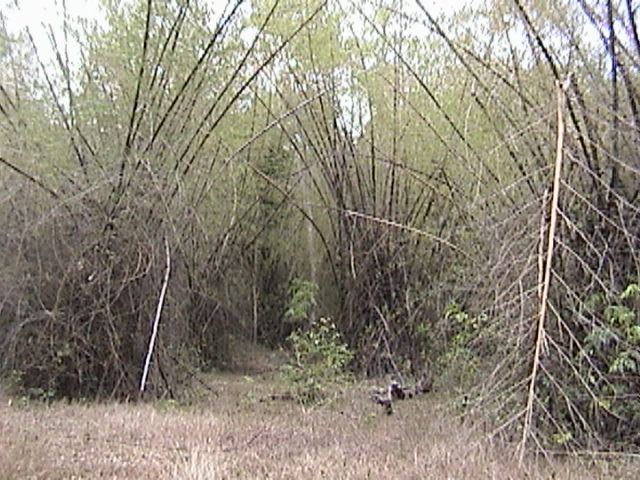
In April 2006, we trekked from the Iruppu waterfalls in Kodagu (Coorg) to the Brahmagiri peak on the Karnataka-Kerala border. After crossing the lower bamboo-dominated patches we crossed a transition zone and reached a nice shola patch at the edge of the high-altitude grassland.


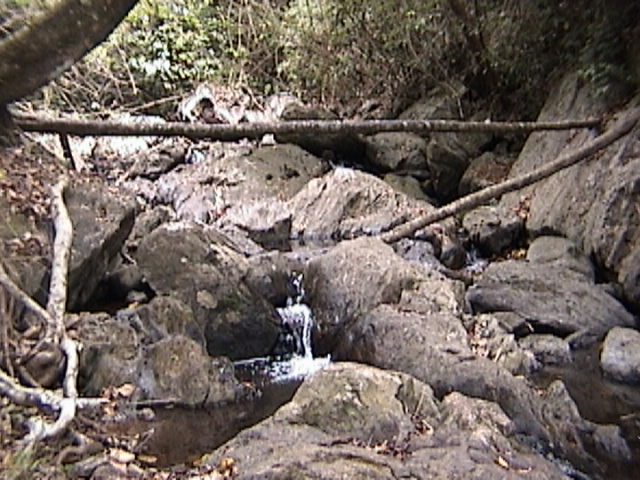
That's where we saw the frog. We found this individual near a small clear-water stream where we had stopped for lunch. In the dappled sunlight of the shola floor, a few individuals were perched on rocks close to the water. It was wet and quite well camouflaged among the rust, brown and maroon leaves sticking to wet stream rocks. The Bronzed Frog was not shy and stayed with us while we lunched, graciously allowing us to photograph it and allowing a close approach.

The common name of the frog is derived from the striking bronze strips that begin from near the snout, continue down the lower jaw, and run along the sides of the body to the lower limbs. The back is brown with bronze spotting and the hind limbs have broken bronze stripes. These strips appear just after the metamorphosis is complete. The Bronzed Frog is an important prey species for the Malabar Pit Viper (Trimeresurus malabaricus), another endemic species that loves the same moist, wet and green canopy-covered shola habitat. Hylarana temporalis was first described in 1864 and is endemic to the Indian subcontinent. It is found in the evergreen forests of the Western Ghats and the Sri Lankan highlands.
Hylarana temporalis or Bronzed Frog is similar to Hylarana aurantiaca, another endemic. H. temporalis is also found in slightly disturbed areas, but H. aurantiaca prefers only fairly pristine canopy-covered streams.
While an alarming die-out of amphibians, especially frogs, has been recorded in recent years, new species continue to be discovered across the world, including the Western Ghats. In early 2009, amphibian researchers S.D. Biju of Delhi University's Systematics Lab and Franky Bossuyt of the Amphibian Evolution Lab of the Vrije Universiteit Brussel announced the discovery of 12 new species of tree frogs from the Western Ghats. Dr Biju also rediscovered the Travancore Bushfrog (Philautus travancoricus), which had not been sighted in 100 years and was hence believed to be extinct. Approximately 126 amphibian species have been described from the Western Ghats.

Another species, Raorchestes resplendens, was recently described from the Eravikulam National Park and is believed to be restricted to a 3 sq km range on the summit of Anaimudi (the highest peak in the Western Ghats), further reinforcing the status of the Western Ghats as an important bio-diversity hotspot.
Text and photographs by Sahastrarashmi
Thanks to K S Gopi Sundar for ID help.

Iruppu-Brahmagiri on foot

The trail begins at Iruppu, a picturesque waterfall where pilgrims to the Rameshwara temple are eager to strip to their barest and enjoy a shower. It is also perhaps the noisiest place in a radius of about 10 kilometres - and not because of the cicadas. Mercifully, as we begin the trek to Brahmagiri, 1350 m above MSL, the human voices fade behind us. Butterflies with startling blue wings sail past, while turquoise dragonflies dip their pointed abdomens in the limpid pools. As we round the bend in the hillside, the shrill crescendo of cicadas hangs in the air like white noise. Birdsong is patchy - an occasional Hill Myna or White-rumped Shama calls in the canopy. The climb is steep but steady, and soon my lungs balk and my heart pounds in my face, my jugular pulsing like a bass drum. The forest transforms suddenly, turning into dense groves of that monstrous grass, bamboo. The tall, ancient stalks creak in the wind. Far away, really far away behind us, we can still hear the waterfall's ghostly whisper. But it's a memory, and its place is in the past. As for me, I must only look ahead, and climb what's left of the trail. Which, dauntingly, is most of it. Four kilometres to go, announces our guide Lakshman, named mysteriously after the holy spot of Lakshmanatheertha that we have just passed. It is warm in the bamboo forest, and the exertion pumps the water out of me. I have driven most of the night without a moment's shut-eye and the strain begins to tell. Our guide has loped ahead, and soon I can't even see the backs of my fellow trekkers. Only Froggie sticks by me, faithful but equally exhausted. The bamboo forests give way to thin deciduous forest, the leaf litter paving the path with a mosaic of red, black and russet brown. My shoes slip on the smooth leaves. The climb is steady. Cicadas screech around me - I can see them clasping the tree trucks, crying to bring down the rain. Robber flies buzz about my ear, while its several smaller cousins are already gorging on generous samples of my blood. My backpack feels heavy - weighed down by the two 2-liter water bottles. After the hardest stretch, the trail begins to level out. Not discernibly, but my thighs and lungs can feel the easing strain. We hear the gurgle of a stream but it disappears from earshot, like a mirage. The trees are larger here. Strangler figs are wrapped around some of the older forest trees. With sunlight hidden by the canopy, the woods are dim and cool. Butterflies cavort in the glades. Brilliant red stink bugs swarm the leaf litter. The earth is moist. I look about for signs of the promised lion-tailed macaque, one of the most theatened primates in southern India, but there are none. We reach a pool under a tree. A spring, with water bubbling into it from some source beneath the ground. Pond skaters walk its surface. The water is cool, clear and sweet. The forest ends after an abrupt 20-foot ascent. Then the grassland begins. This is the great wide open that Tom Petty sang about, with magnificent views on all sides. Above us only sky. And stream-cooled evergreen sholas in the valley below us. The rustle of reptiles in the grass and undergrowth - mostly skinks and small lizards. And birdsong - bulbuls, woodpeckers, barbets, thrushes. Even the freewheeling song of a Malabar Whistling Thrush that must be heard to be believed. Dried elephant dung is scattered about - this region is one of the last strongholds of the Asian elephant (Elephas maximus) but I am not eager to run into any just now. There is more to the trail but no climbing for a while. The track meanders through lush shola, with magnificent views at every bend. Mysterious birdsong echoes in the woods, but the birds are all well camouflaged. Revived by deep draughts from a bottle of Electral in water, I am recharged again. But not for long. At the next halt, I drink greedily from a forest stream. And the group wolfs down methi rotis with pickle. We pause to examine a beautiful Bronzed Frog by the stream. It sits still, flecked with droplets, as we scramble to photograph it. It is some 26 degrees here in the forest. Air-conditioned. And the sweat drying on your skin makes it cooler. The air is fragrant with the fresh scent of green foliage. Can you get high from too much oxygen?