We’ve moved! Here’s where you can find us

The Green Ogre is now at https://www.greenogreindia.org
Showing posts with label deforestation. Show all posts

In the kingdom of the Lion-tailed Macaque

In Valparai the endangered Lion-tailed Macaque inhabits tracts of dense evergreen forest hemmed in by tea plantations. It lives, literally and alarmingly, on the edge


We were driving down from Valparai along one of the remaining patches of tropical evergreen rainforests, soaking up their sounds and feel. We'd had a very good weekend trip, despite not getting to sight anything special besides a couple of Nilgiri Tahr on our way up. The road leading up to Valparai cuts through critical habitat of the Lion-Tailed Macaque and Great Hornbill. We had seen boards screaming "Lion Tailed Macaque are active here. Please drive carefully" and were discussing Kalyan Varma's roadkill photo that had been etched into our minds. 


Ladder-like bridges between canopy trees had been fashioned to ensure that the arboreal primates move freely without having to get down on the road. The extensive clearing of rainforests in Valparai had been started by the British administrators and kept up zealously by their Indian sucessors. Many of those areas are privately owned tea estates now. What remains of rainforests are islets, isolated but protected fiercely by the Nature Conservation Foundation. 


We stopped at a bend on sighting a female scarlet minivet sallying to catch insects. As we were about to get back in the car, Swaheel spotted a primate standing on a near horizontal tree branch, at eye level, about 15 metres away from the road above the downhill slope. "LTM," someone whispered. The animal stared at us for a second or two and walked unhurriedly into the canopy. We thought that was all, happy for the sighting but then we heard movement. Treetops were swinging and black forms moved in and out of branches. And there materialized LTMs of all sizes, and suddenly the forest came alive with whoops and squeaks. We were in the middle of a huge troop of monkeys. They moved down the road. We parked and followed them, careful not to step off the road.
We reached another clearing and were waiting for the monkeys to emerge from the canopy when suddenly Swaheel hissed in my ear: “There, there!" I looked and saw nothing – the canopy was thick with little light penetrating it. He pointed closer and I saw a huge male on all fours on a broken branch. A finger of light illuminated his white mane. Soon, there were macaques everywhere. They were of all ages and sizes -- babies clinging to mothers, juveniles, large males. I spotted another individual barely 3-4 meters from the ground and we spent a satisfying photographic moment.   Vehicles passed us. We had prior warning from Bijoy who had told us the area was very disturbed and we should refrain from attracting a crowd under any circumstances. So, every time we heard a vehicle approach, we pretended to be taking a leak! 


The monkey on the branch was reasonably well camouflaged. We left him alone. Others were trying to cross a gap between trees. What followed was an amazing display. The LTMs on this side of the gorge climbed to the tip of the outcropping branch one at a time. They would shake the branch to make it sway to provide ample thrust for launch. Then the monkey would leap, sailing through the air and latching onto branches on the other side.


They did this one by one -- the first one missed the branch on the other side, and we could hear a crash as it got a foothold further down. Each one of the others made the jump smoothly, including the last one – a mother with a clinging baby.


At this point a minibus from Chalakudy arrived, blaring music, and stopped to partake of the scene. Its occupants pointed at the LTMs and shouted despite our pleas for silence. That was enough irritation for the monkeys, which retreated further into the forest. 


We drove for another 300 meters from that point when we came to a clearing -- and the very verge of the dense evergreen forest. We were in a tea plantation, and it gave us the impression that these threatened primates were living, literally, on the edge. LTMs seldom cross through these plantations, which means they are boxed into these last stretches of evergreen forest with no way out, hoping that whatever little habitat they have would not run out of space, shelter and food.


Text and photos: Sandeep Somasekharan

On the Wing - The Great Hornbill


Nothing can prepare you for the awe-inspiring spectacle of a Great Hornbill, flying wild and free in its ancient forests
The swooshing sound of the Great Hornbills' wingsweeps resonates in the silence of the forest

The Great Hornbill (Buceros bicornis) is found in the Western Ghats and the Himalayan foothills in India as well as in the thick rainforests of Sumatra, the Malay Peninsula and Thailand extending north all the way up to Nagaland in India, as well as Nepal.

These large omnivorous birds do not have many natural predators. However, they are near threatened due to habitat loss from excessive deforestation as well as from poaching (their meat is considered unsuitable for consumption) as their large bills are coveted as trophies. Apart from its huge bill and colorful plumage, the bird is recognizable for its loud and sonorous call, which has earned it the Malayalam name “Malamuzhakki” -- one who makes the hills reverberate. 

 Great Hornbills are known to be monogamous and have a peculiar breeding habit that restricts their ability to proliferate in large numbers. Hornbill pairs partner for life and the death of either partner results in the surviving partner going mate-less for the rest of its life.


Exhibiting great dexterity, a Great Hornbill tosses a berry in the air before swallowing it
While hornbills have a lifespan of around 35 years or more, due to their selective breeding and nesting habits this longevity does not offer a significant advantage for their survival. Females nest in tree hollows while the male helps seal the cavity from outside. The male takes the responsibility of providing food to the incarcerated female. The male makes several daily trips to gather fruits, berries, reptiles and insects for the female. The male stores the fruits in the crop (a sac in its throat) and regurgitates them at the nest, following this regimen until the chick has grown significantly and it is time for the female to emerge from the nest cavity. Since the female has to rely on the male during this time, his death due to hunting or poaching would result in the death of the female and the offspring as well. Great Hornbills are known to return to the same tree cavities year after year and the loss of the tree means the pair would have difficulty in breeding again. There are few trees that satisfy the nesting requirement of hornbills and deforestation has become a major reason for the bird's dwindling numbers. 

Seeing the decline in numbers of the Great Hornbill, several conservation programs have been commenced to protect and revive this intriguing species.

Text: Anand Yegnaswami
(See Sandy's blog post on his meeting with the Great Hornbill)


These lovely images are best printed with HP Laserjet

Osama is dead, but will the cranes fly again?


Now that Osama bin Laden is dead, will America allow Afghanistan to lick its wounds and restore its natural heritage? 

In India, the wintering Siberian Crane has been missing in action for nearly a decade
Afghanistan has always suffered for its place on the map. For millennia, before traders discovered the Silk Route across the Hindu Kush mountains through the Khyber Pass into the riparian plains of the Punjab, before the armies of invaders from Persia thundered into the Indian subcontinent, and before Russians and Americans overran the land in pursuit of mercenary friends-turned-foes, Siberian Cranes flew unmolested over these vast natural barriers to their wintering grounds in India. Though migrating birds have been traditionally hunted in these parts, the outbreak of relentless war has so disturbed their passage that the critically endangered Siberian Cranes have not visited their ritual haunts in Bharatpur, India since 2002.

Of the migratory crane species, the Siberian Crane (Grus leucogeranus) has the longest travel route. They are known to use three distinct migration flyways to their wintering grounds. Of the three surviving populations, birds in western Siberia that winter in northern Iran use the Western Flyway, and those that winter in India use the Central Flyway. The third route, the Eastern Flyway, is used by a breeding population in northeastern Siberia to migrate to Poyang Lake in China. The Western and Central Flyways intersect in Russia and parts of Kazakhstan.

Birds using the Central Flyway traditionally migrated over a distance of 5,000 km from western Siberia through the Russian Federation, Uzbekistan, Turkmenistan, Afghanistan and Pakistan to wintering grounds that once spanned most of northern India including parts of Bihar. The Keoladeo Ghana bird sanctuary in Bharatpur, Rajasthan, was a well-documented wintering ground of the cranes. Cranes are sensitive to disturbance and over time, as war games intensified in the territories along the cranes' Western Flyway, the numbers of Siberian Cranes migrating into India dropped alarmingly. The birds were denied opportunity to descend to their traditional resting and feeding grounds en route to their final wintering destination. The last pair was recorded at Bharatpur in 2002.

Heedless of political boundaries, wintering Siberian Cranes flew 5,000 km to their destinations along routes that traversed several nations
The Cold War warmed up in Afghanistan when America armed Mujahideen fighters with nearly $40 billion in weapons, including portable anti-aircraft missile launchers called Stingers, in order to weaken the Soviet Union's hold in the region. After the end of the Cold War and the disintegration of Soviet power centres in the Kremlin, the weapons remained with the mercenary fighters who changed sides at will in the decades of civil war that followed.

The southeastern part of Afghanistan was once covered with lush forests irrigated by monsoon rains. Less than two percent of those forests remain. In recent years, large parts of Afghanistan have been controlled by Taliban militia who, apart from committing humanitarian atrocities, also denuded the land of its forests. While the Taliban-supported timber mafia pillaged most standing forests for the Pakistan market, military bombings have ruined the remaining tracts. Hazardous pollutants from the explosives, including depleted uranium from anti-tank missiles, pose grave threats to the continued survival of humans and wildlife in the region. Fears are even raised of uranium dust being blown into rivers by windstorms. Depleted uranium has a half-life of 4.5 billion years and clearly the problems of war are not about to go away in a hurry.

After 9/11 the US administration, in pursuit of Al Qaeda, bombed Afghanistan without relent. It is ludicrous to imagine that thoughts of the country's wildlife and environment even troubled policymakers during heated discussions in the interest of US national security. With the reported killing of Al Qaeda chief Osama bin Laden in Pakistan on May 2, America has exacted more than its pound of flesh. 

What, now, will become of Afghanistan? Will the bombings continue? A part of me wonders hopefully: Why can't America, as part of its much-publicised rebuilding efforts, take stewardship of Afghanistan's ecology and allow nature to work her rescuscitating magic?

Will the Siberian Cranes arrive in India by the Central Flyway again? I'm just being a foolish optimist, listening for the rush of the wind in wings of hope.

References:

Life and death in Kaliveli's salt pans


Driving between Chennai and Pondicherry, approximately 30 km before you reach the former French enclave, you cannot but notice a small inlet channel from the sea passing below a narrow bridge and then expanding into a vast lake stretching all the way to the western horizon. This is Kaliveli, the second largest natural lake in southern India (after Pulicat Lake in Andhra Pradesh) and unfortunately among the most neglected wetland ecosystems of the eastern coast.

Kaliveli is connected to the sea by the Yedayanthittu estuary from which there is a considerable intake of sea water. Along its large catchment area are numerous tanks and channels that pump in fresh water especially during the monsoon (October to December) and hence this wetland has a salinity gradient useful for a large array of waterbirds, amphibians, reptiles, molluscs and fishes. Estimates of the exact size of the wetland vary (a substantial portion of the lake is a seasonal wetland) and a documentary film by FERAL puts it as 70 sq km. Kaliveli is classified as an Important Bird Area (IBA) and is an important wintering location and stopover point for winter migrants. Wildlife biologist K S Gopi Sundar once counted over 300 White Storks (Ciconia ciconia) at Kaliveli.

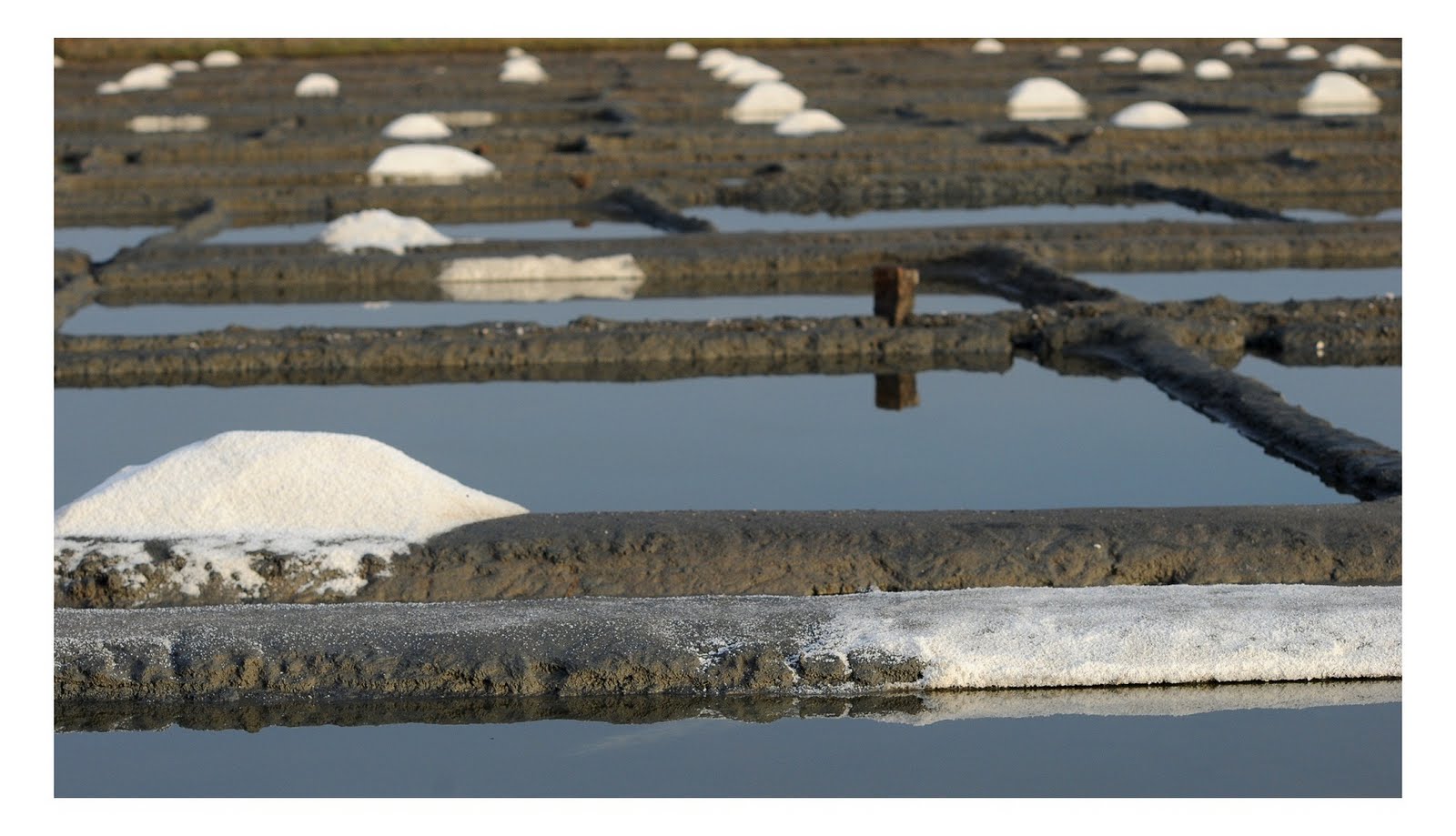
A large area of the wetland, especially the eastern edge along the East Coast Road, has been converted to salt pans. Initially, while driving past the pans on my way to Mahabalipuram and beyond, I used to be fascinated by the sculptural beauty of the salt heaps stretching all the way to the horizon, snow-white pyramids neatly placed in a vast chequered landscape of neatly squared salt pans. It was sheer photogenic geometry. Soon I was to become familiar with their more disturbing aspect, ecologically speaking.
A gravid female Fan-throated Lizard
Spider carrying an egg sac
Remains of a dead tortoise
The body of a snake, consumed by the brine
A crab seems very much at home in the salt pans
In July last year, Gopi and Swati were in Pondicherry and we went over to Kaliveli. As we entered the salt pans we noticed the absolute absence of birds. Barring a few Black-winged Stilts before the bund, we saw no no birds amid the rows of salt pans. Except for some Fan Throated Lizards (Sitana ponticeriana) – among them a number of gravid females -- and some crabs peering out of their burrows along the water channels, everything we saw was dead. There were dead fish in the water channels (closer to concentrated brine than water) no doubt trapped in the channels during the high tide, a dead tortoise, dead snake, dead dragonflies and thousands of shells of dead mollusks. Almost every form of life which had ventured into the salt pans had been quickly snuffed out by the brine. As we walked through the pans towards the edge of the lake trying to get a closer view of the Greater Flamingos that we had seen as pink specks from the road, we came across a remnant mangrove patch along the border of the lake, trying to spread outwards towards the pans but brutally kept in check by human intervention. The entire area of the salt pans was once a mangrove forest, and was later chopped down for the salt industry, thus depriving the east coast of a rich mangrove and estuarine ecosystem that would have rivaled those of Pichavaram, nearly 100 km south.

The salt pans have extended the area of the brackish water further into the lake and have thus alerted the salinity gradient of the lake. The ground water is now so brackish that some salt pans are no longer dependent on the intake from the sea; they simply pump the brine up from the ground.
Painted Storks and Openbill Storks forage beyond the salt pans while the brackish shallows beyond the mangroves play host to Greater Flamingos
A last stand of mangroves
Mangrove forests like these once covered the east coast
It has taken remarkable official apathy to destroy a rich natural wetland ecosystem (Kaliveli continues to be without legal protection). Not even “tourist infatuated” bureaucratic machinery has been able to see the potential of a well-protected, incredibly rich birding area so close to a tourist hub.

Text and photographs by Sahastrarashmi


Further reading:
A manual on Kaliveli (PDF) from the Foundation for Ecological Research, Advocacy and Learning (FERAL)

Tarzan swings, Tarzan falls...

If you went to a boys' school like I did, you know the rest of that verse. For the uninitiated, let's just say that it ends with a reference to the destruction, by shattering, of a part of the male anatomy that rhymes with the first line. Uncle Grey, a Danish agency, has produced a campaign for the Worldwide Fund for Nature (WWF). This one is based on the theme of deforestation. The caption says: “15 km2 of rain forest disappears every minute.” Image copyright: Uncle Grey