We’ve moved! Here’s where you can find us

The Green Ogre is now at https://www.greenogreindia.org
Showing posts with label wetland. Show all posts

Life and death in Kaliveli's salt pans


Driving between Chennai and Pondicherry, approximately 30 km before you reach the former French enclave, you cannot but notice a small inlet channel from the sea passing below a narrow bridge and then expanding into a vast lake stretching all the way to the western horizon. This is Kaliveli, the second largest natural lake in southern India (after Pulicat Lake in Andhra Pradesh) and unfortunately among the most neglected wetland ecosystems of the eastern coast.

Kaliveli is connected to the sea by the Yedayanthittu estuary from which there is a considerable intake of sea water. Along its large catchment area are numerous tanks and channels that pump in fresh water especially during the monsoon (October to December) and hence this wetland has a salinity gradient useful for a large array of waterbirds, amphibians, reptiles, molluscs and fishes. Estimates of the exact size of the wetland vary (a substantial portion of the lake is a seasonal wetland) and a documentary film by FERAL puts it as 70 sq km. Kaliveli is classified as an Important Bird Area (IBA) and is an important wintering location and stopover point for winter migrants. Wildlife biologist K S Gopi Sundar once counted over 300 White Storks (Ciconia ciconia) at Kaliveli.

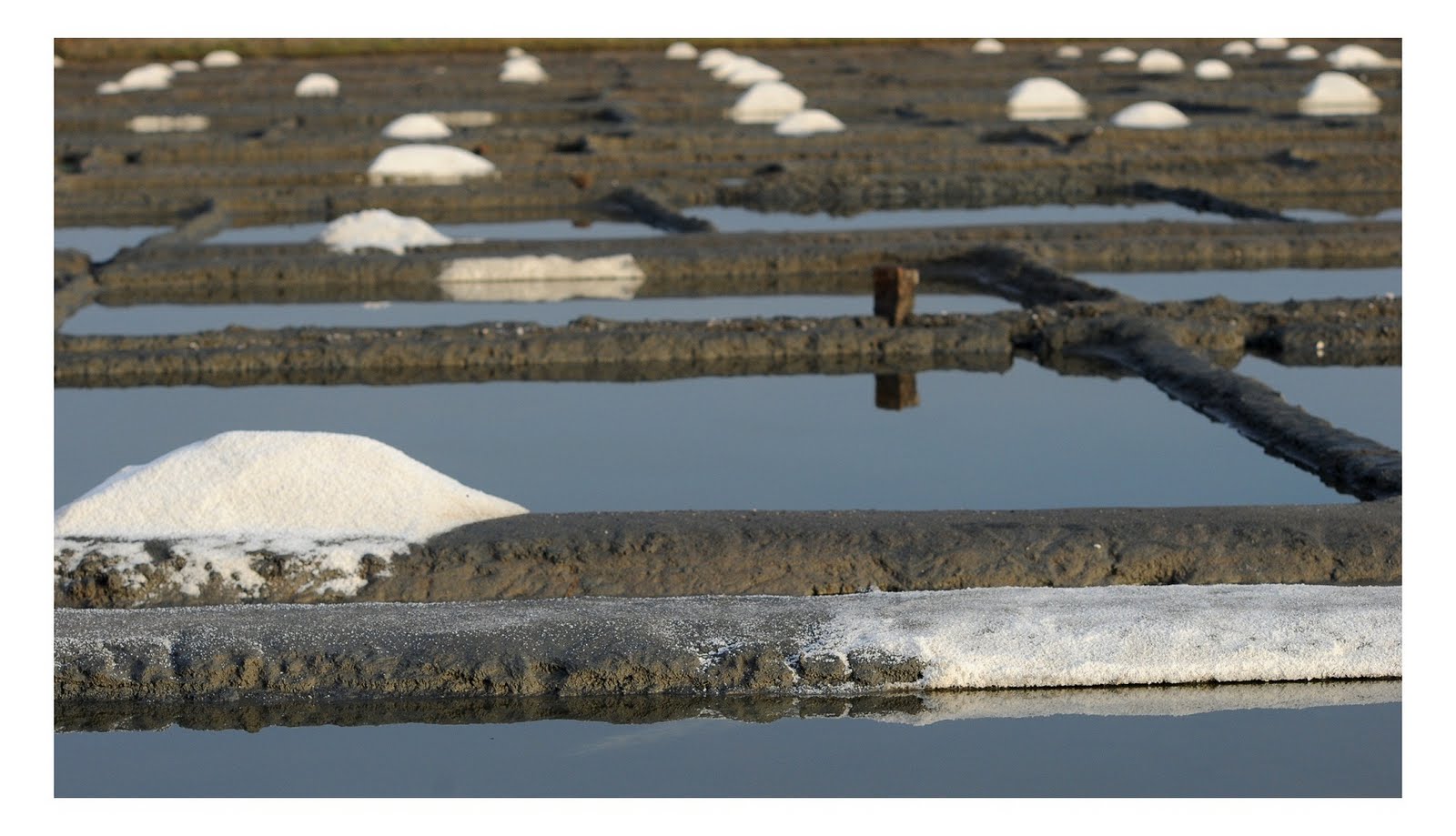
A large area of the wetland, especially the eastern edge along the East Coast Road, has been converted to salt pans. Initially, while driving past the pans on my way to Mahabalipuram and beyond, I used to be fascinated by the sculptural beauty of the salt heaps stretching all the way to the horizon, snow-white pyramids neatly placed in a vast chequered landscape of neatly squared salt pans. It was sheer photogenic geometry. Soon I was to become familiar with their more disturbing aspect, ecologically speaking.
A gravid female Fan-throated Lizard
Spider carrying an egg sac
Remains of a dead tortoise
The body of a snake, consumed by the brine
A crab seems very much at home in the salt pans
In July last year, Gopi and Swati were in Pondicherry and we went over to Kaliveli. As we entered the salt pans we noticed the absolute absence of birds. Barring a few Black-winged Stilts before the bund, we saw no no birds amid the rows of salt pans. Except for some Fan Throated Lizards (Sitana ponticeriana) – among them a number of gravid females -- and some crabs peering out of their burrows along the water channels, everything we saw was dead. There were dead fish in the water channels (closer to concentrated brine than water) no doubt trapped in the channels during the high tide, a dead tortoise, dead snake, dead dragonflies and thousands of shells of dead mollusks. Almost every form of life which had ventured into the salt pans had been quickly snuffed out by the brine. As we walked through the pans towards the edge of the lake trying to get a closer view of the Greater Flamingos that we had seen as pink specks from the road, we came across a remnant mangrove patch along the border of the lake, trying to spread outwards towards the pans but brutally kept in check by human intervention. The entire area of the salt pans was once a mangrove forest, and was later chopped down for the salt industry, thus depriving the east coast of a rich mangrove and estuarine ecosystem that would have rivaled those of Pichavaram, nearly 100 km south.

The salt pans have extended the area of the brackish water further into the lake and have thus alerted the salinity gradient of the lake. The ground water is now so brackish that some salt pans are no longer dependent on the intake from the sea; they simply pump the brine up from the ground.
Painted Storks and Openbill Storks forage beyond the salt pans while the brackish shallows beyond the mangroves play host to Greater Flamingos
A last stand of mangroves
Mangrove forests like these once covered the east coast
It has taken remarkable official apathy to destroy a rich natural wetland ecosystem (Kaliveli continues to be without legal protection). Not even “tourist infatuated” bureaucratic machinery has been able to see the potential of a well-protected, incredibly rich birding area so close to a tourist hub.

Text and photographs by Sahastrarashmi


Further reading:
A manual on Kaliveli (PDF) from the Foundation for Ecological Research, Advocacy and Learning (FERAL)

Wordless Wednesday - Walking on Water

Photo: Sandeep Somasekharan

In Sarus Crane country, a bushel full of lifers

Between November 21 and 25, I was in Rae Bareli, a place whose name most of us remember only during the elections (it happens to be the constituency of the Gandhi family). Rae Bareli and Unnao districts are in the heart of the Gangetic plain. The countryside is characterised by flat, dusty terrain: thickets of thorn scrub and acacia, marshes and reed beds, saline mudflats, occasional orchards and a great abundance of wetlands and foodgrain cultivation - wheat, bajra, lentils, paddy, sugarcane and water chestnuts among others. The soil is a fine, powdery yellowish dust, which motor vehicles whip up into enormous clouds. Trapped in the mist, it lingers, hindering both visibility and breathing. But there is no doubt that it is fertile soil, being rich in silt washed down by the rivers. We birded every day, sometimes rising as early as 4:30 AM to be earlier than the earliest bird. Winter has set in nice and firm over northern India, and the mercury hovered around 10 degrees C on some days. We covered many of the wetlands of the districts as well as a sampling of orchards. In the reed beds and alkaline scrublands of Samaspur Bird Sanctuary, we went looking for winter arrivals. Since my trek to the Garhwal Himalayas, I have not added so many lifers on a single birding trip. Of these, our standout sightings are the Red-necked Grebe at Samaspur, the Richard's Pipit at a very disturbed wetland near Khiron and the Steppe, Imperial and Bonelli's Eagles. We got a very good look at a Red-necked Falcon, and an obliging Wryneck posed for my video camera. Among the grass stalks and reed beds, Bluethroats displayed their painted chests with aplomb. Prinias - Jungle, Plain and Graceful - joined Zitting Cisticolas and Common Stonechats in creating that ever-mellifluous marsh chorus. At Samaspur, the Striated Grassbird announced his territorial claim with a pretty little song, and much fluttering and displaying. Warblers were alive in every bush. We had a couple of excellent views of the Greater Whitethroat. Wagtails - Grey, Yellow, White and Citrine - were everywhere. And our resident White-Browed felt a little edged out, methinks. The migrant waders fed busily. There were Storks and Ibises, Little Ringed Plovers, Little and Temminck's Stints, Sandpipers (Common, Green, Marsh and Wood), flocks of Ruff, Redshanks and Greenshanks, as well as visiting White-tailed and Grey-headed Lapwings. We detoured to the banks of the Ganga at Dalmau to catch a glimpse of a handsome resident - the River Lapwing. The little guys were at their best. I had the best look I have ever had of the Red Avadavat, picking seeds off the ground only feet away from my feet. But most of all, I acquainted myself with the reigning monarch of these wetlands - the enchanting Sarus Crane. We counted (as part of a census) over a hundred Sarus cranes. This is a sentient creature - let me tell you that. No bird can inspire so much respect. Several times, as I stood watching a pair of Sarus (often less than 50 feet away), I have been struck by the dignity with which this bird carries itself. There's a certain indulgence and aloofness about the Sarus that can only come with immense power and pedigree. Mostly, they mate for life and bring up one or two chicks every year. I was lucky to see plenty of chicks - from downy, tottering ones a few days old to some that were as tall as their parents. More on that later in a separate post. Enough said. Here's the species list:
  1. Ashy Drongo
  2. Ashy Prinia
  3. Ashy-crowned Sparrow Lark
  4. Asian Barred Owlet
  5. Asian Koel
  6. Asian Openbill
  7. Bank Myna
  8. Barn Swallow
  9. Black Drongo
  10. Black Ibis
  11. Black Kite
  12. Black Redstart
  13. Black-headed Ibis
  14. Black-headed Munia
  15. Black-headed Oriole
  16. Black-shouldered Kite
  17. Black-winged Cuckooshrike
  18. Black-winged Stilt
  19. Blue Rock Pigeon
  20. Bluethroat
  21. Blue-winged Leafbird
  22. Bonelli's Eagle
  23. Booted Warbler
  24. Brahminy Starling
  25. Bronze-winged Jacana
  26. Brown Hawk Owl
  27. Brown Rock-Chat
  28. Brown-headed Barbet
  29. Cattle Egret
  30. Chestnut-bellied Nuthatch
  31. Chestnut-shouldered Petronia
  32. Chiffchaff
  33. Citrine Wagtail
  34. Common Coot
  35. Common Flameback
  36. Common Iora
  37. Common Kestrel
  38. Common Kingfisher
  39. Common Moorhen
  40. Common Myna
  41. Common Peafowl
  42. Common Pochard
  43. Common Redshank
  44. Common Sandpiper
  45. Common Stone Chat
  46. Common Tailorbird
  47. Common Teal
  48. Coppersmith Barbet
  49. Cotton Pygmy Goose
  50. Coucal
  51. Crested Lark
  52. Crested Pochard
  53. Darter
  54. Egyptian Vulture
  55. Eurasian Collared Dove
  56. Eurasian Spoonbill
  57. Gadwall
  58. Graceful Prinia
  59. Great Egret
  60. Greater Whitethroat
  61. Green Bee Eater
  62. Green Sandpiper
  63. Greenish warbler
  64. Greenshank
  65. Grey Francolin
  66. Grey Heron
  67. Grey Hornbill
  68. Grey Wagtail
  69. Grey-capped Pygmy Woodpecker
  70. Grey-headed Canary Flycatcher
  71. Grey-headed Lapwing
  72. Hoopoe (Eurasian and Indian subspecies)
  73. House Crow
  74. House Sparrow
  75. House Swift
  76. Hume's warbler
  77. Imperial Eagle
  78. Indian cormorant
  79. Indian Robin
  80. Indian Roller
  81. Indian Silverbill
  82. Intermediate Egret
  83. Jungle Babbler
  84. Jungle Prinia
  85. Large Grey Babbler
  86. Large-billed Crow
  87. Large-billed Pipit
  88. Laughing Dove
  89. Lesser Whistling Duck
  90. Lesser Whitethroat
  91. Little Egret
  92. Little Grebe
  93. Little Ringed Plover
  94. Little Stint
  95. Long-tailed Minivet
  96. Long-tailed Shrike
  97. Marsh Harrier
  98. Marsh Sandpiper
  99. Northern Shoveller
  100. Oriental Honey Buzzard
  101. Oriental Magpie-Robin
  102. Oriental Skylark
  103. Oriental White-eye
  104. Paddyfield Pipit
  105. Paddyfield Warbler
  106. Painted Stork
  107. Peregrine Falcon
  108. Pheasant-tailed Jacana
  109. Pied Bushchat
  110. Pied Kingfisher
  111. Pied Starling
  112. Plain Prinia
  113. Plum-headed Parakeet
  114. Pond Heron
  115. Purple Heron
  116. Purple Sunbird
  117. Purple Swamphen
  118. Red Avadavat
  119. Red-necked Falcon
  120. Red-necked Grebe
  121. Red-throated Flycatcher
  122. Red-vented Bulbul
  123. Red-wattled Lapwing
  124. Red-whiskered Bulbul
  125. Richard's Pipit
  126. River Lapwing
  127. Rose-ringed Parakeet
  128. Ruff
  129. Rufous Treepie
  130. Rufous-tailed Shrike
  131. Sand Lark
  132. Sarus Crane
  133. Scaly-breasted Munia
  134. Sind Sparrow
  135. Small cormorant
  136. Spotbill Duck
  137. Spotted Dove
  138. Spotted Owlet
  139. Steppe Eagle
  140. Streak-throated Weaver
  141. Striated Grassbird
  142. Tawny Pipit
  143. Temminck's Stint
  144. Verditer Flycatcher
  145. White-breasted Waterhen
  146. White-browed Wagtail
  147. White-tailed Lapwing
  148. White-throated Kingfisher
  149. Wire-tailed Swallow
  150. Wood Sandpiper
  151. Woolly-necked Stork
  152. Wryneck
  153. Yellow-crowned Woodpecker
  154. Zitting Cisticola
Videos and photos coming soon.