We’ve moved! Here’s where you can find us

The Green Ogre is now at https://www.greenogreindia.org
Showing posts with label mangrove forests. Show all posts

Pichavaram - the great mangrove forest of Tamil Nadu

Few people know (or care) that this favourite locale of filmmakers is a spectacular mangrove ecosystem throbbing with life
The mangrove forests of Pichavaram comprise an intriguing ecosystem

Tickets in hand, negotiations with the boatman closed, we should have been on the boat, headed for our first visit to a mangrove ecosystem. But all we could do was to gaze longingly at the dense green clumps across a vast expanse of the lagoon. The boat that was to carry us there was moored to the shore covered in blue tarpaulin. A sudden squall was depositing even more rain on the already soaked and overflowing coastline of southern Tamil Nadu and we were right in the centre of it all – at the northern edge of the Cauvery delta. 


A sudden squall threatened to drown out our much-awaited trip

Pichavaram, one of only two mangrove ecosystems located in Tamil Nadu, is approximately 75 km south of Pondicherry and 15 km from the temple town of Chidambaram. We had reached Pichavaram in the afternoon after a very enriching visit to the great living Chola temple. To be fair, the day had been fairly dry but now that we had planned to be on open water for the next four hours, it had started pouring.


Our entry into the mangroves began with the boatman negotiating one of the tamer channels
The Cauvery delta is formed when the river breaks up into multiple distributaries after Srirangam island. The northernmost distributary Coleroon (or Killidam) meets the sea near Pichavaram (the other river that drains this area is Vellar and the wetland is referred to as Vellar-Pichavaram-Coleroon wetland). The other mangrove patch is at Muthupet, which happens to be at the southernmost point of the Cauvery delta; the distance between the two is 180 km. Muthupet has a large lagoon where six distributaries discharge their waters. These mangroves are characterized by a long dry season (February to September) and high salinity.
Inside the mangroves
The shower stopped as suddenly as it had begun. We were off in a jiffy, the boatman rowing slowly and steadily across to the mangroves. Clouds streamed in from the ocean, promising more rain, but we pretended not to care. Pichavaram has almost 4,000 rivulets of varying length and width with mangroves on either side. As we entered the first, not more than six feet across, we saw the mangroves up close. They seem to grow out of water (there is not a patch of ground visible anywhere) almost like a floating forest.
The canopy weaves a tangled web, and not always a friendly one

The boatman was accomplished at clearing our way
As the boat negotiated the first turn, to our utter amazement and delight we entered a long and narrow rivulet completely wrapped in mangroves. It was like entering a green tunnel – the boatman had to row by moving the low, tangled mangrove branches out of the way. The banks of the rivulet were covered with mangrove roots reaching into the water – hundreds for every clump. The sky was swallowed up completely by the arches of these low trees and all we could see was the narrow rivulet and a vast impenetrable forest growing out of turbid water. The world had dissolved into an expanse of brown and red stilt roots (and all the shades in between) and the luxuriant green foliage of the mangroves, upon which streaks of sunlight created an impressionist canvas of rust, brown, olive, jade, lime-green and emerald.


A maze of stilt roots

In the eerie silence, as we negotiated one tunnel after another, crabs lit up the scene. They were everywhere – climbing up from the water’s edge, clinging to the trunks, hanging on to the canopy and perched in silence on overarching branches. A myriad species of crabs inhabit the forest and it was unfortunate that we knew so little about them. Soon enough we entered one of the wider channels. It was almost 100 feet across, like highways connecting the islands of mangroves. Forest towered on either side, dense and glistening in the evening sun.

The low boughs were the province of a myriad species of crabs
The east coast wetlands starting from the Sundarbans right down to Pichavaram (and Muthupet) receive a major infusion of fresh water from the rivers either throughout the year (the snow-fed Ganga and Brahmaputra) or during the northeast monsoon (Krishna, Godavari and Cauvery). Salinity levels vary through the season in proportion to the fresh water discharge but the trend is towards an increase in salinity as we move down the coast. So, while the Sundarbans have the least salinity (and the shortest dry season), the mangrove wetlands of the Cauvery delta have the maximum salinity levels and the longest dry season. Salinity (or the absence of freshwater intake) has an observed impact on biomass and species diversity. The Sunderbans and Mahanadi mangroves have 26 recorded mangrove species (out of the 33 found in India, 51 in South Asia and 68 worldwide), and high biomass due to tall low-salinity tolerant trees. But the mangrove species diversity drops to 17 for Godavari, 12 for Krishna and finally 11 for Cauvery. 


The sea-water dominated mangroves of Gujarat (with almost no fresh water infusion) have a species diversity of just eight. Further, the dominant species in all the high salinity mangroves -- those of the rivers Cauvery and Krishna and in Gujarat -- is Avicennia marina, an extremely saline water-tolerant species.

It has been observed that except in Andaman and Nicobar Islands, where the mangroves along tidal creeks, lagoons and bays are extremely diverse, those of the east coast are gradually being dominated by high salt-tolerant species like Avicennia marina due to changes in quantity and periodicity of fresh water. It has been found that the vegetation of Pichavaram and Muthupet wetlands used to be more diverse in the beginning of the 20th century but since the freshwater inflow was severely curtailed by the numerous dams and canals upstream on the Cauvery, Avicennia marina became dominant.


Mangroves receive an infusion of river water during the monsoon

We spent almost three hours in this verdant forest. It was a strangely hypnotic world. The dense forest growing out of the water, trees on stilts, and meditating crabs perched where we expected birds, puzzled our senses. But it was a real world, a shrinking and vulnerable patch of forest, and probably the last remnant of the much vaster mangrove forests that occupied the Cauvery Delta.


A strangely hypnotic world
Note:
Mangrove wetlands in India are in most cases the gift of east-flowing rivers. Other than the geological fact that India has no major west-flowing rivers, the east coast is gentler and wider and thus aids major rivers in creating large deltas and an accompanying network of tidal creeks and canals, and brackish lagoons where the mangroves thrive.

The major mangroves patches in India are Sunderbans (Ganga-Brahmaputra), Mahanadi (Mahanadi, Brahmini and Baitarani – the famous Bhitarkanika wetland), Godavari (the Gautami-Godavari system creates the Coringa wetland), Krishna (three islands located between Gollamattapaya and Nadimeru distributaries, and the Krishna river) and Cauvery (Pichavaram and Muthupet). The river dominated (tide-dominated in the case of the Sunderbans) mangroves of the east coast comprise approx 57 percent of India’s mangroves.

The west coast mangroves, all of which are in Gujarat (Gulf of Kutch and the Gulf of Khambat), comprise about 23 percent and those of Andaman and Nicobar Islands make up the remaining 20 percent. There are no statistically significant mangroves outside these five states (Andhra Pradesh, Tamil Nadu, Odisha, West Bengal and Gujarat) and Andaman and Nicobar islands, though small patches exist along the coasts of Kerala, Karnataka, Maharashtra and Goa.


We saw very few birds inside the forests but for the Striated Heron or the Mangrove Heron
The Gujarat mangroves are of a very different type. They are “sea mangroves” since they receive almost no freshwater from inland rivers during the year. These are classified as “drowned-valley type mangroves”.

Text and photographs by Sahastrarashmi
Additional photographs by Bijoy Venugopal


References: 


V Selvam, Environmental Classification of Mangrove Wetlands of India [PDF]

Life and death in Kaliveli's salt pans


Driving between Chennai and Pondicherry, approximately 30 km before you reach the former French enclave, you cannot but notice a small inlet channel from the sea passing below a narrow bridge and then expanding into a vast lake stretching all the way to the western horizon. This is Kaliveli, the second largest natural lake in southern India (after Pulicat Lake in Andhra Pradesh) and unfortunately among the most neglected wetland ecosystems of the eastern coast.

Kaliveli is connected to the sea by the Yedayanthittu estuary from which there is a considerable intake of sea water. Along its large catchment area are numerous tanks and channels that pump in fresh water especially during the monsoon (October to December) and hence this wetland has a salinity gradient useful for a large array of waterbirds, amphibians, reptiles, molluscs and fishes. Estimates of the exact size of the wetland vary (a substantial portion of the lake is a seasonal wetland) and a documentary film by FERAL puts it as 70 sq km. Kaliveli is classified as an Important Bird Area (IBA) and is an important wintering location and stopover point for winter migrants. Wildlife biologist K S Gopi Sundar once counted over 300 White Storks (Ciconia ciconia) at Kaliveli.

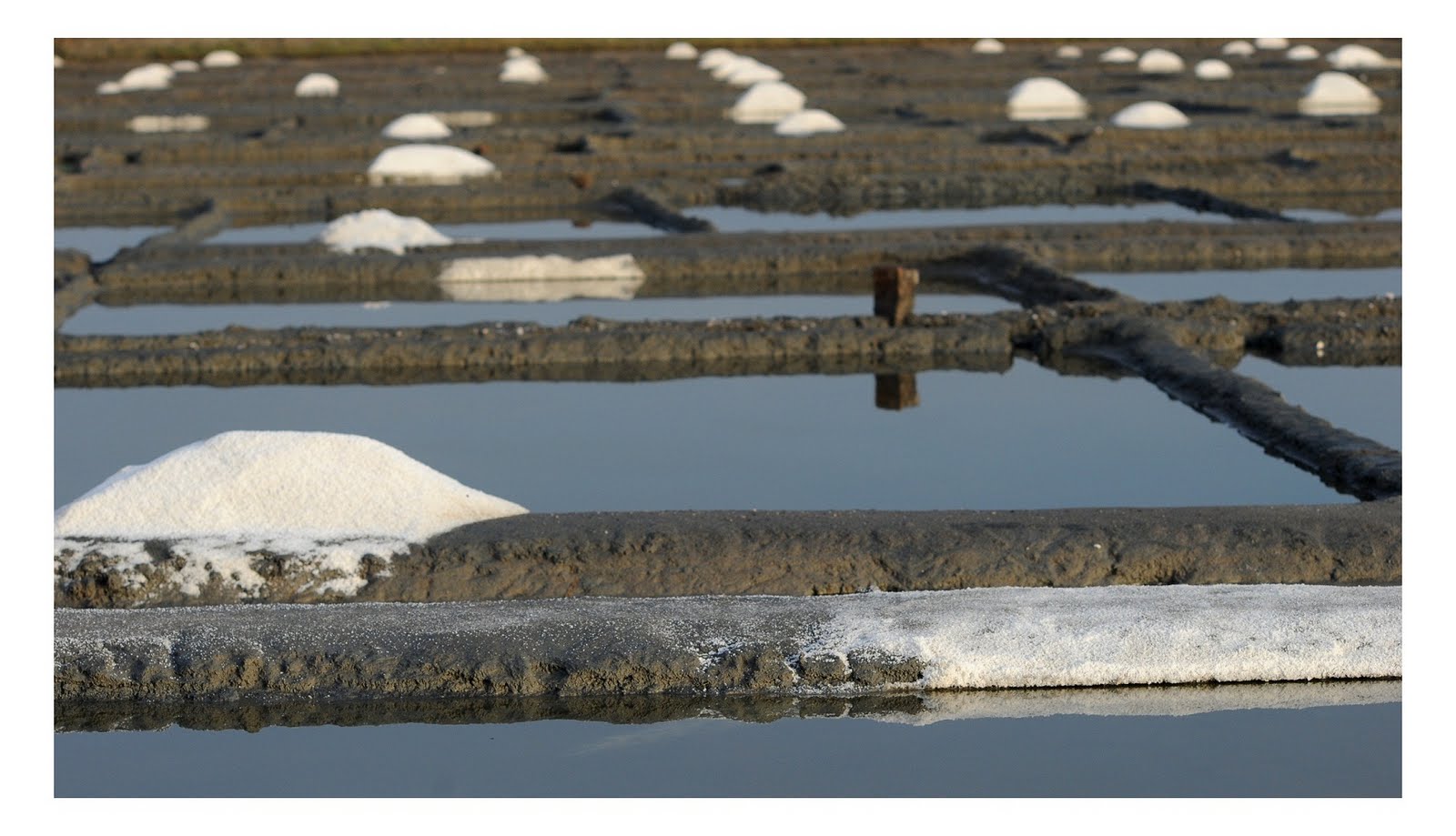
A large area of the wetland, especially the eastern edge along the East Coast Road, has been converted to salt pans. Initially, while driving past the pans on my way to Mahabalipuram and beyond, I used to be fascinated by the sculptural beauty of the salt heaps stretching all the way to the horizon, snow-white pyramids neatly placed in a vast chequered landscape of neatly squared salt pans. It was sheer photogenic geometry. Soon I was to become familiar with their more disturbing aspect, ecologically speaking.
A gravid female Fan-throated Lizard
Spider carrying an egg sac
Remains of a dead tortoise
The body of a snake, consumed by the brine
A crab seems very much at home in the salt pans
In July last year, Gopi and Swati were in Pondicherry and we went over to Kaliveli. As we entered the salt pans we noticed the absolute absence of birds. Barring a few Black-winged Stilts before the bund, we saw no no birds amid the rows of salt pans. Except for some Fan Throated Lizards (Sitana ponticeriana) – among them a number of gravid females -- and some crabs peering out of their burrows along the water channels, everything we saw was dead. There were dead fish in the water channels (closer to concentrated brine than water) no doubt trapped in the channels during the high tide, a dead tortoise, dead snake, dead dragonflies and thousands of shells of dead mollusks. Almost every form of life which had ventured into the salt pans had been quickly snuffed out by the brine. As we walked through the pans towards the edge of the lake trying to get a closer view of the Greater Flamingos that we had seen as pink specks from the road, we came across a remnant mangrove patch along the border of the lake, trying to spread outwards towards the pans but brutally kept in check by human intervention. The entire area of the salt pans was once a mangrove forest, and was later chopped down for the salt industry, thus depriving the east coast of a rich mangrove and estuarine ecosystem that would have rivaled those of Pichavaram, nearly 100 km south.

The salt pans have extended the area of the brackish water further into the lake and have thus alerted the salinity gradient of the lake. The ground water is now so brackish that some salt pans are no longer dependent on the intake from the sea; they simply pump the brine up from the ground.
Painted Storks and Openbill Storks forage beyond the salt pans while the brackish shallows beyond the mangroves play host to Greater Flamingos
A last stand of mangroves
Mangrove forests like these once covered the east coast
It has taken remarkable official apathy to destroy a rich natural wetland ecosystem (Kaliveli continues to be without legal protection). Not even “tourist infatuated” bureaucratic machinery has been able to see the potential of a well-protected, incredibly rich birding area so close to a tourist hub.

Text and photographs by Sahastrarashmi


Further reading:
A manual on Kaliveli (PDF) from the Foundation for Ecological Research, Advocacy and Learning (FERAL)

Sundarbans Diary - Oh Calcutta!

Jennifer Nandi bids goodbye to the Sundarbans and acclimates to civilisation as she traipses the streets of crowded Kolkata


The famous bridge over the Hooghly River in Kolkata
January 12 - Leaving for Kolkata


During the three-hour-cruise to the jetty, from where we will be transferred by car to Kolkata, we are surprised by thousands of ducks - hundreds of Wigeon and Tufted Ducks on open water, and Lesser Whistling Teal huddled against the comparative safety of the reeds. Our eyes devour these sights of the Sundarbans - a landscape full of colour and incident for the vigilant visitor.


Ferrying hay in the Sundarbans - note the toilet at the back of the boat
Sadly, the Sundarbans are also the recipient of eroded topsoil and silt. In their downward flow from the Himalayan regions, rivers and streams -- the primary agents of soil erosion -- drain the Himalayas, eroding large quantities of soil in their upper courses. During the monsoon, unsorted sediments clog reservoirs, turbines and irrigation works and are deposited over agricultural fields and settlements by the swollen rivers. As the sun's intense radiation accelerates the rate at which snow melts in the uplands, the increased erosion causes water levels to rise to flood proportions, sweeping away unwary people and animals. 


In fact, Nepal exports to India the one commodity that it can least afford to part with – its topsoil. This affects the lives and property of several hundred million people in Gangetic India and Bangladesh. The Bay of Bengal is the eventual sink for this sediment. The Bengal Fan, at over 20 km thick, is one of the thickest accumulations of sediment in the world. Indeed much of the country of Bangladesh is built on top of the fan, which lies on top of the oceanic crust. Truly, in the face of deforestation, the rivers wash our future into the sea.

Our 3-hour drive back to Kolkata feels like, according to Ken, a Kamikaze run! Too much frenetic traffic, too many people, too many obstacles that should never have been on the road! Warmly embraced by the hospitality of the Oberoi Grand Hotel, we luxuriate in it till early evening when we set out to buy books and, in general, to gad around the city streets. We pass on the option of eating elsewhere, so happy are we with the fare at the Oberoi Grand.


After our sojourn in the wild Sundarbans, exploring the postcolonial wilderness of the City of Joy was actually pleasurable
January 13 - Kolkata


For much of our city tour, photography is banned. Police shepherd photography-intentioned, gawking tourists away from the imposing edifices that line Kolkata’s colonial streets. The Writer’s Building, built in 1780 for the East India Company’s bureaucracy, is the most glorious. BBD Bagh, renamed after the nationalists who attempted to assassinate the British Lieutenant Governor Lord Dalhousie, was once a central reservoir that supplied Calcutta’s water. It is not uncommon to hear locals refer to it by its old colonial name, Dalhousie Square. The other equally imposing edifices are the Standard Buildings and St Andrew’s Church. Across the road, on the ruins of the original Fort William -- the site of the ‘Black Hole of Calcutta’ -- stands the truly grand, domed General Post Office built in 1866. There is a 1902 Black Hole Memorial, sequestered in a corner on the grounds of St. John’s Church. It is an interesting church, but lacks the extraordinary majesty of St. Paul’s Cathedral. Here, the pews are original and the stained-glass west window is by Edward Burne-Jones.


The stately Victoria Memorial stands in memory of a dead queen
Although built for a dead colonial queen, the Victoria Memorial is an incredibly beautiful building. We pose in its well-tended gardens and photograph its magnificence over and over again. Only then do we enter the interior galleries that trace the history of the city.


We are overawed by the city; there is much that we haven’t seen – the Metropolitan Building of the colonial era, and Tipu Sultan’s Mosque. All this and much more will have to wait for another time. Meanwhile, we come away with an untroubled feeling. No pushy hawkers, no lewd remarks by passing men, no blank belligerent stares which women in Delhi are routinely burdened with.


That night we dine at “Oh Calcutta!” - a fitting end to a rather interesting day. As we feast on excellent Bengali cuisine we shelve thoughts of packing to be done that night – the hotel will graciously permit us to leave behind luggage so that we travel light onwards to what for me is the highlight of the whole trip.


Text and photos: Jennifer Nandi

Sundarbans Diary - In celebration of alert laziness

On the last leg of her sojourn in the Indian Sundarbans in West Bengal, Jennifer Nandi enjoys an off-day that turns out quite rewarding


Jan 11, 2010 


Our definition of a pleasant morning – few tourists! We enjoy a slow walk on one of the islands to a watchtower - the walkways leading up to it are securely fenced off to provide protection against sudden tiger intrusion.


A thirsty bird of prey lands on a protruding root of a tree at the water’s edge. Searching for distinctive features, we quarrel over its identification and conclude that it’s a Besra (Accipiter virgatus). It’s a wonderful luxury knowing the names of these birds - but it isn’t really necessary to identify them. Even if you don’t know the names of birds, you can always just watch. Watching becomes an interesting habit. It’s what one can always do while waiting, especially while waiting. And birds provide such thrilling moments. But the key to one’s enjoyment is the knowledge that accompanies the thrill. It is with understanding of the phenomenon called life, that one’s joy is enhanced. I’m eternally gratified to have the explanation while witnessing any of life’s dramas unfold. So here I am, delighted anew, because delight is more often than not, sudden and utterly unexpected.


Back on the boat, blurred images of non-bird-like movement fill our binocular-aided vision. Jumping from the prop-roots of the mangroves onto the broad mudflats up ahead are mudskippers so named for their ability to hop across the mud using their tails for propulsion. Their stumpy pectoral fins enable them to "walk" across the exposed mud. Some cling to vertical proproots or tree trunks using their pelvic fins that have fused together to form suckers. To breathe out of water, they carry a mixture of air and water in their gill chambers. If however, they open their mouths to feed, this fluid comes gushing out! Then of course the mudskipper must dash back to the water’s edge to gulp another mouthful. They have a peculiar appearance with eyes on the tops of their heads. We see some resting in shallow water with their bodies fully submerged but for the eyes. It’s an interesting way to keep an eye on what is happening in the world! 


A scuttling, lopsided Fiddler Crab distracts us – it’s a male. He has one claw that is out of all proportion to its body – all to attract a mate! We spin our heads abruptly to the sound of raucous communication by Kingfishers, signalling the sun’s progression toward the horizon. They resume activity at this part of the day with vocalisations to intimidate rivals fighting for favoured fishing rights. If a Pied Kingfisher sights a fish near the surface it will aim and plunge, with wings folded, from a height of anything up to 10 metres. Watching this bird hang poised in the air with rapidly vibrating wings and with beak and tail pointed sharply downwards, while taking aim one appreciates the realization that these birds must’ve had to develop the muscular skills this technique required without having to develop any radical skeletal modifications such as those evolved by the hummingbird. We watch it hover, witness its disappointment, then see it briskly pass on to hover elsewhere. Apparently the kingfisher’s superbly controlled accurate dive seems to have been developed originally to pluck prey from the ground. It’s always a joy to watch them effortlessly pick up fish swimming just below the surface of the water. It is an act of extraordinary skill performed within a matter of a few seconds, without falter or fumble. The birds that pioneered diving for fish had to learn how to offset their aim to allow for the way that light bends as it enters or leaves water.


An egret ventures perilously close to a slumbering Estuarine Crocodile
There are Collared and Black-capped Kingfishers too. They batter their prey before swallowing them whole. One, having been dispatched from his perch by a rival, swipes his dagger-shaped bill on his new perch to wipe off the frustration or indignity of having been ousted. Flying low over the coast, a sea eagle comes in to perch on the bare branch of a tall tree, within 10 ft of us. Sea eagles too have huge, powerful beaks. They have impressive wingspans and their big sturdy legs and feet are always bare, with extremely powerful sharp, curved talons. Like most animals, the sea eagle feeds on what it obtains most easily. It may fish for food, steal a meal from another bird, or eat dead fish and other animal remains. 


A dark Changeable Hawk Eagle journeys in with prey in its talons. It is a striking bird and it is my first viewing of the bird in its black morph. It perches on a strong branch to devour his supper. The din of roosting birds peaks as the sun slips below the horizon and suddenly, all is quiet. 


Back at the lodge a theatrical drama awaits us. Put up by the local villagers, it is an energetic, colourful performance. They throw themselves into the act with unreservedness. Their costumes are bold and bright, their make-up carefully done and we enjoy the show thoroughly. The theme is a prayer to the goddess Bonbibi to keep them safe from the tiger. The goddess is much worshipped by locals - especially those whose livelihood depends on wood-collection for fuel from the mangrove forests. Her protection is sought against tiger attacks – several of the villagers had suffered the loss of loved ones or had themselves managed to escape with injuries. The performance is a valiant effort to bring their plight of a marginal existence to the forefront, compelling visitors who come to this small town at the water’s edge to at least participate in their precarious reality by any small measure. There are few inducements for most tourists to come here, so they must do what it takes to optimise the limited traffic.

Sundarbans Diary - The Enormous Estuarine Crocodile

Cruising through the backwaters of the Sundarbans in India, Jennifer Nandi marvels at the estuarine crocodile, even as her thoughts turn to the conflict between these fascinating reptiles and the ecosystem's human inhabitants

Estuarine crocodile sunbathing in the squelchy ooze

The plan for today begins with breakfast on board. Once again, to ensure a fairly decent meal, I do what it takes. It is rather surprising that the guide, the camp crew and boat crew have little idea of what standard quality of a meal implies. Nevertheless, all are co-operative and aim to please, which is a wonderful attitude to work with, and so my suggestions of difficult alterations to the breakfast menu are charmingly accepted.

Beautiful Forest - Adrift in the Sundarbans

In the third episode of her Bangladesh travelogue, Jennifer Nandi enters the sinuous spiderweb of the Sundarbans, where the sluggish rivers are reluctant to lose their freedom to the sea


There are three main rivers with their tributaries that make up the Sundarbans. The River Jamuna (Brahmaputra, in India) joins the River Padma (Ganges, in India); and further down its course, joins the River Meghna, whose source is in the Sylhet hills. The western portion of this river system lies in India. Though the Sundarbans have lost half of their inland area over the last 200 years through human encroachment, over 10,000 km of continuous mangrove wilderness remain.

The myriad channels that crisscross the Sundarbans like a spider’s web draw visitors such as us. Innocent of human structure, this landscape answers to a name that means ‘beautiful forest’. One-third of its total area is permanently covered by water. Yet, it is the only mangrove forest with tigers; it harbours one of the largest remaining global population of this highly endangered species. Its coastal waters are home to the world’s largest population of Irrawaddy dolphins. It comes as no surprise that these mangrove forests are one of the two Ramsar sites in Bangladesh. But the Sundarbans is not an easy place to be in.

Twice a day, the character of the water changes from fresh to salty. And twice a day too, much of the mud is exposed to the air. Creatures that live in these stressful environments tolerate the fluctuating changes of fresh to salt water. Rewards for doing so are huge because of the nutrition that is available in such waters. Food is delivered to the estuary every day from both the sea and the land, so the creatures that are able to survive here flourish.

Water hyacinth snagged on a tree after high tide

Cleaning crabs after an early morning catch

The sandbanks being covered by water twice a day snag prodigious amounts of food that are inviting to the daytime gleaning of birds. This is particularly vital for the winter migrants that need to strengthen themselves for the ordeal of their journey to the half-frozen nesting grounds farther north. Small, short-billed waders exploit surface-dwelling organisms of the tidal mudflats. Most waders possess ear openings positioned much further forward than those in other birds. In this way, they are better able to detect vibrations in the mud.

The shifting sandbars of the rivers part the braids of their wandering channels and on this cold, damp and foggy morning, we witness life at the very edge of existence. Pastels of dawn paint the early morning water and jungle a strange hue. We are sitting on a mattress in a flat-bottomed ‘country boat’. The boatman paddles into a small creek. There are other boats like ours – though their compulsion to be out, so early, on such a cold morning, is driven by sheer necessity. They are fishing vessels – anchored with a bit of rope to a convenient snag. The men lean forward, yielding beneath a burden of life, as they lower their nets for fish; others catch crab.

Nypa palms
The forest dawn is long. The dark, impenetrable mangrove forest narrows the channels. We paddle through these tortuously twisted creeks and the mangroves press closer. The water is shallow and dark. On the harsh, sluggish grey, steep banks that lead down to the water’s edge are clear prints of tiger. If one had to emerge for a morning’s snack, I don’t think we had much of a chance, armed guard notwithstanding. Eerie sunlight sifts through curtains of fog. It’s still cold. As we paddle into wider channels, flowerpeckers and sunbirds gather on the blossoms of the flowering trees taking advantage of the cold shafts of sun that part the fog.

The river beds of the Jamuna, the Padma and the Meghna together with their tributaries are full of sediment by the time they reach their estuaries. They become sluggish in their reluctance to lose their freedom to the sea. Mingling with the dissolved salts of sea-water, their sediments clump together and drift to the bottom. These fine-grained, great, grey banks of mud trap the gases produced by the decomposition of organic debris. Earthworm-like creatures, called lugworms, ingest quantities of this mud to extract this organic material. These fat-bodied worms are in turn food for birds whose beaks are able to probe deeper into the mud. We see Whimbrels with their long down-curved bills feeding on the squelchy ooze at low tide. They also feed on fiddler crabs, probing into their burrows with their superbly adapted bills. Curlews with their even longer bills are fewer in number. But it’s still too early for any serious birdwatching and two hours later we head back to our luxury boat for some sustenance.

Sundari trees, after which the Sundarbans take their name
Ken is particularly pleased - I’d taught the cook to use the percolator, so Ken could drink Italian coffee with his substantial breakfast. We are now sailing towards Katka, a port 6 hours away at the very tip of the Sundarbans where we meet the Bay of Bengal. We move onto the bridge. It is flooded with a tide of light. We sit in its warmth and softness with mugs of the hottest coffee, and our binoculars at the ready. It is a delightful winter morning, and we waste it watching waders. We spot the rare Finfoot and then had the vessel halt for a better look! It’s a shy and secretive bird – we are lucky to see it riding high in the water. We see more Whimbrels and Curlews. The steep banks provide little space for them to stand. Brown-headed gulls tail us for a long while. Brahminy Kites circle overhead, and those great white birds, the Large Egrets, with their fierce fiery eyes and spear-like bills, fly from tree to tree in their effort to get away.

And now the true splendour of the mangrove forest reveals itself in a study in halftones. The trees are of different species that have all found ways of adapting to their very particular environment. Of the 50 mangrove species in the world the Sundarbans harbour 20. The Crab-apple mangrove is the most common species we find this morning. Each tree has its share of Fire-breasted Flowerpeckers and Sunbirds that suck nectar from the few flowers remaining. The Mangrove Apple is taller but deer are able to reach its leaves. Rhesus Macaques gather its fruit. The villagers also relish the Mangrove Apple fruit and grind it into a chutney. Local fishermen use Nypa Palm that line the water’s edge, to thatch their country boats for shelter. The Blinding Mangrove has sap, as its name suggests, that blinds. Its wood was used to manufacture safety matches and newspaper. Not anymore. It’s a tall tree which we keep a look out for perching birds. Irrawaddy freshwater dolphins show themselves as fast-disappearing dark shapes.

We settle into lazy inaction. Like light, that great zeitgeber of biological clocks, the stable rhythm of the boat’s engine lulls my body rhythms to a state so peaceful and warm that I close my eyes and hold the moment, as even the wind holds its breath, making it last till the afternoon sun yawns over the water and another sumptuous meal is served.

In the late afternoon we board the country-boat and paddle into the broader channels. We return before the falling river dusk and board our luxury boat to cruise down to Kotka in the Bay of Bengal. Ours is the only boat apart from a few crab fishermen. Here the tidal range is very large and much of the land is flooded. At Kotka we find three other large boats packed with local holiday makers. Tonight again we have an excellent view of the star stippled sky. Another good day passes.


Missed the first two episodes of Jennifer's Bangladesh travelogue?

Read them here:


Copyright: Text and photographs by Jennifer Nandi. All rights reserved.