We’ve moved! Here’s where you can find us

The Green Ogre is now at https://www.greenogreindia.org
Showing posts with label wetlands. Show all posts

Le Question: What colour is the eye of the Sarus?

Seeing eye to eye with the Sarus Crane evokes a host of questions and the answers aren't exactly simple

Shashwat and I were driving along a small arterial road in Rae Bareli, checking out the pairs of Sarus Crane (Grus antigone) among the paddy fields on either side. It was the end of a relatively warm November day, and dusk was imminent. We came across a beautiful female near a clump of reeds by the roadside -- though sexes are almost alike, I could tell since it was smaller than the male, which was foraging a few metres away.

Me: What colour is the Sarus?
Shashwat: Grey, White.
Me: What is the colour of its face?
Shashwat: Red
Me: And the color of its beak?
Shashwat: White, Grey
Me: And the eye?
Shashwat: The Sarus has no eye!
The Sarus hadn’t lost an eye but we were looking into the setting sun with the clump of reeds and the bird in the foreground. Its bright red eye was hidden in the glowing red skin of its head -- you actually could not see it. I knew the eye existed and that he was only telling me what he saw. We were both right, as a Zen master might say, but he was in the "moment"; the unconditioned observer.

Wordless Wednesday - Sitting Duck

Photograph: Sandeep Somasekharan
All rights reserved
See all Wordless Wednesday posts

Encounter: Otter in the water!

At first they looked like coconuts bobbing in the water. The next second we were gaping with wide-eyed delight at a family of Smooth-coated Otters!
Champion Swimmer's Rule #1: Keep your nose above the water

My first brush with the Smooth-coated Otter (Lutrogale perspicillata) was back in 2008 when I saw one surface near a small rock islet in Ranganathittu bird sanctuary near Mysore. Seeing our boat it dived underwater immediately and we never saw it again.
Curious otters look at their visitors

Three years later I ran into them again in an irrigation channel near Mysore. On a random Saturday stroll along the agricultural lands around the outskirts of the city we heard a strange barking call from a brimming irrigation channel. A casual glance turned up nothing but a second later we saw a head rising from the water - it could have easily been mistaken for a shrivelled and dried coconut floating on water.

From a distance they looked like floating coconut husks
The otter then let itself be washed away downstream by the currents and we thought we had seen the last of it. But a few minutes later we saw the otter again with the rest of its group. There were about seven individuals and they were climbing up on to the agricultural land above using the roots of trees that were jutting out on the embankment.
Check out the webbed feet! 
We followed the otters for about an hour, walking carefully to ensure that we didn't disturb them. They would enter the water and swim downstream and upstream, moving their flexible bodies like sine-waves when moving upstream, and to move downstream they just let themselves be carried by the currents, keeping their noses above the water.
Swimming in sine waves
On land they moved in fast bounds, stopping to crane their necks once in a while to ascertain that there was no lurking danger. A farmer's bicycle aroused ample interest, but lack of reciprocation of any kind disappointed them and they took to the water again.
Anybody home?
About half a kilometre downstream, near habitation, the otters stopped, probably on hearing noises from workers in the fields. They started swimming upriver and we continued on our way, humbled and happy to have been taken into confidence by this charming family of semi-aquatic carnivores, and having been privy to their merry ways.
Back to the water
Smooth-coated Otters are the largest of the three species of otters found in India (of 13 species distributed worldwide) - the other two are the Small-clawed Otter and the Eurasian Otter. Increasing loss of the otter's habitat, which includes waterways and riparian habitats, has pushed list-makers at IUCN to place the Smooth-coated Otters in the Vulnerable category.

Text and photos by Sandeep Somasekharan
All rights reserved

Life and death in Kaliveli's salt pans


Driving between Chennai and Pondicherry, approximately 30 km before you reach the former French enclave, you cannot but notice a small inlet channel from the sea passing below a narrow bridge and then expanding into a vast lake stretching all the way to the western horizon. This is Kaliveli, the second largest natural lake in southern India (after Pulicat Lake in Andhra Pradesh) and unfortunately among the most neglected wetland ecosystems of the eastern coast.

Kaliveli is connected to the sea by the Yedayanthittu estuary from which there is a considerable intake of sea water. Along its large catchment area are numerous tanks and channels that pump in fresh water especially during the monsoon (October to December) and hence this wetland has a salinity gradient useful for a large array of waterbirds, amphibians, reptiles, molluscs and fishes. Estimates of the exact size of the wetland vary (a substantial portion of the lake is a seasonal wetland) and a documentary film by FERAL puts it as 70 sq km. Kaliveli is classified as an Important Bird Area (IBA) and is an important wintering location and stopover point for winter migrants. Wildlife biologist K S Gopi Sundar once counted over 300 White Storks (Ciconia ciconia) at Kaliveli.

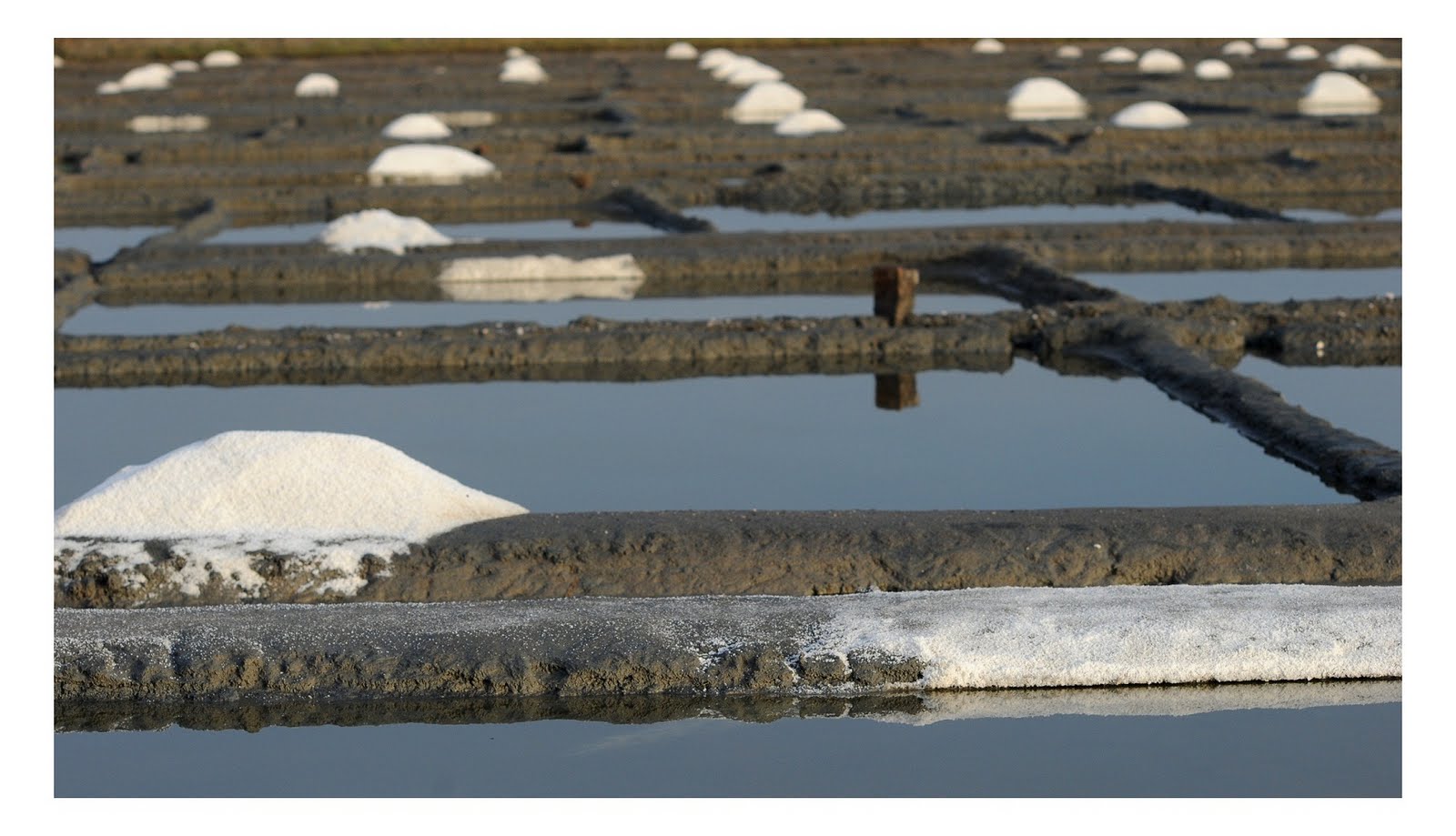
A large area of the wetland, especially the eastern edge along the East Coast Road, has been converted to salt pans. Initially, while driving past the pans on my way to Mahabalipuram and beyond, I used to be fascinated by the sculptural beauty of the salt heaps stretching all the way to the horizon, snow-white pyramids neatly placed in a vast chequered landscape of neatly squared salt pans. It was sheer photogenic geometry. Soon I was to become familiar with their more disturbing aspect, ecologically speaking.
A gravid female Fan-throated Lizard
Spider carrying an egg sac
Remains of a dead tortoise
The body of a snake, consumed by the brine
A crab seems very much at home in the salt pans
In July last year, Gopi and Swati were in Pondicherry and we went over to Kaliveli. As we entered the salt pans we noticed the absolute absence of birds. Barring a few Black-winged Stilts before the bund, we saw no no birds amid the rows of salt pans. Except for some Fan Throated Lizards (Sitana ponticeriana) – among them a number of gravid females -- and some crabs peering out of their burrows along the water channels, everything we saw was dead. There were dead fish in the water channels (closer to concentrated brine than water) no doubt trapped in the channels during the high tide, a dead tortoise, dead snake, dead dragonflies and thousands of shells of dead mollusks. Almost every form of life which had ventured into the salt pans had been quickly snuffed out by the brine. As we walked through the pans towards the edge of the lake trying to get a closer view of the Greater Flamingos that we had seen as pink specks from the road, we came across a remnant mangrove patch along the border of the lake, trying to spread outwards towards the pans but brutally kept in check by human intervention. The entire area of the salt pans was once a mangrove forest, and was later chopped down for the salt industry, thus depriving the east coast of a rich mangrove and estuarine ecosystem that would have rivaled those of Pichavaram, nearly 100 km south.

The salt pans have extended the area of the brackish water further into the lake and have thus alerted the salinity gradient of the lake. The ground water is now so brackish that some salt pans are no longer dependent on the intake from the sea; they simply pump the brine up from the ground.
Painted Storks and Openbill Storks forage beyond the salt pans while the brackish shallows beyond the mangroves play host to Greater Flamingos
A last stand of mangroves
Mangrove forests like these once covered the east coast
It has taken remarkable official apathy to destroy a rich natural wetland ecosystem (Kaliveli continues to be without legal protection). Not even “tourist infatuated” bureaucratic machinery has been able to see the potential of a well-protected, incredibly rich birding area so close to a tourist hub.

Text and photographs by Sahastrarashmi


Further reading:
A manual on Kaliveli (PDF) from the Foundation for Ecological Research, Advocacy and Learning (FERAL)

Wordless Wednesday - Purple Heron amid Bulrushes


Photo: Sahastrarashmi

Wordless Wednesday: Sarus Crane gestures hypnotically

Caption this!
Photograph: Sahastrarashmi