
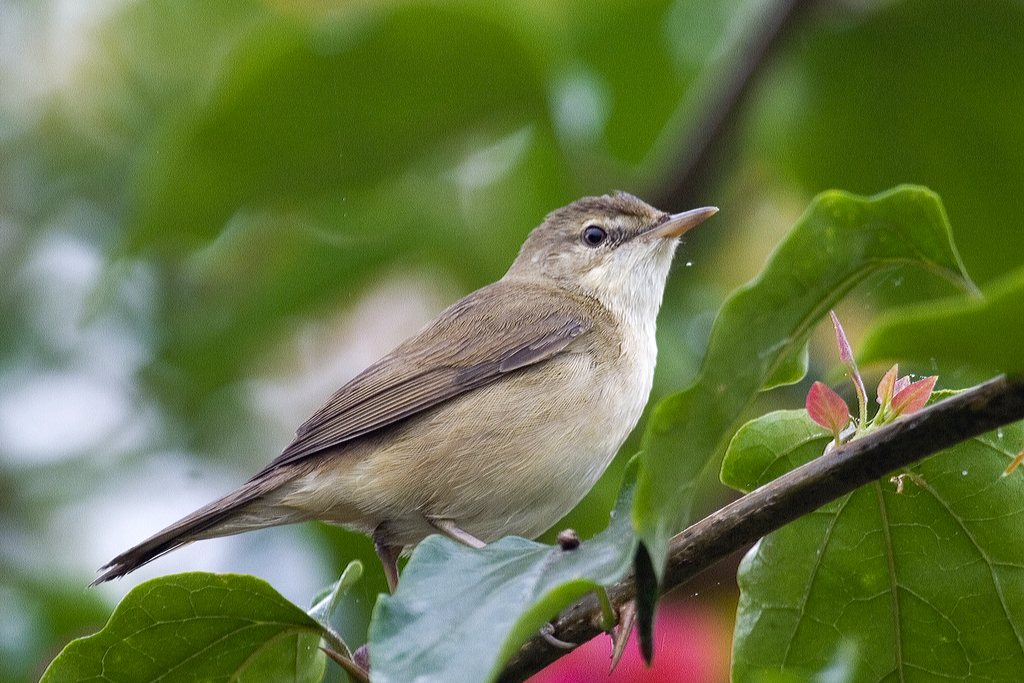
The Blyth's Reed Warbler makes a long winter journey from the temperate zones of Asia to the Indian subcontinent, and then returns when its northern breeding grounds warm up. This year, at least one of them isn't going back, thanks to a glass-and-steel high-rise that stood in its way. Who knows how many more have died like this?
Over the weekend I was in Kollam, Kerala and last Thursday I had left a Bangalore battered by rain. On Monday evening it was Kerala's turn to send us off with thundershowers. And this morning in Bangalore, leaning over the balcony to sniff at the new day, I noticed with delight that winter had arrived.
Crisp and cool with a hint of haze, the wintry morning resounded with the faraway murmur of traffic. The migrants would be here, I thought as I listened for the chek of the Blyth's Reed Warbler (Acrocephalus dumetorum) and the scolding of the Brown Shrike. None could be heard.
As a child I would listen for the warbler in my parents' garden. The precise, brief chek followed by another note repeated at a casual interval. My November Bird, as I called it, the warbler's reassuring presence accompanied me through so many winters that I marked time by it. It was an assurance of temporal certainty, the unimpeachable synchronicity of the seasons. The chek-chek in the garden would stay with us until the days lengthened in March, and the juggernaut of final exams thundered past. And suddenly, one day, no warblers. They had heeded the change in season and gone back home.
Yesterday morning the warbler, by its absence, occupied my thoughts on my way to work. And so it was surprising, as we headed out for lunch this afternoon, my colleague Nelson pointed to the lobby and cried, "There's a bird in here!"
Sure enough, fluttering about the Ferrari-red lounge chairs was a warbler. Desperately out of place. How had it penetrated the seventh floor of this fortress-like glass-and-steel citadel secured by doors that would part only at the flash of an access card? As it lurched against the cold, inhospitable -- and frightfully inorganic -- surroundings it toppled toward the ground. I scooped and cupped the trembling bird in my palms. It was breathing deeply and its tiny heart pounded against my palm. The crown looked scuffed, leaving a worryingly deep (but bloodless) gash that hinted at a tragic story -- it had probably struck the building's glass walls in flight, probably mistaking it for sky. Or perhaps it had been startled by a predator -- could a scuffle explain the wound on its head? -- and found its way mysteriously into the lobby. How long had it been there? When had it last fed?

I had no answers, but I assume it must have sneaked in when one of the negligent janitors left a door open.
Lunch had to be postponed. The presence of an unknown bird -- "Is it a sparrow?" queried most -- in an office bay commanded much excitement. Calls for a box were quickly answered. I left the bird in and covered the top lightly, allowing ample air. Leaving the troubled bird in peace, I thought I'd head downstairs for a lightning-quick bite when a colleague phoned saying the bird had flown its temporary coop. By the time I got back, someone had returned it to its lodgings, but the warbler appeared to be much weaker.

A call to Salim (who used to run the Bannerghatta Rescue Centre) made us gloomier. He advised us to feed the bird with a saline solution and release it at the earliest. But the bird looked considerably weaker. It tucked its head into its wings in a posture that birds adopt when they are roosting. Salim warned that these could be signs of morbidity. Small birds need to eat constantly to keep their metabolism going. Alarmingly, this battered warbler seemed not to want the rehydrating solution that I fed it with a straw. In fact, its eyes were now half-shut and it made no protest when handled, slumping forward in my palm.
Things didn't look good at all.
How far this agile and energetic bird had come, in the flight trails its ancestors had followed for millennia, to end up in a sorry mess here in this smog-choked city. How far from its summer haunts in the far east of Europe and the far west of Central Asia, now probably draped in snow, it had flown. All for this - to smash into a thoughtlessly built edifice.

Sympathy poured for the bird. As did counsel. Some folks offered to take it home, put it in a cage and feed it birdseed. That warblers, unlike finches and budgerigars with their seed-crushing bills, have no appetite for birdseed did not strike those hearts overflowing with kindness.
As we watched, the bird stiffened, opened its eyes wide, stretched its wings and legs and then became absolutely still. Dead, just like that. Rigor mortis set in within an hour. I gave my November Bird an unceremonious funeral beside Bellandur Lake, leaving some opportunistic scavenger to perform its appointed role in the circle of life.
An ominous beginning to winter, and one that whetted all over again my hatred for glass-and-steel high-rises.
Lead photo: Wikimedia Commons/ Shankar70
Photographs: Padma Swaminathan
Text: Beej
Also read: And swiftly fell the swift

I had no answers, but I assume it must have sneaked in when one of the negligent janitors left a door open.
Lunch had to be postponed. The presence of an unknown bird -- "Is it a sparrow?" queried most -- in an office bay commanded much excitement. Calls for a box were quickly answered. I left the bird in and covered the top lightly, allowing ample air. Leaving the troubled bird in peace, I thought I'd head downstairs for a lightning-quick bite when a colleague phoned saying the bird had flown its temporary coop. By the time I got back, someone had returned it to its lodgings, but the warbler appeared to be much weaker.

A call to Salim (who used to run the Bannerghatta Rescue Centre) made us gloomier. He advised us to feed the bird with a saline solution and release it at the earliest. But the bird looked considerably weaker. It tucked its head into its wings in a posture that birds adopt when they are roosting. Salim warned that these could be signs of morbidity. Small birds need to eat constantly to keep their metabolism going. Alarmingly, this battered warbler seemed not to want the rehydrating solution that I fed it with a straw. In fact, its eyes were now half-shut and it made no protest when handled, slumping forward in my palm.
Things didn't look good at all.
How far this agile and energetic bird had come, in the flight trails its ancestors had followed for millennia, to end up in a sorry mess here in this smog-choked city. How far from its summer haunts in the far east of Europe and the far west of Central Asia, now probably draped in snow, it had flown. All for this - to smash into a thoughtlessly built edifice.

Sympathy poured for the bird. As did counsel. Some folks offered to take it home, put it in a cage and feed it birdseed. That warblers, unlike finches and budgerigars with their seed-crushing bills, have no appetite for birdseed did not strike those hearts overflowing with kindness.
As we watched, the bird stiffened, opened its eyes wide, stretched its wings and legs and then became absolutely still. Dead, just like that. Rigor mortis set in within an hour. I gave my November Bird an unceremonious funeral beside Bellandur Lake, leaving some opportunistic scavenger to perform its appointed role in the circle of life.
An ominous beginning to winter, and one that whetted all over again my hatred for glass-and-steel high-rises.
Lead photo: Wikimedia Commons/ Shankar70
Photographs: Padma Swaminathan
Text: Beej
Also read: And swiftly fell the swift


