We’ve moved! Here’s where you can find us

The Green Ogre is now at https://www.greenogreindia.org
Showing posts with label winter migration. Show all posts

Death of a warbler

The Blyth's Reed Warbler makes a long winter journey from the temperate zones of Asia to the Indian subcontinent, and then returns when its northern breeding grounds warm up. This year, at least one of them isn't going back, thanks to a glass-and-steel high-rise that stood in its way. Who knows how many more have died like this?
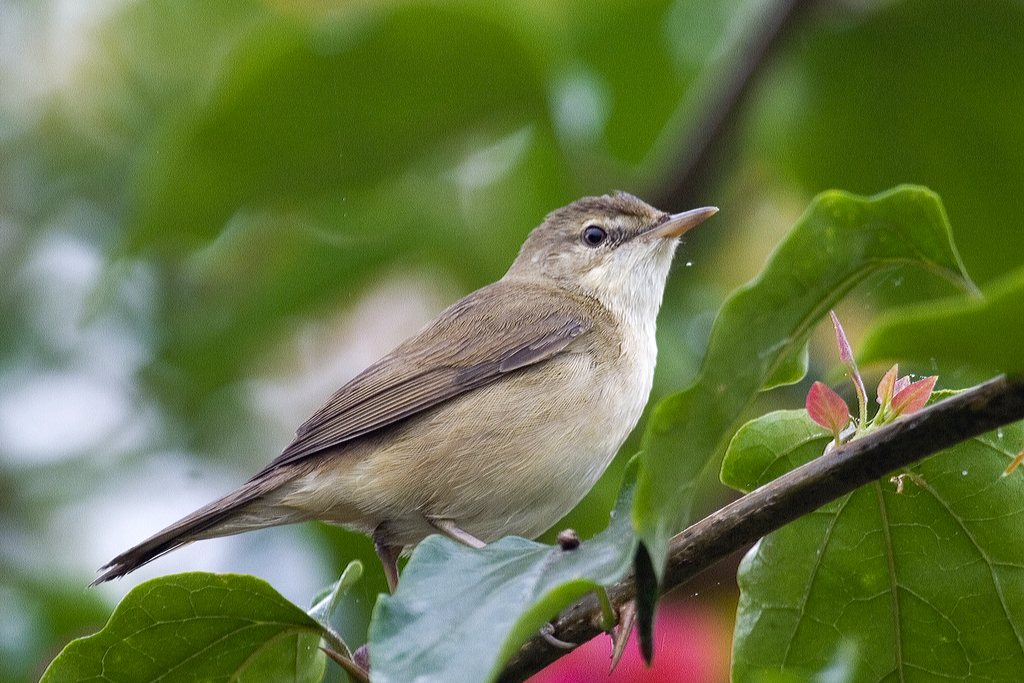


Over the weekend I was in Kollam, Kerala and last Thursday I had left a Bangalore battered by rain. On Monday evening it was Kerala's turn to send us off with thundershowers. And this morning in Bangalore, leaning over the balcony to sniff at the new day, I noticed with delight that winter had arrived. 

Crisp and cool with a hint of haze, the wintry morning resounded with the faraway murmur of traffic. The migrants would be here, I thought as I listened for the chek of the Blyth's Reed Warbler (Acrocephalus dumetorum) and the scolding of the Brown Shrike. None could be heard. 

As a child I would listen for the warbler in my parents' garden. The precise, brief chek followed by another note repeated at a casual interval. My November Bird, as I called it, the warbler's reassuring presence accompanied me through so many winters that I marked time by it. It was an assurance of temporal certainty, the unimpeachable synchronicity of the seasons. The chek-chek in the garden would stay with us until the days lengthened in March, and the juggernaut of final exams thundered past. And suddenly, one day, no warblers. They had heeded the change in season and gone back home.

Yesterday morning the warbler, by its absence, occupied my thoughts on my way to work. And so it was surprising, as we headed out for lunch this afternoon, my colleague Nelson pointed to the lobby and cried, "There's a bird in here!"

Sure enough, fluttering about the Ferrari-red lounge chairs was a warbler. Desperately out of place. How had it penetrated the seventh floor of this fortress-like glass-and-steel citadel secured by doors that would part only at the flash of an access card? As it lurched against the cold, inhospitable -- and frightfully inorganic -- surroundings it toppled toward the ground. I scooped and cupped the trembling bird in my palms. It was breathing deeply and its tiny heart pounded against my palm. The crown looked scuffed, leaving a worryingly deep (but bloodless) gash that hinted at a tragic story -- it had probably struck the building's glass walls in flight, probably mistaking it for sky. Or perhaps it had been startled by a predator -- could a scuffle explain the wound on its head? -- and found its way mysteriously into the lobby. How long had it been there? When had it last fed? 


I had no answers, but I assume it must have sneaked in when one of the negligent janitors left a door open. 


Lunch had to be postponed. The presence of an unknown bird -- "Is it a sparrow?" queried most -- in an office bay commanded much excitement. Calls for a box were quickly answered. I left the bird in and covered the top lightly, allowing ample air. Leaving the troubled bird in peace, I thought I'd head downstairs for a lightning-quick bite when a colleague phoned saying the bird had flown its temporary coop. By the time I got back, someone had returned it to its lodgings, but the warbler appeared to be much weaker.


A call to Salim (who used to run the Bannerghatta Rescue Centre) made us gloomier. He advised us to feed the bird with a saline solution and release it at the earliest. But the bird looked considerably weaker. It tucked its head into its wings in a posture that birds adopt when they are roosting. Salim warned that these could be signs of morbidity. Small birds need to eat constantly to keep their metabolism going. Alarmingly, this battered warbler seemed not to want the rehydrating solution that I fed it with a straw. In fact, its eyes were now half-shut and it made no protest when handled, slumping forward in my palm.


Things didn't look good at all.


How far this agile and energetic bird had come, in the flight trails its ancestors had followed for millennia, to end up in a sorry mess here in this smog-choked city. How far from its summer haunts in the far east of Europe and the far west of Central Asia, now probably draped in snow, it had flown. All for this - to smash into a thoughtlessly built edifice.


Sympathy poured for the bird. As did counsel. Some folks offered to take it home, put it in a cage and feed it birdseed. That warblers, unlike finches and budgerigars with their seed-crushing bills, have no appetite for birdseed did not strike those hearts overflowing with kindness. 


As we watched, the bird stiffened, opened its eyes wide, stretched its wings and legs and then became absolutely still. Dead, just like that. Rigor mortis set in within an hour. I gave my November Bird an unceremonious funeral beside Bellandur Lake, leaving some opportunistic scavenger to perform its appointed role in the circle of life.


An ominous beginning to winter, and one that whetted all over again my hatred for glass-and-steel high-rises.


Lead photo: Wikimedia Commons/ Shankar70
Photographs: Padma Swaminathan
Text: Beej


Also read: And swiftly fell the swift 

Encounter: In Shangri-La with Bar-headed Geese

Meeting the Bar-headed Goose, arguably the world's highest flier, in its breeding grounds at 15,000 feet is a rare and humbling privilege
Korzok (4,595 m, 15,075 ft), the small settlement on the border of the incredibly blue Tso Moriri was the highest I had even been. So when had my first sighting of the Bar-headed Goose (Anser indicus), one of the highest flying birds in the world, on those very waters at a shouting distance from the 300-year old monastery, you can perhaps excuse me for believing that it was probably pre-ordained.


The lake, along with several other high altitude lakes and marshes of Ladakh (including the now popular Pongong Tso), is a breeding ground for this enigmatic goose whose simple diagnostic features are the black bars along the face. The first bar starts just behind its black eye giving it a very peculiar “eyeless” appearance when seen from a distance. The body is grey and it honks like rest of the goose family. The beak is yellow and the legs and feet are orange. The geese eat grasses along the lakes and are ground-nesters, laying a clutch of 3 to 7 eggs in a shallow, down-padded depression.


The Bar-headed Goose is probably the world's highest flying bird. The birds have been observed flying over the peaks of the Great Himalayas (this is the Siberian population, not the one in Ladakh) and one estimate put the height of their migration flyway at over 10,000 m (33,000 ft). This would mean that they might even be taking advantage of jet streams for their migratory flights – probably the only bird known to do so. They have a flapping flight – not a soaring/gliding one – and adaptations like a large wing surface and haemoglobin capable of using the rarefied oxygen more efficiently. Following the jet stream cuts the needs for energy and enables one of the fastest migrations into India.


At Tso Moriri, I encountered them along the shore while walking along the lake. They saw me before I saw them and had started to walk down towards the water, chicks in tow, when I spotted them. There was no panic but they kept a watchful eye on me till they reached the lake. Then they gently swam away – a very gentle, effortless paddle, hardly appearing to move yet growing more and more distant while bobbing up and down along the wind-ruffled blue waters tinted with the silver of dawn.


Once winter grips the plateau in early October, the Bar-headed Geese will fly inland to Assam, northern India and right down to Tamil Nadu in peninsular India. Along the way, as they disperse, large congregations can sometimes be seen, and one of the birds' favoured sites is the Pong Dam in Kangra (Himachal Pradesh) where upto 30,000 geese flock. They stay on till late April before heading back to their breeding grounds.
Bar-headed Geese at home in Tso Moriri
The downy chicks take after their parents
A few fledged juveniles join the adults - note the darker napes of the juveniles
Text and Photographs by Sahastrarashmi 
Close up of the Bar-headed Goose from Wikipedia Commons

Osama is dead, but will the cranes fly again?


Now that Osama bin Laden is dead, will America allow Afghanistan to lick its wounds and restore its natural heritage? 

In India, the wintering Siberian Crane has been missing in action for nearly a decade
Afghanistan has always suffered for its place on the map. For millennia, before traders discovered the Silk Route across the Hindu Kush mountains through the Khyber Pass into the riparian plains of the Punjab, before the armies of invaders from Persia thundered into the Indian subcontinent, and before Russians and Americans overran the land in pursuit of mercenary friends-turned-foes, Siberian Cranes flew unmolested over these vast natural barriers to their wintering grounds in India. Though migrating birds have been traditionally hunted in these parts, the outbreak of relentless war has so disturbed their passage that the critically endangered Siberian Cranes have not visited their ritual haunts in Bharatpur, India since 2002.

Of the migratory crane species, the Siberian Crane (Grus leucogeranus) has the longest travel route. They are known to use three distinct migration flyways to their wintering grounds. Of the three surviving populations, birds in western Siberia that winter in northern Iran use the Western Flyway, and those that winter in India use the Central Flyway. The third route, the Eastern Flyway, is used by a breeding population in northeastern Siberia to migrate to Poyang Lake in China. The Western and Central Flyways intersect in Russia and parts of Kazakhstan.

Birds using the Central Flyway traditionally migrated over a distance of 5,000 km from western Siberia through the Russian Federation, Uzbekistan, Turkmenistan, Afghanistan and Pakistan to wintering grounds that once spanned most of northern India including parts of Bihar. The Keoladeo Ghana bird sanctuary in Bharatpur, Rajasthan, was a well-documented wintering ground of the cranes. Cranes are sensitive to disturbance and over time, as war games intensified in the territories along the cranes' Western Flyway, the numbers of Siberian Cranes migrating into India dropped alarmingly. The birds were denied opportunity to descend to their traditional resting and feeding grounds en route to their final wintering destination. The last pair was recorded at Bharatpur in 2002.

Heedless of political boundaries, wintering Siberian Cranes flew 5,000 km to their destinations along routes that traversed several nations
The Cold War warmed up in Afghanistan when America armed Mujahideen fighters with nearly $40 billion in weapons, including portable anti-aircraft missile launchers called Stingers, in order to weaken the Soviet Union's hold in the region. After the end of the Cold War and the disintegration of Soviet power centres in the Kremlin, the weapons remained with the mercenary fighters who changed sides at will in the decades of civil war that followed.

The southeastern part of Afghanistan was once covered with lush forests irrigated by monsoon rains. Less than two percent of those forests remain. In recent years, large parts of Afghanistan have been controlled by Taliban militia who, apart from committing humanitarian atrocities, also denuded the land of its forests. While the Taliban-supported timber mafia pillaged most standing forests for the Pakistan market, military bombings have ruined the remaining tracts. Hazardous pollutants from the explosives, including depleted uranium from anti-tank missiles, pose grave threats to the continued survival of humans and wildlife in the region. Fears are even raised of uranium dust being blown into rivers by windstorms. Depleted uranium has a half-life of 4.5 billion years and clearly the problems of war are not about to go away in a hurry.

After 9/11 the US administration, in pursuit of Al Qaeda, bombed Afghanistan without relent. It is ludicrous to imagine that thoughts of the country's wildlife and environment even troubled policymakers during heated discussions in the interest of US national security. With the reported killing of Al Qaeda chief Osama bin Laden in Pakistan on May 2, America has exacted more than its pound of flesh. 

What, now, will become of Afghanistan? Will the bombings continue? A part of me wonders hopefully: Why can't America, as part of its much-publicised rebuilding efforts, take stewardship of Afghanistan's ecology and allow nature to work her rescuscitating magic?

Will the Siberian Cranes arrive in India by the Central Flyway again? I'm just being a foolish optimist, listening for the rush of the wind in wings of hope.

References:

Encounter: The Demoiselles of Khichan - Part II


Demoiselles, like other cranes, suffer on account of habitat loss and degradation throughout their breeding and wintering ranges. With the spread of agriculture in the Eurasian steppes a large swath of the species' breeding territory is threatened on account of disturbance, grazing and hunting.

In India, where the cranes winter, the primary problems are population increase and the resultant erosion of farmers’ tolerance for this crane. Cases of death from poisoning – both deliberate and inadvertent (pesticides) – are on the rise.


For cranes migrating to India another major threat along the migration path comes from hunting, which is prevalent in Afghanistan and Pakistan. The USGS website describes a hunting practice known as “soya”, which is used on the migrating Demoiselles: "Following traditional hunting practices, the crane hunters in Pakistan station themselves in valleys where the cranes pass on migration and use tame cranes to lure wild birds within range of rock-weighted slings (known as soya). Hunters hurl the soya into the air to entangle the flying cranes. In recent years, increasing numbers of hunters have taken up this traditional practice, while firearms have also been used with greater frequency. The Eurasian Crane and the critically endangered central population of the Siberian Crane are also affected by this practice. As many as 5000 cranes of all three species (10%-15% of the total population of migrating cranes) have been shot or captured in Pakistan in a single season, and the popularity of the sport continues to grow."

The next morning I am at the Chuggaghar (the feeding centre set up by the residents of Khichan). It is dark but the last few stars bravely twinkle on. The desert air is cool and crisp. Khichan is still asleep and the Demoiselles can neither be seen nor heard. Behind the Chuggaghar, the desert begins. After a shallow nullah I can see the dim shape of the dunes.


A few hundred yards ahead, I have crossed the patch of Babool bushes and have reached the base of the first dune. From behind them, I can hear faint but unmistakable crane sounds. The Demoiselles are roosting somewhere behind the first row of dunes. I take off my slippers and climb the dunes – at this early hour in late February the sand feels cool and moist, like the clay on the banks of a river. I sit down facing east and wait for the sun. And the Demoiselles.

I do not have to wait long. The sounds increase steadily and creep closer. In an inspired choreography of nature, the bluish-hued pre-dawn desert slowly fills up with crane calls behind me as the sky before me fills up with the reddish glow of dawn.


The first cranes fly in from the north. They come in a long line flying over the dunes, the line dipping near the centre giving a faint impression of a V, mirroring the Vs of the soft pre-dawn contours of the dunes. They fly over me and pass over the Chuggaghar and then beyond it towards the sun. Soon, there are cranes flying in from all sides – all in the same long lines with a hint of a V at the center. They fly from over the dunes towards the Chuggaghar. Some of them fly past the Chuggaghar and then turn back towards the desert and start settling over the dunes. Others descend in the Chuggaghar to feed. By now, the sun is up and I am completely surrounded by cranes. For a brief moment my world dissolves in a symphony of white sand, blue sky, red sun and the beautiful silver grey of the Demoiselles.


Read the first of this two-part post


Text and photographs by Sahastrarashmi

Agriculture and bird diversity - some findings

The winter of 08-09 has now packed away its woollies and headed off into the southern hemisphere to cool things off. But while we argued about the patterns of bird migration, the late arrival of migrants (some entirely absent) and blamed global warming for our frustrations, a biologist I know has braved the odds and conducted one of the most comprehensive bird surveys conducted in Uttar Pradesh in recent times. Streams in the agricultural landscape make excellent foraging grounds for a variety of waterbirds. The man (not in picture) is Gopi Sundar, whom readers of this blog have met virtually many times over. Gopi, as the International Crane Foundation's research associate and principal coordinator of the Indian Cranes and Wetlands Working Group, is well known for his study of Sarus cranes and their habitat in the rice-dominated agricultural landscape of Uttar Pradesh. Gopi spent the winter braving dense fog and the political mafia to execute a painstaking survey of the bird diversity in this ecosystem. He used a grid-based sampling design with space-for-time replication to test for variations in "observed patterns of bird species richness and abundance due to four different intensities of rice cultivation". His study documented 198 bird species in 160 transects. Yellow Wagtails are a relatively common species in Uttar Pradesh's cultivated areas. They are one of the last migrants to leave and can be seen feeding on insects in ripening wheat fields in early summer. Gopi's report begins with this arresting declaration: "Agriculture is the biggest threat to bird diversity worldwide." The Hindu published a report based on his work in its national edition. It opens with the very same statement. Gopi's findings suggests that agriculturists hark back to traditional land-use methods, which preserved natural habitats and enabled bird diversity. Preserving islands of natural habitat and avoiding mono-cropping or monocultures can be important steps in this direction. The Hindu report can be read here. PHOTOGRAPHS: © K. S. GOPI SUNDAR/ ICF. USED WITH PERMISSION. ALL RIGHTS RESERVED.

With warmer winters, migrants shift north

A study among North American birds shows that more and more species are moving their winter migration grounds further north as a possible outcome of global warming. The Audubon Society has published a report (download) that clearly shows that species such as the Purple Finch (top), Wild Turkey, Marbled Murrelet, Red-breasted Merganser (below) and Spruce Grouse have moved their winter migration grounds northward by hundreds of miles. The trend may be similar the world over. Winter bird records in India have indicated that some wintering species have arrived later than usual in some of their wintering grounds. Photographs: Purple Finch - © Ashok Khosla Red-breasted Merganser - © USFWS, Dave Menke Audubon Birds and Climate Change Press Room

Sultanpur Bird Sanctuary, November 28, 2008

The fog clung to the ground in great murky blankets when I arrived at Sultanpur Bird Sanctuary on this Friday morning. At 6 AM, traffic on NH 8 via Mehrauli and Gurgaon had been thin, but my gruff but kindly Sikh cab driver held my gaze for an astonished moment in the rear-view mirror when I said I was going looking for birds. After driving more than 50 km from Delhi in bone-numbing cold and dangerous visibility levels to do this, he must have wondered. But he only said I could have gone to Bharatpur instead. But Sultanpur, so close to Delhi (in Haryana), is a celebrated avian paradise. And winter made it especially so. A Bluethroat, displaying its gaily banded chest, welcomed me. As the fog lifted, peafowl scuttled, but a covey of Grey Francolins grazed unperturbed on the path ahead of me. A thudding of hooves announced Nilgai. A female followed by three young calves crossed barely a hundred metres in front of me. Sarus cranes were calling, and somewhere among the reeds a Black-necked Stork was planning breakfast. The soft quackering of several migratory ducks, the trilling of Tailorbirds and at least three species of Prinia - Ashy, Plain and Graceful - provided the background music for my morning walk. The mist lifted gently, and the view became less ghostly. Painted storks and cormorants flew overhead. In a copse to my right, two male Black Redstarts had a mild face-off. A Rufous-tailed Shrike picked a dragonfly out of mid-air and dismembered it slowly on a thorn thicket. Red-throated Flycatchers were everywhere, some males showing off their bright throats. The water was alive with ducks. Though I was staring right into the sun, I could tell the silhouettes of Northern Shovellers and Spotbills. There were Common Teals, Lesser Whistling Ducks, Common and Crested Pochards, Tufted Ducks, Gadwall and Garganey. But among them all, sailing like frigates in a flotilla of dhows, were the Greylag Geese. Large, beautiful birds with bills of pink, they lorded over the water. Until a Eurasian Marsh Harrier scattered the ducks and extracted a shudder out of the Greylag flock. There were other raptors too - Spotted Eagles, Oriental Honey Buzzards, Black-shouldered Kites, Kestrels... As winter wears on, these waters will attract more migrants, among them Common Cranes, Bar-headed Geese and a host of warblers and waders. And then, by March, most of them would have returned, but for the Shovellers, who are usually the last to go.
  1. Alexandrine Parakeet
  2. Ashy Prinia
  3. Asian Pied Starling
  4. Bank Myna
  5. Barn Swallow
  6. Black Kite
  7. Black Redstart
  8. Black-shouldered Kite
  9. Bluethroat
  10. Blyth's Reed Warbler
  11. Booted Warbler
  12. Common Chiffchaff
  13. Common Coot
  14. Common Kestrel
  15. Common Moorhen
  16. Common Myna
  17. Common Peafowl
  18. Common Pochard
  19. Common Stone Chat
  20. Common Tailorbird
  21. Common Teal
  22. Common Woodshrike
  23. Crested Pochard
  24. Eurasian Collared Dove
  25. Gadwall
  26. Garganey
  27. Great Cormorant
  28. Greater Spotted Eagle
  29. Greenish Warbler
  30. Grey Francolin
  31. Grey Heron
  32. Greylag Goose
  33. House Crow
  34. Indian Cormorant
  35. Indian Robin
  36. Indian Silverbill
  37. Large Grey Babbler
  38. Laughing Dove
  39. Lesser Whistling Duck
  40. Lesser Whitethroat
  41. Little Cormorant
  42. Long-tailed Shrike
  43. Northern Shoveller
  44. Oriental Honey Buzzard
  45. Oriental Magpie Robin
  46. Oriental White-eye
  47. Orphean Warbler
  48. Paddyfield Pipit
  49. Painted Stork
  50. Pied Bushchat
  51. Pintail
  52. Plain Prinia
  53. Pond Heron
  54. Purple Heron
  55. Purple Sunbird
  56. Purple Swamphen
  57. Red Avadavat
  58. Red-throated Flycatcher
  59. Red-wattled Lapwing
  60. Rose-ringed Parakeet
  61. Rufous-tailed Shrike
  62. Sarus Crane (H)
  63. Shikra
  64. Spotbill Duck
  65. Spotted Dove
  66. Yellow-eyed Babbler
  67. Zitting Cisticola
Video grab: Spotted Eagle