We’ve moved! Here’s where you can find us

The Green Ogre is now at https://www.greenogreindia.org
Showing posts with label migration. Show all posts

Death of a warbler

The Blyth's Reed Warbler makes a long winter journey from the temperate zones of Asia to the Indian subcontinent, and then returns when its northern breeding grounds warm up. This year, at least one of them isn't going back, thanks to a glass-and-steel high-rise that stood in its way. Who knows how many more have died like this?
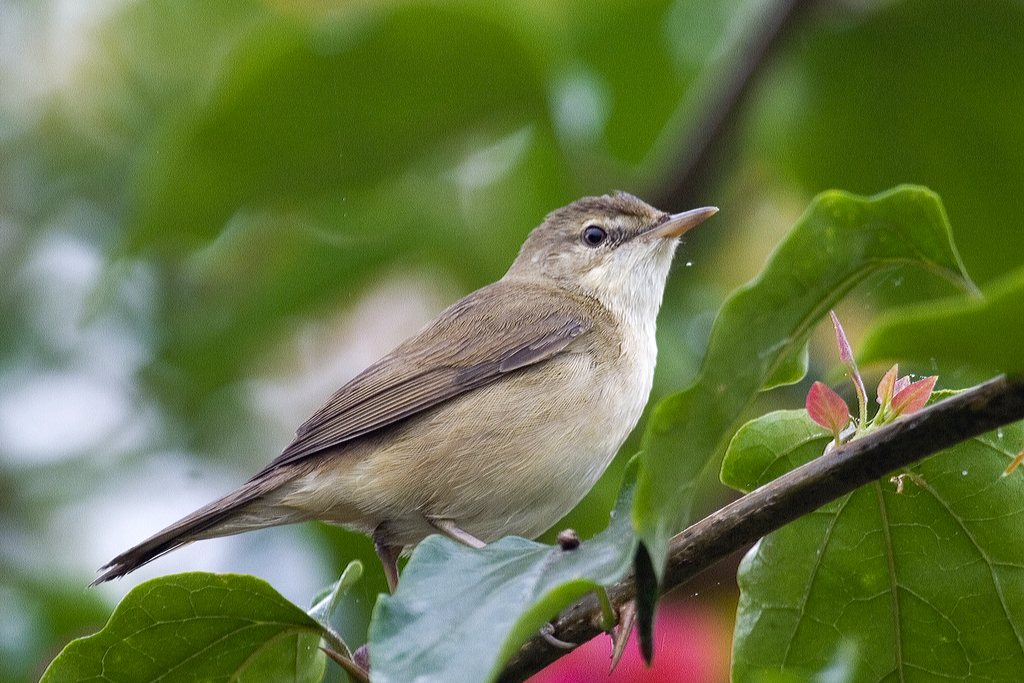


Over the weekend I was in Kollam, Kerala and last Thursday I had left a Bangalore battered by rain. On Monday evening it was Kerala's turn to send us off with thundershowers. And this morning in Bangalore, leaning over the balcony to sniff at the new day, I noticed with delight that winter had arrived. 

Crisp and cool with a hint of haze, the wintry morning resounded with the faraway murmur of traffic. The migrants would be here, I thought as I listened for the chek of the Blyth's Reed Warbler (Acrocephalus dumetorum) and the scolding of the Brown Shrike. None could be heard. 

As a child I would listen for the warbler in my parents' garden. The precise, brief chek followed by another note repeated at a casual interval. My November Bird, as I called it, the warbler's reassuring presence accompanied me through so many winters that I marked time by it. It was an assurance of temporal certainty, the unimpeachable synchronicity of the seasons. The chek-chek in the garden would stay with us until the days lengthened in March, and the juggernaut of final exams thundered past. And suddenly, one day, no warblers. They had heeded the change in season and gone back home.

Yesterday morning the warbler, by its absence, occupied my thoughts on my way to work. And so it was surprising, as we headed out for lunch this afternoon, my colleague Nelson pointed to the lobby and cried, "There's a bird in here!"

Sure enough, fluttering about the Ferrari-red lounge chairs was a warbler. Desperately out of place. How had it penetrated the seventh floor of this fortress-like glass-and-steel citadel secured by doors that would part only at the flash of an access card? As it lurched against the cold, inhospitable -- and frightfully inorganic -- surroundings it toppled toward the ground. I scooped and cupped the trembling bird in my palms. It was breathing deeply and its tiny heart pounded against my palm. The crown looked scuffed, leaving a worryingly deep (but bloodless) gash that hinted at a tragic story -- it had probably struck the building's glass walls in flight, probably mistaking it for sky. Or perhaps it had been startled by a predator -- could a scuffle explain the wound on its head? -- and found its way mysteriously into the lobby. How long had it been there? When had it last fed? 


I had no answers, but I assume it must have sneaked in when one of the negligent janitors left a door open. 


Lunch had to be postponed. The presence of an unknown bird -- "Is it a sparrow?" queried most -- in an office bay commanded much excitement. Calls for a box were quickly answered. I left the bird in and covered the top lightly, allowing ample air. Leaving the troubled bird in peace, I thought I'd head downstairs for a lightning-quick bite when a colleague phoned saying the bird had flown its temporary coop. By the time I got back, someone had returned it to its lodgings, but the warbler appeared to be much weaker.


A call to Salim (who used to run the Bannerghatta Rescue Centre) made us gloomier. He advised us to feed the bird with a saline solution and release it at the earliest. But the bird looked considerably weaker. It tucked its head into its wings in a posture that birds adopt when they are roosting. Salim warned that these could be signs of morbidity. Small birds need to eat constantly to keep their metabolism going. Alarmingly, this battered warbler seemed not to want the rehydrating solution that I fed it with a straw. In fact, its eyes were now half-shut and it made no protest when handled, slumping forward in my palm.


Things didn't look good at all.


How far this agile and energetic bird had come, in the flight trails its ancestors had followed for millennia, to end up in a sorry mess here in this smog-choked city. How far from its summer haunts in the far east of Europe and the far west of Central Asia, now probably draped in snow, it had flown. All for this - to smash into a thoughtlessly built edifice.


Sympathy poured for the bird. As did counsel. Some folks offered to take it home, put it in a cage and feed it birdseed. That warblers, unlike finches and budgerigars with their seed-crushing bills, have no appetite for birdseed did not strike those hearts overflowing with kindness. 


As we watched, the bird stiffened, opened its eyes wide, stretched its wings and legs and then became absolutely still. Dead, just like that. Rigor mortis set in within an hour. I gave my November Bird an unceremonious funeral beside Bellandur Lake, leaving some opportunistic scavenger to perform its appointed role in the circle of life.


An ominous beginning to winter, and one that whetted all over again my hatred for glass-and-steel high-rises.


Lead photo: Wikimedia Commons/ Shankar70
Photographs: Padma Swaminathan
Text: Beej


Also read: And swiftly fell the swift 

Encounter: Rufous Tailed Shrike

Often, the stupidest questions elicit the most enlightening answers. Such was my initiation to the little featherball known as the Rufous-tailed Shrike. I'm glad I asked, though...


I am responsible for one of the dumbest questions in Birdingdom. This is a belated confession.

One fine February evening we were happily maneuvering a pot-holed road in Rae Bareli as GS scanned the acacia bushes beside the road for birds. Suddenly he exclaimed, “Rufous-tailed Shrike!" (Beams with excitement, asks driver to stop.)

I saw the bird and inquired, “Why is this Rufous-tailed Shrike?” It was actually three questions:

Why is this bird a shrike?
Why is it a Rufous-tailed Shrike?
What are you so excited about?

You must have realized that I had figured it was a bird. I also had a passing familiarity with the color rufous.

Prickled by the question but managing to keep his composure (the sighting helped), GS snapped, “Observe.”

This I did.

Lanius isabellinus is a small shrike with a hooked bill adapted for tearing flesh. It has a grey or sandy-brown mantle, a prominent rufous tail and grey-brown ear coverts. The male has a white patch at the base of the primaries (this is absent in the female) and the female has faint dark scaling on the breast and flanks. The bird in the last picture seems to be a first winter specimen since it has the overall coloration of the female (including the faint dark scaling on the breast), lacks the white patch at the primaries, but has the dark black lore of the male. The bird in Sandeep's photo (the lead pic) is an adult female (lacks the white patch on the primaries).
In winters the bird frequents wooded country along canals, riparian tracts and acacia vegetation along small roads. It breeds in the highlands of Baluchistan, southern Siberia and the Daurian steppes of central Asia.

The Rufous-tailed Shrike eats smaller birds, lizards and rodents and has the gruesome habit of impaling its prey on thorns and barbed wires. It is usually found atop bushes and small trees – a prominent perch for hunting. The bird we saw flew down and picked up a large ant (see pic below).
Going by the field guide that we were using, the shrike had no business to be there. However, one cannot really fault the birding guides for this as the basic information regarding winter and summer ranges of migrants is quite archaic – some of it survives from the days of Salim Ali and the British ornithologists. Bird checklists for some districts in UP are last updated by the district collectors and amateur British naturalists (A O Hume was the Collector of Etawah and the district is an exception, thanks to Gopi’s fieldwork. The checklist is quite current with 400+ birds). Most siting data continues to be reported from IBAs and established sanctuaries but very few birders visit the offbeat places, which are not well-known or are simply off-track. This leads to over-reporting from certain parts while creating birding blind-spots at the same time.

The grand old man of Indian ornithology was wise enough to avoid bias and made sure that he birded in places like Bastar, Bahawalpur, Districts of United Provinces, Afghanistan, etc. where few people venture today. He had birded in Rae Bareli and has reported the Siberian Crane from there. In my multiple visits to Samaspur, a bird sanctuary in the district, I have never encountered birders. The sanctuary staff tells me that such visits are fewer than a dozen in a year.

Moreover, the migrants can shift the wintering range based on factors like temperature, cropping pattern and rainfall. This is both seasonal as well as gradual shifts over time. This makes it all the more necessary for the data gathering to be extensive and well-planned.


The shrike sighting turned out to be good birding education. The presence of this elegant little predator indicated that the migratory season was well underway. Moreover, migrants can often be found in areas in which they have not been recorded earlier either due to a shift in range or gaps in information. So it's good birding practice to keep looking for them. This is where initiatives like MigrantWatch are both welcome and necessary since they enrich our knowledge about these lovely avian tourists as well as track shifts in arrival times and geographical spread.

Incidentally (now that I am on serial confession mode), I am also responsible for one of the most stupid answers in all Birdingdom. More on that later. Patience, dear reader. Or patientez s’il vous plait, in case you are Francophone.

Text and photographs by Sahastrarashmi (taken in Rae Bareli, Uttar Pradesh)
Lead photo by Sandeep Somasekharan (taken in Kutch)

Encounter: Rufous-tailed Scrub Robin

It had given me the slip in Kutch, but in Oman I caught up with the Rufous-tailed Scrub Robin


Last month a travel assignment took me to the Sultanate of Oman. I spent four days on the road from Muscat watching the arid gravel desert fleet past, then sampled the crisp night air of the Jebel Shams mountain, spent a night in the dunes and was then driven at 140 km along the coast from Sur to Muscat. In the sapping 46-degree heat, I expected birds to drop dead from the sky, but they didn't. Instead, sparrows seemed to flourish, as did mynas and bulbuls near date palm-fringed oases. On the road I passed wheatears and lapwings, swifts and sand martins, munias and Egyptian vultures, but none quickened my pulse like one lifer that I encountered on my last blazing afternoon just 500 metres from the pale-blue Gulf of Oman.


We were hurrying back to the air-conditioned refuge of our four-wheel-drive near Bimmah Sinkhole, when a little brown job stopped to regard me from the scant shade of a bare thorn bush. It was close enough to get me to forget the heat for a moment, then two or three, and then for a full five minutes as my body gently surrendered moisture to the roasting desert air. Open-mouthed as it attempted to lose body heat, the bird allowed me to get quite close.  


The bird, which had a melancholic musical call, was somewhat similar to the bush robins I had seen in the Himalayas and in habit reminiscent of the Cetti's Bush Warbler but with the tail held upright. At first I thought it might be the Rufous-tailed Wheatear that I had met in Kutch. But the bird's posture ruled out chat, flycatcher, thrush, wheatear and warbler, and I deduced that the little chap had to be a robin of some kind. Though I had no idea which one, since I didn't have a field guide to the birds of Oman. 


I did the next best thing -- I watched it, made mental notes and some on paper. The bird had a prominent white supercilium and a white under-eye patch. A dull black stripe began behind the nostrils and stopped at the eye. When it flitted from bush to bush it revealed a rich rufous tail that fanned out occasionally in the manner of a redstart. But then again the tail went right back to the upright angular position. I shot a picture to aid my identification efforts. When I got home, a little Googling solved the mystery.


This was a Rufous-tailed Scrub Robin (Cercotrichas galactotes), also known by several common names including Rufous Bush Robin. It occurs from the European Mediterranean south to the Sahel and east to Pakistan, where it is known to breed. The bird is also a passage migrant in Kutch, Gujarat.


I had missed the bird in Kutch, but here in Oman it gave me an exclusive audience.


Text and photograph: Beej

Encounter: The Demoiselles of Khichan - Part I


As I enter the village children greet me. They are a cheerful lot, waving and smiling at the visitor with a camera. I notice that they are playing with a dead snake and want me to see it up close. For an armchair explorer like me, fed on a regular dose of National Geographic specials, the relation between the desert and deadly snakes needs no explaining. And I am wearing sandals.


The kids are aware of the purpose of my visit. They point me to the village pond where the cranes are roosting. Khichan has three ponds on its northern edge – two twin adjacent ones and a smaller, secluded one a few hundred metres to the north. As I climb the ridge towards the pond, a voice calls out from behind me.


To aap koorja aaye hain?” (So you have come to see the cranes?)


Kumar is a part-time potter and a hotelier-in-the-making (he wants to open a small hotel in Khichan for the crane-besotted). However, for now he has chosen to be my guide and companion – a role into which he slips easily and which he plays with flair for the rest of the evening.


As we climb the ridge that makes up the edge of the shallow village pond, about two thousand roosting Demoiselle Cranes come into view. The place is alive with their calls. Demure, with silver-grey bodies, glistening black necks and white plumes extending backwards from their sparkling red eyes, the cranes are magnificent to behold. Some accounts maintain that the crane was christened by Mary Antoinette, the queen of France better known for her unplanned rendezvous with the guillotine.


Demoiselle Cranes (Anthropoides virgo) inhabit dry grasslands or poor-vegetation lands such as savannah, steppes and semi-deserts. They are increasingly adapting to agricultural fields and are usually found within reach of water sources (which, like other cranes, they use for roosting). Khichan is on the edge of the desert with sparse cultivation and a few shallow ponds – ideal Demoiselle habitat.


As we observe the cranes from the bund, Kumar volunteers information on the purpose of their visit. “Yeh yahan par honeymoon manane aayi hain,” he tells me with a smile and a wink. “They are here to celebrate their honeymoon.”


After the American Sandhill Crane, the Demoiselle Crane is the most abundant of the world’s cranes, with a population estimated at about 240,000. There are no known subspecies and the Demoiselle has six main populations of which the Eastern Asia, Kazakhstan/Central Asia, and Kalmykia are abundant. Small populations are found in Turkey, North Africa and the Black Sea. The Demoiselle has been recorded from more than 40 countries in the world.


In India, Demoiselle Cranes fly in from countries of the former USSR (the area around the Caspian and Black Seas) and Mongolia, flying over the Himalayas at almost 24,000 feet. They are regular winter visitors to parts of northern and central India. Large flocks can be seen in parts of Gujarat, Rajasthan and Maharashtra (flocks have been observed near Pune) and North Karnataka (a large population regularly winters near the Hidkal Dam near Belgaum). More recently, they have been observed in Ladakh.


The crane winters in India but does not breed here (unlike the Black-necked Cranes). Come March, they will begin their long flight home, reaching Eastern Europe or the central Asian and Mongolian steppes in the beginning of spring, and start the breeding cycle. The locals inform me that the cranes begin the return migration on the full moon night of March and before setting off, circle the village (which they otherwise never enter), seemingly offering thanks and a promise of return.


Peter Matthiessen documents similar behavior in the Black-necked Crane (Grus nigricollis) in Bhutan: “According to tradition, the birds will return to Phobjika valley in late December, arriving at midday when the sun is highest. Invariably, say the villagers, they circle three times over Gantey Gompa, crying out to the lama for his blessing before gliding slowly down into the dark-walled valley.”


Scientists speculate that the slow circling allows the cranes a gradual ascent and hence has more to do with flight dynamics than gratitude. But in the East, where reality has been traditionally perceived in subjective terms and explanations are multi-hued, the former explanation makes as much sense as the latter, and both co-exist without challenge to their veracity.


I spend some time with Kumar watching the cranes feeding and preening. A few are flying about the pond but the overall impression is one of peace from the near-absence of predators. They are lined up along the circumference of the pond and completely cover a small island within it. Some have settled a distance away from the pond on the gravel. A camel cart is parked nearby (it seems to be a permanent fixture at Khichan – I have seen it in earlier photographs of the place) and the owner is filling it up with mud dug up from the pond. The actual digging is performed by women and girls dressed in the blazing red and orange hues commonly seen in Rajasthan.


The cranes appear oblivious to their presence. Occasionally a tourist vehicle arrives within a hundred yards of the pond causing mild commotion within the ranks. Things settle down quickly once the vehicle leaves. Kumar tell me that Khichan witnesses a lot of tourist traffic due to the cranes but few visitors spend more than an hour in the village. Other than the cranes the village boasts some old havelis – a signboard on the road proudly points them out.

To be continued...


Text and photographs by Sahastrarashmi

Migratory Blue Tiger butterflies ring in the new

Walking by the backwaters at Aronda, a coastal village near Sawantwadi in southern Maharashtra, we came upon a bush of yellow blooms shimmering with butterflies, mostly Blue Tigers (Tirumala limniace) and a few Common Crows (Euploea core).

Both species are known to migrate extensively during the monsoon, and it was a little surprising to see them here on the West coast of India on New Year's Day. Are they regrouping for the return migration to the Eastern Ghats?

Those in the know please help me with identifying the plant.


Sultanpur Bird Sanctuary, November 28, 2008

The fog clung to the ground in great murky blankets when I arrived at Sultanpur Bird Sanctuary on this Friday morning. At 6 AM, traffic on NH 8 via Mehrauli and Gurgaon had been thin, but my gruff but kindly Sikh cab driver held my gaze for an astonished moment in the rear-view mirror when I said I was going looking for birds. After driving more than 50 km from Delhi in bone-numbing cold and dangerous visibility levels to do this, he must have wondered. But he only said I could have gone to Bharatpur instead. But Sultanpur, so close to Delhi (in Haryana), is a celebrated avian paradise. And winter made it especially so. A Bluethroat, displaying its gaily banded chest, welcomed me. As the fog lifted, peafowl scuttled, but a covey of Grey Francolins grazed unperturbed on the path ahead of me. A thudding of hooves announced Nilgai. A female followed by three young calves crossed barely a hundred metres in front of me. Sarus cranes were calling, and somewhere among the reeds a Black-necked Stork was planning breakfast. The soft quackering of several migratory ducks, the trilling of Tailorbirds and at least three species of Prinia - Ashy, Plain and Graceful - provided the background music for my morning walk. The mist lifted gently, and the view became less ghostly. Painted storks and cormorants flew overhead. In a copse to my right, two male Black Redstarts had a mild face-off. A Rufous-tailed Shrike picked a dragonfly out of mid-air and dismembered it slowly on a thorn thicket. Red-throated Flycatchers were everywhere, some males showing off their bright throats. The water was alive with ducks. Though I was staring right into the sun, I could tell the silhouettes of Northern Shovellers and Spotbills. There were Common Teals, Lesser Whistling Ducks, Common and Crested Pochards, Tufted Ducks, Gadwall and Garganey. But among them all, sailing like frigates in a flotilla of dhows, were the Greylag Geese. Large, beautiful birds with bills of pink, they lorded over the water. Until a Eurasian Marsh Harrier scattered the ducks and extracted a shudder out of the Greylag flock. There were other raptors too - Spotted Eagles, Oriental Honey Buzzards, Black-shouldered Kites, Kestrels... As winter wears on, these waters will attract more migrants, among them Common Cranes, Bar-headed Geese and a host of warblers and waders. And then, by March, most of them would have returned, but for the Shovellers, who are usually the last to go.
  1. Alexandrine Parakeet
  2. Ashy Prinia
  3. Asian Pied Starling
  4. Bank Myna
  5. Barn Swallow
  6. Black Kite
  7. Black Redstart
  8. Black-shouldered Kite
  9. Bluethroat
  10. Blyth's Reed Warbler
  11. Booted Warbler
  12. Common Chiffchaff
  13. Common Coot
  14. Common Kestrel
  15. Common Moorhen
  16. Common Myna
  17. Common Peafowl
  18. Common Pochard
  19. Common Stone Chat
  20. Common Tailorbird
  21. Common Teal
  22. Common Woodshrike
  23. Crested Pochard
  24. Eurasian Collared Dove
  25. Gadwall
  26. Garganey
  27. Great Cormorant
  28. Greater Spotted Eagle
  29. Greenish Warbler
  30. Grey Francolin
  31. Grey Heron
  32. Greylag Goose
  33. House Crow
  34. Indian Cormorant
  35. Indian Robin
  36. Indian Silverbill
  37. Large Grey Babbler
  38. Laughing Dove
  39. Lesser Whistling Duck
  40. Lesser Whitethroat
  41. Little Cormorant
  42. Long-tailed Shrike
  43. Northern Shoveller
  44. Oriental Honey Buzzard
  45. Oriental Magpie Robin
  46. Oriental White-eye
  47. Orphean Warbler
  48. Paddyfield Pipit
  49. Painted Stork
  50. Pied Bushchat
  51. Pintail
  52. Plain Prinia
  53. Pond Heron
  54. Purple Heron
  55. Purple Sunbird
  56. Purple Swamphen
  57. Red Avadavat
  58. Red-throated Flycatcher
  59. Red-wattled Lapwing
  60. Rose-ringed Parakeet
  61. Rufous-tailed Shrike
  62. Sarus Crane (H)
  63. Shikra
  64. Spotbill Duck
  65. Spotted Dove
  66. Yellow-eyed Babbler
  67. Zitting Cisticola
Video grab: Spotted Eagle

Raptor massacre in Malta

Disturbing news from the Guardian website on the killing of raptors in Malta and local hunters' rage towards British conservationists. This is hatred of the Crown gone way too far. The excerpt says it all:
Thirty British volunteers and a delegation of five staff from the RSPB have spent the last two weeks documenting the shooting of birds of prey such as osprey, honey buzzards, and marsh harriers as they fly over over the Mediterranean island on annual migratory routes. The volunteers estimate scores of rare birds protected by EU laws have been killed this year and claim the shootings have reached a new high... Malta and the neighbouring island of Gozo are a key stopover point for hundreds of thousands of migratory birds as they make the journey from Europe to spend winter in Africa.
More here

Wildlife Direct - list of wildlife conservation blogs on Africa

Wildlife Direct links to a large number of excellent wildlife blogs from around Africa. The list also covers a blog about Orangutans in Malaysia, Snub-nosed Monkeys in Vietnam, Amazon Parrots and a blog on the wildlife of the Seychelles. An excellent resource.

More here

Technorati Tags: , ,

Strictly not for the birds

I posted this on another blog in 2002: In 1999, as an intern training at the editorial office of The Week in Kochi, I came to be known as the Birdman thanks to a feature on Kashmir’s Dal Lake that I had to rewrite. I peppered the piece with pintails, garganey and shovellers, adding colour and cackle to what arrived on the desk as a pretty drab report. It never occurred to me that the news of my skills would be tom-tommed all the way to the sacred cabins of the top brass. One day a senior editor came up to my workstation, and bent down sheepishly for a seemingly conspiratorial exchange. “Do ducks have pricks?” he hissed. “No,” I said, inadvertently mimicking his whisper, and pretending to conceal my shock. “Then how do they do it?” he asked incredulously. “Birds belong to Class Aves, they have no external genitalia,” I said, trying in vain not to sound professorial. “Both sexes have a cloacal aperture, which is differentiated internally. Often the male may have cloacal spurs to secure the moment of contact.” “Which means…” “Which means ‘sex’ between birds is merely cloacal contact,” I said, shrugging. “Oh…” he said, his face betraying great dismay. “Yes, sir,” I empathized. “The joys of intercourse, more specifically intromission, are strictly not for the birds.” UPDATE: The beloved bird scientist Gopi Sundar updates me thus: Ducks are among the few aves who have semi-pricks
swans have slightly bigger ones
:)

A wild goose chase with a happy ending

A fascinating story of bird migration has come to light, involving a Bar-Headed Goose (Anser indicus), which was recently photographed near Somnathpur in Karnataka. On December 26, 2007, Niranjan M. posted a picture of a flock of bar-headed geese at a lake near Somnathpur. One individual in the flock bore a yellow neck band with the serial number E6. The ringed bird was traced to a ringing project in Mongolia. Gopi wrote to Martin Gilbert of WCS, who identified the ringed bird as the same one that was "caught on 19 July 2007 in the Darkhad Valley" in northern Mongolia. The picture taken at that time confirms that. Mongolia to Karnataka... what a moving story! Update: Another bird from the Mongolian flock (C6) was photographed at Veer Dam near Pune, Maharashtra