We’ve moved! Here’s where you can find us

The Green Ogre is now at https://www.greenogreindia.org
Showing posts with label mumbai. Show all posts

Encounter: The Coppersmith Barbet


More often heard than seen, the diminutive Coppersmith is a thousand times smaller than its enormous voice

Once a while we may be treated to the sight of a coppersmith perched this low
I was on my first ever trip to Ranganathittu Bird Sanctuary near Mysore, when I had a flat tire halfway through. As I pushed my two-wheeler along with my friend for kilometers looking for a pile of tires or a board screaming "puncher" (or variants of it) advertising a puncture mechanic in these parts of the world, I saw a strikingly colorful bird on an electric line. It was predominantly dark green, with striking red tufts above the beak and under the chin. It sat there, tilting its head left and right, and then took off. And I came home, thumbed through my Salim Ali (this was before I graduated to Grimmett and Inskipp) and found the name -- Coppersmith Barbet (Megalaima haemacephala).
 
A not-so-ripe fig makes a Coppersmith look elsewhere...
I had to wait a while before I came to realize the philosophy behind the intriguing name. I came to hear (and see) it calling high up from a treetop with its neck craned -- whatever little it could manage with that short neck - and letting out a full-throated but short ringing tuk... tuk.... Apparently, this call earned the bird its name as it sounded, to the imaginative listener, like a coppersmith flattening out a sheet of his metal with a mallet.
Once his mind is set on it, no fig is too large!
Sexes are alike and juveniles are cute variants of the adults sans the red above the beak and below the eyes.
A juvenile, lacking the red crest and throat patch
The coppersmith is mostly a frugivore and a voracious fig eater -- if you see a fig tree with a large number of ripe fruits, take a closer look: the coppersmith barbet is invariably in there.
Who said three's too many?
The Coppersmith Barbet has survived in semi-urban areas and cities that offer fruiting trees for food, and cavities on tree trunks for nesting. If you still find the bird uninteresting you also might change your opinion when I tell you that it is the official bird of the city of Mumbai. That is a fitting honor for a resilient bird that is clinging on despite rampant urbanization.

Text and photographs by Sandeep Somasekharan

Mumbai's trash flows from urban jungle to national park

There's a good reason to keep humans out of forests: Trash!

Some people stood here to enjoy the scenery, and left behind evidence of ample enjoyment


At birdsofbombay, Sunjoy Monga posted about a cleanup drive in Sanjay Gandhi National Park. A tireless team comprising schoolchildren and other volunteers recovered a large amount of trash from the national park, which is a virtual ghetto inside the city. 


And guess what most of the trash consisted of? Booze bottles - some half-full, others half-empty. Empty foil packets of wafers and gutkha - that awful-smelling stuff that some people sprinkle into their mouths from an elevation of half a foot. Now, this is must be a truly amazing way to celebrate Wildlife Week, no? 


When the Forest Department wakes up from its stupor, maybe it will give us some sober answers. I've seen this happen in every national park that I have visited - Bandipur, Mudumalai, Nagarahole, Bhadra, Periyar. For most of us urban chameleons, national parks offer a perfect hideaway from the city. But what some people do when they go there is unpardonable. 


Most national parks have effete, unconvincing signboards emblazoned with some weak cliche about saving our forests. Few of them offer the real reasons why you should not travel with stuff that tends to become trash. And if you do, why you should take your trash home. Most forest department workers are not educated about this aspect in the first place, so enforcement is not even on the horizon. 


Was it illiteracy or plain insensitivity that led people to litter below a signboard entreating them not to do so?
I once travelled on a safari in Bandipur with a bunch of engineering college students. One of them was playing music on a Walkman so loud that all of us could hear the screech of the playback singer's sibilants and the thump of jhankaar beats. I'm sure the animals heard him, too, a mile away. And, helped ably by the rattle and trundle of the diesel van that took us on the safari, we saw nothing but jungle fowl and the backside of an elephant. 


At Muthodi, my friends and I came across a group of surly drunks at the Shegekan Guest House. We hoped to stay here in order to have convenient access to the sholas. The Forest Department put us up at the dormitory downhill, denying us permission to stay at the guest house because someone connected to a minister had booked the place. Driving up, we heard the tinkle of bottles even before the guest house came into view. 


And, even as we stood watching Crimson-backed Sunbirds in that horrible garden planted with many exotics including a Christmas Tree, a couple of unsavoury characters argued loudly on the balcony, their beers and rums having gotten the better of them. We grumbled to the caretaker but got nothing except a helpless smile. And steel tumblers of coffee, at our expense. I stepped close to him unwittingly, and - sniff, sniff - my nose discovered the reason for his nonchalance. Booze makes quick friends. And if you have a quarter bottle to spare, rules melt like an ice cube in a glass of neat double malt.

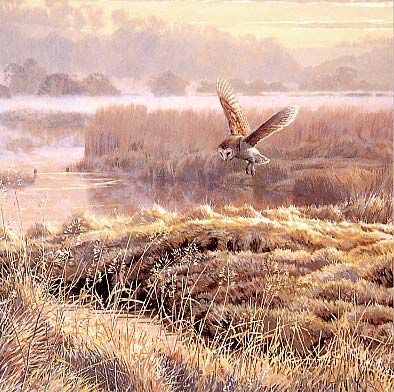
Barn Owl hovering, redux

Last week, I saw a barn owl just outside our apartment complex. It was past 7 and this guy swished by with a ghostly whisper of wings. I waited to see if it would hover, but it just flew up into a dead tree and perched there.
In August 2001, I saw barn owls hovering for the first time. Here's a note and the subsequent discussion (from bngbirds):
I moved to Mumbai last month from Bangalore. While I found the bird life -- like the people here -- to be hardy and adaptive, what I saw last Saturday really took the cake. I was taking a late night stroll on the esplanade at Carter Road, Bandra. Most people who are familiar with Mumbai know of the profusion of rats here, as well as their insouciance and nonchalance -- I've had rats ambling up to inspect my feet and when I tried to shoo them off, they would rear up on their hind legs and bare their teeth at me. Terrifying stuff, really. On this night, as usual, there were rodents aplenty scurrying on the esplanade. Suddenly a ghostly white shape materialised out of somewhere -- a barn owl, that graceful stalker of urban vermin. There were at least two or three of them policing the stretch, easily distinguishable from the night herons that were also stalking other prey on the shore. One of these owls appeared to be struggling against something in the air, about 10-15 feet from the ground. I hoped the poor bird wasn't caught against an electric wire. As I moved closer, I found no obstructions in its path. The bird was hovering! I've known only ospreys, kestrels and pied kingfishers to hover (at least, they are the only ones I have seen doing so, apart from hummingbirds in the US, and back home, harriers who manage a mean hover against the breeze, or maybe pipits and skylarks that do their own versions). This barn owl, however, was doing an amazing job of it, with all the flourish of a trapeze artist on an invisible trapeze. It would flap briefly against the wind (a strongish sea breeze), apparently catch hold of a current and hover -- quasi-static -- in one place, wings rapidly beating. Before anybody casts any aspersions, I must stress that I wasn't drunk, and I had three others with me who weren't, too (though they wouldn't know an owl from a bat if I hadn't told them) and we all saw this amazing spectacle. The barn owl held its pose for about 30-40 seconds, then caught another current and performed for us again. All the while, I noticed the head cock from side to side and those large, shiny, black eyes taking in the view. Unfortunately, I didn't catch sight of the bird preying on any of those execrable rats, but I sure hope it managed a great meal that night. Such talent is certainly deserving of great reward.
That post is archived at bngbirds. It was revealed that barn owls, like many other owls, do hover. And the interesting discussion that followed highlighted the observation that "woodland owls have no need to hover".