We’ve moved! Here’s where you can find us

The Green Ogre is now at https://www.greenogreindia.org

Tree-hugging for beginners

When you can't hug the whole tree, start with a new leaf


Photograph: Beej

On the wing - Whiskered Tern unloads excess baggage

Pooping on the fly -- a tern for the worse, or the ideal weight-loss solution?


In flight, a Whiskered Tern (Chlidonias hybridus) unloads extra baggage by leaving a trail of guano. Defecation in flight probably helps optimise body mass for energy-efficient flight, especially after a bird has recently fed. 


Whiskered Terns may be seen well inland over large water bodies as well as along coasts, estuaries and backwaters. They are strong fliers, with their pointed wing-flaps providing considerable thrust. They twist and turn in flight, changing direction randomly and sweep into the water to emerge with unsuspecting fish, amphibians, crustaceans and aquatic insects in their beaks.


Text and photograph: Sandeep Somasekharan

From Madurai to Mount Kailas, a pilgrim's puzzling progress

A chance find in a Pondicherry flea market points to an unknown Tamil Nadu pilgrim party's mysterious journey to the base of Mount Kailas in 1948, only two years after Heinrich Harrer arrived in Lhasa


Last Sunday, as I am prone to do on weekends, I paid a visit to the flea shops on the East Coast Road in Pondicherry. These shops, which usually offer a motley collection of old stuff – terracotta figurines, calendars and posters, furniture, French porcelain, old black-and-white photographs, books and the usual bric-à-brac, sometimes throw up a surprise.

Rummaging through an old tin trunk full of dusty faded black-and-white photos I came across an old, slightly faded picture with a mountain in the background. That was surprising enough – 90 percent of the pictures are usually studio portraits of respectable South Indian families, newlyweds, demure housewives and pious Brahmins – but what hooked me was the familiar outline of the peak. From its aspect, it could have been only one mountain -- a huge mass of rock and snow, magnificent in its setting, awe-inspiring and bequeathed with majestic grandeur. It was Mount Kailas (6714 m).

My heart pounded as I dusted the picture and read the text printed on the mount: “Photo taken on 10-7-48 during the pilgrim visit by Sri K. L. N. Janakiram to Holy Mount Kailas.” Four men stood in front of the mountain, three looking away from the camera with the canvas tent visible behind the fourth person. The four pilgrims appear in good shape, proud but with no visible swagger at this achievement, which even in these times when Toyota Land Cruisers race down to within shouting distance of the holy mountain, is a matter of undue vanity and arrogance for quite a few.

To put this in context, the region was still being explored in the late 1930s. A paper written in 1942 by the eminent geologist Darashaw Nosherwan Wadia (after whom the Institute of Himalayan Geology was renamed in 1976), mentions explorations carried on between 1928 and '38 in the Kailas-Manasarovar region as having "raised some doubts regarding Sven Hedin’s conclusions [the Swedish geographer, explorer and writer was the first European to enter the Kailash-Manasarovar region]. Though not a professional geographer, the Swami [Swami Pranavananda, whose book Exploration in Tibet attempted to surmise the sources of the Himalayan rivers] has made a record of most interesting, accurate and painstaking observations of natural features and phenomena which provide valid data on the intricate question of fixing the sources of these rivers”. 

The rivers spoken of are the Indus, Sutlej, Ganges and Brahmaputra. Heinrich Harrer’s fabled escape to Tibet via the Tsang Chok-la Pass (5,896 m) near Badrinath was made only in 1944 (he reached Lhasa on January 15, 1946).

Partly due to its remoteness, but mainly since Tibet was closed to foreigners through much of its history, the chronology of first explorations of this mysterious Himalayan kingdom is as intriguing as the land itself.

While trade between India and Tibet, conducted during the summer months once the high passes were free of snow, has a long history, the first Europeans on record to visit Tibet were probably the Jesuit monks António de Andrade and Manuel Marques from Portugal who arrived in Tibet via the Mana Pass near Badrinath. This was in 1624 during the reign of the Mughal Emperor Jehangir. They set up a short-lived mission in Tibet and their travel accounts were quite popular in Europe where they were translated into all major regional languages.

Between 1893 and 1908, Hedin led three expeditions into Central Asia and Tibet. During his second expedition (1899-1902) he was unable to reach Lhasa, being turned back by the Tibetan army, he exited via Ladakh continuing to to Calcutta via Delhi, Agra and Benaras. During his third expedition (1905-1908), he became the first European to reach and explore the sacred Kailas and Manasarovar region of Tibet. He was also credited with locating the sources of the two greatest rivers of Asia – the Indus and the Brahmaputra (a discovery that was later questioned – he may have found one of the sources).

The British, who were not allowed entry into Tibet, worried that other European powers would beat them to it (the Russians were persevering hard to enter Tibet). They trained and sent several Indians from Johar Valley in Uttarakhand to carry out surveys in Tibet. Between 1865 and 1882, Nain Singh, Mani Singh, Kishen Singh and later Kinthup (from Sikkim), disguised as Ladakhi merchants, undertook several undercover survey missions to Tibet, explored the land (they were trained to cover a fixed 33-inch pace and click a bead after every 100 paces), measured the altitude (by measuring the boiling temperature of water, mercury was hidden in a cowrie shell and the walking stick a makeshift thermometer) and coordinates of Lhasa , surveyed the Manasarovar region, and successfully determined the course of the Sutlej river and the upper course of the Tsangpo.

One gets an idea of how little was known about Tibet despite all these attempts by the fact that until 1912 it was not known if Tsangpo in Tibet was the same river as the Brahmaputra in India. In 1878, Kinthup was specifically sent to Tibet for this reason but despite his valiant efforts this mission met with a tragic end. He was to float 50 specially marked logs a day for 10 days down the Tsangpo. Surveyors were to lie in wait for these logs on the Indian side in Arunachal Pradesh. However, first he was duped and sold as a slave by his fellow-traveller. Then, 18 months later, when he managed to flee his captors on the pretext of a pilgrimage, his letter to his handlers never reached India. He floated the logs and when he finally returned, his hunch that the Tsangpo was indeed the Brahmaputra (he correctly described the river as it rounded the huge peak of Namche Barwa, 7745 m, entering a deep gorge within a short distance of the Indian hills) was met with scepticism. The gorge described by Kinthup is now known as the Yarlung Zangbo Grand Canyon – the world’s deepest canyon where the Brahmaputra cuts through the Eastern Himalayas to enter India.
The north face of Mount Kailas, also spelled Kailash (Photo: Ondřej Žváček/ Wikimedia Commons)
I could learn very little about the routes taken to Kailas during the days of British rule. Several options existed via the Mana pass (5608 m, near Badrinath), Lipulekh (5334 m, the current route), via Leh over the Changtang plateau, from Sikkim via Nathu La (4010 m) and via Bhutan, or from Nepal. I can only guess the route that this party from Tamil Nadu could have taken. But regardless of that, they would have faced lawless bandits, inclement weather and the perils of uncharted routes. It’s a testimony to both their endurance and faith that this journey to the abode of Shiva was a success.

While I feel sorry that the photograph of these four pioneer pilgrims ended up in a flea shop, as someone who is completely taken in by the mystique of the Himalayas, it is a perfect gift. The photograph has finally come home.

Text by Sahastrarashmi 

Main Photo: Unknown
References: Trekking in the Indian Himalaya (Lonely Planet). For pictures of turn-of-the-century Tibet, visit The Tibet Museum

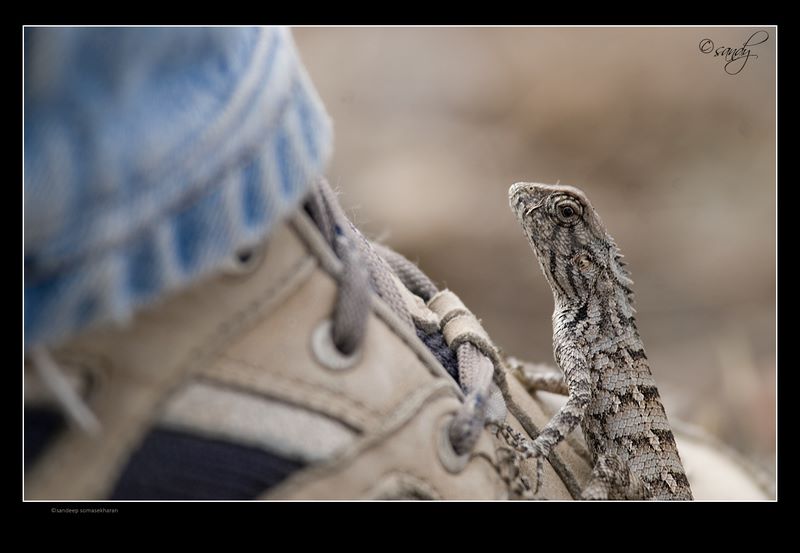
Wordless Wednesday - Don't shoe me away!


Photograph: Sandeep Somasekharan
All rights reserved
View all Wordless Wednesday posts at The Green Ogre
View Sandeep's Flickr photostream

Audubon's birds - poetry on canvas

In Audubon's time the Passenger Pigeon and the Carolina Parakeet had not yet become America's most celebrated (and lamented) extinctions...
Audubon's painting of the Ivory-billed Woodpecker, which was considered extinct until 2006 when it was reportedly rediscovered (source: Wikimedia Commons)

As Google has already informed you, today is the 226th birth anniversary of John James Audubon, the French-American ornithologist, naturalist and painter.

In Audubon's time the Passenger Pigeon (Ectopistes migratorius) and the Carolina Parakeet (Conuropsis carolinensis) had not yet become America's most celebrated extinctions. Both species were abundant. The story went that migrating flocks of passenger pigeons darkened the sky for hours. By 1920, both species had been extirpated by indiscriminate hunting. While skins and grainy black-and-white images of these birds are still to be found in museum galleries and catalogues, we have Audubon to thank for depicting their vibrant colours on canvas. In Audubon's paintings, dead birds come alive.


Audubon's vibrant image of this flock of extinct Carolina Parakeets bursts with life (source: Wikimedia Commons)
Birds have always awakened the artist in the poet and the poet in the artist. Just as Audubon's bold brush-strokes captured the beauty of fluttering life in the American woodland, birds piqued the imagination of his contemporary, a reclusive poet who lived and loved in her cloistered nook of Amherst, Massachusetts. Birds fascinated Emily Dickinson, and she often portrayed them as redeemers of faith.

Hope is the thing with feathers  
That perches in the soul,  
And sings the tune without the words,  
And never stops at all,  
   
And sweetest in the gale is heard;          
And sore must be the storm  
That could abash the little bird  
That kept so many warm.

     –from "Hope is the thing with feathers" by Emily Dickinson


Where eagles dare... to soar!

Honorary Ogre Anand Yegnaswami is mystified by the phenomenon of soaring after watching raptors do their thing

A Black Eagle on outstretched wings
Our recent trip to Dandeli with the Ogres got me acquainted with a majestic flyer. We were walking up the Nagzari trail, which leads to a waterfall of the same name, when a raptor appeared overhead. “Black Eagle!” exclaimed Bijoy. What followed was one of the closest and memorable up-close experiences with the bird. We strained our necks trying to keep our eyes on the raptor, which played hide-and-seek as it circled high above the tall trees of the Nagzari Valley. Our irises followed the Black Eagle (Ictinaetus malayensis) wherever it went, held together as though by an invisible glue. And then it perched upon a tree with regal poise. We were indeed fortunate to have observed this bird of prey from so close.

I felt a tingling sensation, awestruck by the bird's aerial performance against the azure backdrop. I asked Sahastra: “Why do they fly around in circles?”


“Thermals,” he said, and went ahead to explain about the air columns that are formed by the uneven heating of the ground. I wondered: I have been looking at these birds soaring high in the sky for aeons, yet never did it occur to me to delve into the science behind their flight.


Watching a raptor, like this Black Eagle, negotiate thermals is an education in itself
For me large birds circling above had come to signify death – I had come to assume that the birds circled above because they had spotted some carrion below. Such an assumption was excusable during the days when I had not claimed an interest in birding, but not anymore for I have understood that the soaring flight is yet another classic example of how our avian friends have adopted a natural phenomenon to their advantage.

This short tête-à-tête with Sahastra gave me an important insight – what would have been a fleeting glance turned out to be a marveling experience and the reason for it was “interest”. Reminded me of the story of a lady who threw away an old saucer when an archaeologist walking by the trash pile jumped up in joy shouting “Ming”. The interest in the Black Eagle’s flight turned out to be my “Ming” experience, which helped me understand and appreciate the phenomenon of thermals, which I wish to share with you.


Vultures, such as this Himalayan Griffon, offer an excellent demonstration of the phenomenon of soaring, traversing long distances with barely a flap of their enormous wings
Thermals are rising drafts of air produced due to the solar heating of the surface of the earth – the air in contact with the hot surface rises until it loses the heat energy and descends to the surface of the earth, only to rise again. Thermals are usually observed from late in the morning (when the sun starts heat up the cold air) until late in the afternoon (when the sun begins to set). The fact that thermals are a localized phenomenon helps explain why the soaring birds are seen circling – the swirling updraft of air gives the birds the circular flying pattern. Once done soaring, the birds can move out of the air column and descend by gliding with the cold downward draft of air.

I chewed on the thought for a while when a question popped up in my head: Why is it that only certain species of birds have a soaring flight pattern?  As a bird becomes larger in size, it needs larger wings to produce the forces required to keep it airborne. For instance, a Griffon vulture weighing close to 10 kg would need a wingspan of almost 3 metres to sustain flight. Flapping such enormous wings would require colossal calories of energy (now it is easy to imagine why ostriches don’t fly) and hence these large birds use thermals (convection air currents/air columns) to soar.
Wide wingspans enable large birds of prey like vultures to take advantage of thermals to soar
Thermals don’t have any particular direction, so it is possible to observe the birds soaring in either direction – clockwise or anticlockwise. It depends on factors such as wind direction, the contours of the surface where the thermals originate, etc. The Coriolis Effect that guides the directions of hurricanes does not apply here due to the insignificant air mass of the thermals.

I began writing about my newfound wisdom on the soaring flight pattern, emphasizing the “hot” air currents facilitating the ascent of large birds when an email from Sahastra provided an interlude to my incessant keystrokes.


He shared an experience from his Himalayan trek with Bijoy where he had observed Griffons and Lammergeiers (Bearded Vultures) rising up against cliff faces on misty/rainy days. He went ahead to explain the concept of obstruction currents - which are essentially updrafts of air caused by obstructions such as hills, cliffs or tall buildings. This kind of soaring is called slope-soaring or ridge-soaring. This brought back memories of my office in Houston (I was on the 19th floor of the 20-storey building) where I used to see American Black Vultures (Coragyps atratus) flying outside the windows and occasionally colliding against the panes. I wish I had known about obstruction currents then -- I would have been able to better appreciate the presence of these vultures.

The Black Eagle experience at Dandeli that brought me a learning (better late than never) would have eluded me had I not heeded to my birder friends’ advice: “When you spot a bird, don’t just see. Observe!”


Video: Lammergeier soaring

Lammergeier Descent from Sahastra Rashmi on Vimeo.


Video: Himalayan Griffon soaring

Himalayan Griffon's Soaring Flight from Sahastra Rashmi on Vimeo.

Text and info-graphic by Anand Yegnaswami
Photographs by Sandeep Somasekharan
Videos by Sahastrarashmi

Raptor Friday: The Shaheen Falcon

Two Ogres compare notes about their respective sightings of a fast-flying falcon. Was that a Peregrine or a Shaheen?


Sandy: I saw it fly at a height where it looked like a fast-moving orange-and-black speck in the sky. The wing-flapping wasn't anywhere near furious, but every flap propelled it further ahead with amazing thrust. I managed a shot, and later identified it as a Shaheen Falcon (Falco peregrinus peregrinator). Since then I have enjoyed multiple sightings of the bird as it zipped past or perched on trees high up with no intention of leaving the place for a long time.


Arun: There is a lot of confusion between the Peregrine Falcon (Falco peregrinus calidus) and the Shaheen Falcon among newbie birders, despite the fact that both are quite distinctive in appearance. The different naming conventions followed by guidebooks and websites only deepen the confusion. Grimmett and Inskipp refers to both races as the Peregrine Falcon, while differentiating them as two sub-species. Salim Ali and Rishad Naoroji list them as two species.


The Shaheen Falcon, a resident of the Indian subcontinent, is smaller than the Peregrine Falcon, which is a winter visitor. It has a rufous wash on the underside with black speckles, whereas the Peregrine's underside is white with black speckles. The black hood over the head, the yellow ring around the eyes (similar to most other falcons), huge talons and a no-nonsense beak make these birds look mean and menacing, but they are more famous for something else! Yes - the dive!


A Shaheen shows off its wingspan near Bangalore
The birds are known to hunt other birds, at times even smaller raptors, in mid-air. They dive at a breakneck speed of over 300 kmph, the fastest recorded among birds while taking prey in mid-air in most cases. Hunts take place at dawn and dusk mostly, when the prey is most active, though night-time predation of migratory birds has also been observed. They are seen in a wide variety of habitats, and reign supreme as master hunters -- Shaheen in Persian means king of birds.

A Shaheen Falcon photographed at Dandeli

Text and Photographs: Sandeep Somasekharan and Arun Menon

The next time you see a leopard in your town...

If you took the city of Tokyo and turned it upside down and shook it you would be amazed at the animals that fall out: badgers, wolves, boa constrictors, crocodiles, ostriches, baboons, capybaras, wild boars, leopards, manatees, ruminants, in untold numbers. There is no doubt in my mind that feral giraffes and feral hippos have been living in Tokyo for generations without seeing a soul." 
- Yann Martel, Life of Pi 


As the horrendous impact of the earthquake that hit Japan last month has shown, "shaking" a city is none too far-fetched an image. But when Martel wrote these lines, his metaphor was perhaps figurative. Either way, there are incidents time and again where you run into leopards, jackals and foxes in open yards, farmhouses and city outskirts. And this troubling reality is reinforced further by the leopard that ventured into the Mysore campus of Infosys in February. 


We are slowly being enlightened to the reality that the description of wild animal doesn't necessarily suit animals that are confined to forests. Leopards can survive in suburbs and cities by hiding in abandoned buildings and preying on stray dogs. This January, fellow-Ogre Bijoy and friend Rohit saw a leopard that had been run over by a speeding vehicle at dawn on the NICE road on the outskirts of Bangalore city. While the leopards of Mumbai have made headlines repeatedly, Mysore has seen several leopard-man conflicts in recent years. The worst was perhaps in 2008 when, in the presence of police and forest officials, an assembled mob surrounded a leopard that had strayed into the city and beat it to death. Media spread rumours that it was a man-eater, as it had desperately lunged at some of its tormentors with the fury typical of a cornered wild animal. 


The morning of March 8 saw forest officials, police and CISF at the Infosys campus in Mysore after a leopard had been spotted at night in one of the buildings under construction. This time the leopard was tranquilized and subsequently released 90 km away in Nagarahole National Park. Some amateur photographers got too close to the cornered leopard, completely disregarding security warnings. As these heroes attempted to photograph the leopard from close quarters, the cat charged them. On the basis of this incident, media reports announced shriekingly that the leopard had "mauled" the photographer. Mercifully, being amid a more "aware" group of humans, the leopard was not immediately branded a man-eater and bludgeoned to death. 


Leopards are all around, especially in a city like Mysore. Chamundi Hills, a well-known leopard habitat, is being encroached by the city from all directions. Naturally, running short of food, opportunistic leopards will take to the suburbs for easy pickings in stray dogs and livestock. Rarely do we get instances where they attack humans, and when they do, it is either when they are cornered or trying to protect their young. 


The Ministry of Environment and Forests has come up with very elaborate guidelines on how to deal with human-leopard conflict. When there has been no deliberate attack, and no straying into thickly populated area, the manual says it is best to leave the leopard alone, the reason being that the animals may make every effort to keep away from people. But if the leopard ends up in a populated area, there is a chance that human presence can agitate them into acts of desperation. In the rare event of it being a child-lifter or in case of deliberate attacks on humans, the officials are permitted to euthanise the animal in a humane way. 


Apart from this, several steps may be taken to minimize public fury due to such conflicts. The manual provides guidance to build leopard-proof cattle sheds, educate villagers who are compensated for any livestock taken by the animals, and to leave the livestock kill alone to prevent further attacks. Also, providing proper sanitation and waste disposal in villages near forests is important to check pig and stray dog activity as these animals attract leopards. In some villages in the Himalayas, we have noticed dogs with spiked metal collars to deter leopards (the cats are known to kill their prey with a fatal bite to the throat, severing the jugular vein).


A Bhotia dog in Chopta, Uttarakhand is fitted with a spiked metal collar to deter predation by leopards
Man-animal conflicts are a reality we have to live with given the increasing rate of habitat fragmentation. Sighting a leopard near human habitation does not warrant pressing the panic button -- it might be a passerby on the lookout for stray dogs. Alert the local wildlife warden rather than raise a public alarm. 


Download this informative manual [PDF/ ZIP] on human-leopard conflicts. You never know when you may need it.
-------------------------------------------


Text by Sandeep Somasekharan with additional inputs from Bijoy Venugopal
Photographs: Leopard image by Philip MacKenzie/ Stock.xchng; Other images by Bijoy Venugopal


Thanks to Kalyan Varma for the conversations that inspired this post and to Vidya Athreya whom we have never met but whose important work at Project Waghoba we have followed from a distance. The Green Ogre had earlier written about Kalyan's stirring photo-essay on the capture of a leopard in Valparai. 


Also read Arun Menon's account of a suspected leopard presence in Bilikal Rangaswamy Betta.

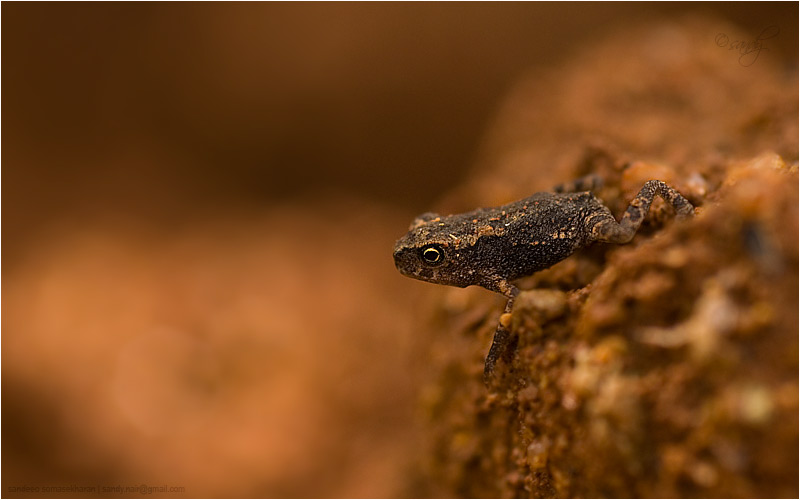
Wordless Wednesday - Look before you leap


Photograph: Sandeep Somasekharan
All rights reserved

Pichavaram - the great mangrove forest of Tamil Nadu

Few people know (or care) that this favourite locale of filmmakers is a spectacular mangrove ecosystem throbbing with life
The mangrove forests of Pichavaram comprise an intriguing ecosystem

Tickets in hand, negotiations with the boatman closed, we should have been on the boat, headed for our first visit to a mangrove ecosystem. But all we could do was to gaze longingly at the dense green clumps across a vast expanse of the lagoon. The boat that was to carry us there was moored to the shore covered in blue tarpaulin. A sudden squall was depositing even more rain on the already soaked and overflowing coastline of southern Tamil Nadu and we were right in the centre of it all – at the northern edge of the Cauvery delta. 


A sudden squall threatened to drown out our much-awaited trip

Pichavaram, one of only two mangrove ecosystems located in Tamil Nadu, is approximately 75 km south of Pondicherry and 15 km from the temple town of Chidambaram. We had reached Pichavaram in the afternoon after a very enriching visit to the great living Chola temple. To be fair, the day had been fairly dry but now that we had planned to be on open water for the next four hours, it had started pouring.


Our entry into the mangroves began with the boatman negotiating one of the tamer channels
The Cauvery delta is formed when the river breaks up into multiple distributaries after Srirangam island. The northernmost distributary Coleroon (or Killidam) meets the sea near Pichavaram (the other river that drains this area is Vellar and the wetland is referred to as Vellar-Pichavaram-Coleroon wetland). The other mangrove patch is at Muthupet, which happens to be at the southernmost point of the Cauvery delta; the distance between the two is 180 km. Muthupet has a large lagoon where six distributaries discharge their waters. These mangroves are characterized by a long dry season (February to September) and high salinity.
Inside the mangroves
The shower stopped as suddenly as it had begun. We were off in a jiffy, the boatman rowing slowly and steadily across to the mangroves. Clouds streamed in from the ocean, promising more rain, but we pretended not to care. Pichavaram has almost 4,000 rivulets of varying length and width with mangroves on either side. As we entered the first, not more than six feet across, we saw the mangroves up close. They seem to grow out of water (there is not a patch of ground visible anywhere) almost like a floating forest.
The canopy weaves a tangled web, and not always a friendly one

The boatman was accomplished at clearing our way
As the boat negotiated the first turn, to our utter amazement and delight we entered a long and narrow rivulet completely wrapped in mangroves. It was like entering a green tunnel – the boatman had to row by moving the low, tangled mangrove branches out of the way. The banks of the rivulet were covered with mangrove roots reaching into the water – hundreds for every clump. The sky was swallowed up completely by the arches of these low trees and all we could see was the narrow rivulet and a vast impenetrable forest growing out of turbid water. The world had dissolved into an expanse of brown and red stilt roots (and all the shades in between) and the luxuriant green foliage of the mangroves, upon which streaks of sunlight created an impressionist canvas of rust, brown, olive, jade, lime-green and emerald.


A maze of stilt roots

In the eerie silence, as we negotiated one tunnel after another, crabs lit up the scene. They were everywhere – climbing up from the water’s edge, clinging to the trunks, hanging on to the canopy and perched in silence on overarching branches. A myriad species of crabs inhabit the forest and it was unfortunate that we knew so little about them. Soon enough we entered one of the wider channels. It was almost 100 feet across, like highways connecting the islands of mangroves. Forest towered on either side, dense and glistening in the evening sun.

The low boughs were the province of a myriad species of crabs
The east coast wetlands starting from the Sundarbans right down to Pichavaram (and Muthupet) receive a major infusion of fresh water from the rivers either throughout the year (the snow-fed Ganga and Brahmaputra) or during the northeast monsoon (Krishna, Godavari and Cauvery). Salinity levels vary through the season in proportion to the fresh water discharge but the trend is towards an increase in salinity as we move down the coast. So, while the Sundarbans have the least salinity (and the shortest dry season), the mangrove wetlands of the Cauvery delta have the maximum salinity levels and the longest dry season. Salinity (or the absence of freshwater intake) has an observed impact on biomass and species diversity. The Sunderbans and Mahanadi mangroves have 26 recorded mangrove species (out of the 33 found in India, 51 in South Asia and 68 worldwide), and high biomass due to tall low-salinity tolerant trees. But the mangrove species diversity drops to 17 for Godavari, 12 for Krishna and finally 11 for Cauvery. 


The sea-water dominated mangroves of Gujarat (with almost no fresh water infusion) have a species diversity of just eight. Further, the dominant species in all the high salinity mangroves -- those of the rivers Cauvery and Krishna and in Gujarat -- is Avicennia marina, an extremely saline water-tolerant species.

It has been observed that except in Andaman and Nicobar Islands, where the mangroves along tidal creeks, lagoons and bays are extremely diverse, those of the east coast are gradually being dominated by high salt-tolerant species like Avicennia marina due to changes in quantity and periodicity of fresh water. It has been found that the vegetation of Pichavaram and Muthupet wetlands used to be more diverse in the beginning of the 20th century but since the freshwater inflow was severely curtailed by the numerous dams and canals upstream on the Cauvery, Avicennia marina became dominant.


Mangroves receive an infusion of river water during the monsoon

We spent almost three hours in this verdant forest. It was a strangely hypnotic world. The dense forest growing out of the water, trees on stilts, and meditating crabs perched where we expected birds, puzzled our senses. But it was a real world, a shrinking and vulnerable patch of forest, and probably the last remnant of the much vaster mangrove forests that occupied the Cauvery Delta.


A strangely hypnotic world
Note:
Mangrove wetlands in India are in most cases the gift of east-flowing rivers. Other than the geological fact that India has no major west-flowing rivers, the east coast is gentler and wider and thus aids major rivers in creating large deltas and an accompanying network of tidal creeks and canals, and brackish lagoons where the mangroves thrive.

The major mangroves patches in India are Sunderbans (Ganga-Brahmaputra), Mahanadi (Mahanadi, Brahmini and Baitarani – the famous Bhitarkanika wetland), Godavari (the Gautami-Godavari system creates the Coringa wetland), Krishna (three islands located between Gollamattapaya and Nadimeru distributaries, and the Krishna river) and Cauvery (Pichavaram and Muthupet). The river dominated (tide-dominated in the case of the Sunderbans) mangroves of the east coast comprise approx 57 percent of India’s mangroves.

The west coast mangroves, all of which are in Gujarat (Gulf of Kutch and the Gulf of Khambat), comprise about 23 percent and those of Andaman and Nicobar Islands make up the remaining 20 percent. There are no statistically significant mangroves outside these five states (Andhra Pradesh, Tamil Nadu, Odisha, West Bengal and Gujarat) and Andaman and Nicobar islands, though small patches exist along the coasts of Kerala, Karnataka, Maharashtra and Goa.


We saw very few birds inside the forests but for the Striated Heron or the Mangrove Heron
The Gujarat mangroves are of a very different type. They are “sea mangroves” since they receive almost no freshwater from inland rivers during the year. These are classified as “drowned-valley type mangroves”.

Text and photographs by Sahastrarashmi
Additional photographs by Bijoy Venugopal


References: 


V Selvam, Environmental Classification of Mangrove Wetlands of India [PDF]

Odisha Diary: Guideless and guileless in Bhitarkanika

When the local bird guide of two decades vintage turns out to be a shimmering dud, Jennifer Nandi takes control of the rest of her birding trip at Bhitarkanika
Early morning at Bhitarkanika - eagles in the trees harry the waterfowl
Birding guides are, at the best of times, difficult to come by. Our unequivocal request directed at the ground operators at Odisha for an able birding guide with a real sense of the park and its bird life was received with understanding. When time is at a premium, it’s essential to have an efficient bird watching strategy. This is greatly aided by the local guide whose ample knowledge of his park takes you exactly where we might see interesting birds. 

Shivering with cold and excitement, we wait and wonder whether the promised expert would actually turn up. Our foreheads furrow as we fight off a rising chorus of doubts; our eyes squint in the inky blackness that is only just beginning to fade. And we struggle with the impotence of restlessness. But all seems well – we see Tapan, our guide, accompanied by a large plum of a man. His hands hold a stick or lathi; binoculars are strung around his neck. This is for real - our designated local birding guide with 20 years experience behind him, strides out of the morning darkness to meet us. We are thrilled. On our wish list are such precious items as the Mangrove Whistler but we do not want to get ahead of ourselves. 
A Monitor Lizard on a mid-morning walk
This spectacle certainly throws a warm halo over matters at once as we head off in dead earnest to board the boat, walking rapidly to mitigate some of the excitement. We cruise for a short while until majestically our birding guide signals with his lathi for the boat to stop. He strides off the one-foot wide gangplank and imperiously summons us. Obediently we follow him into the lightening gloom. 
Up and down the canals by boat
Sadly, this is his brief spasm of importance. That he is useless to the point of embarrassment is evident from his first identification. He points excitedly to an Orange-headed Ground Thrush, misidentifying it as a Mangrove Whistler. I am stupefied that anyone could make such a grievous error. For the uninitiated, an Orange-headed Thrush matches its description – it really does have an orange head. The peninsular race has vertical black head stripes. Striking, wouldn’t you say? And the Mangrove Whistler – it is a drab grey-brown bird! 

Eyes puckered in bewilderment, I turn to the Orange-headed Thrush page of Inskipp’s field guide to birds and simply point; and then to the Mangrove Whistler page, and point again. I am stunned into silence and robbed of my vowels! His ponderous self-image permits no embarrassment -- he nods, smiles and says yes, it’s the same bird, only younger! Soon he is misidentifying the eagles flying overhead, the ducks, the waterfowl... 

Twenty years! To be out in the field for twenty years and not know your own backyard birds is unforgivable especially since you tout yourself as an experienced professional birder! To remonstrate with such deafening dumbness would be a waste of very valuable time and energy. So we just give him a very wide berth. 
A marsh crocodile, one of many that are bred at Bhitarkanika, basks in sumptuous sun
Filled with a kind of melancholy gaiety, we focus on the fecund riot of plant and animal life that must await us. Once we get over the shock of having to find the feathered gems on our own, we have quite a good time. We seem to have the park to ourselves – there isn’t another human being in sight. So we walk unobstructed into the early morning mist, surprising the preening water birds. Short-toed Serpent Eagles fly low overhead. Lesser Spotted Eagles harry the waterfowl and rest in the tops of nearby trees. This is breathtakingly beautiful country. Behind me teal take off sending a bright shiver down my spine which in an odd way reveals to me a secret concerning myself. Watching excites me. 

Ken signals for coffee and we cup our palms around steaming hot cups of Lavazza made in our very own percolator! A boar rooting aggressively in the leaf mould catches our eye. He moves out of sight and we set off along a drier path walking alongside each other. I am closer to the bushes on the right. While our vision is focused intently on birds that might hop onto the path ahead to glean for food, we hear an excited shout from behind. We turn to see our guide pointing at a 10-foot King Cobra that permitted us to walk within two feet of its magnificent presence. It raises its head to give us a once over and then serenely, without fuss, slithers away. It occurs to me that I had chosen the very bushes along that path for what I took to be a very private answering of nature’s call. How wrong I was! 
This 10-feet King Cobra made the answering of nature's calls a little less private
This morning has been most wonderful and we steer ourselves in the direction of returning to the lodge for a much needed breakfast. A scrumptious fare awaits us and we do immense justice – but we are in a hurry to get back to the water. We wander up and down all the channels by country boat. Mugger crocodiles – some measuring over 20 feet – are on most banks. Bhitarkanika breeds freshwater marsh crocodiles and then releases them into the channels. The ride relaxes us – the mid-morning sun warms us to a point where we make up our minds to do an early morning walk the following day before our departure to Konarak. We fix a time with the boatman who is only too happy to navigate his beloved boat while we watch with meditative alertness. 

Text and photos by Jennifer Nandi
All rights reserved

Previously in this series:

Other travelogues by Jennifer Nandi